Türkiye's internal migration falls to 2.87% in 2025, TurkStat reports

 13 oC
13 oC 
Güneşli

A total of 2,475,019 people migrated between provinces in Türkiye in 2025, with internal migration accounting for 2.87% of the country's population, according to data released on Tuesday by the Turkish Statistical Institute (TurkStat).
The data show that the internal migration rate, which stood at 3.18% in 2008, has fluctuated over the years before declining to 2.87% in 2025. Women represented the majority of internal migrants, accounting for 52.5%, while men made up 47.5%.
Istanbul Leads Both Inbound and Outbound Migration
Istanbul remained the country's primary migration hub, recording the highest number of people moving into the province during the year.
A total of 329,912 people relocated to Istanbul, followed by Ankara with 176,833 newcomers and İzmir with 106,083.
At the opposite end of the scale, Ardahan received the fewest migrants, with 4,914 people moving into the province. It was followed by Bayburt with 5,064 and Tunceli with 6,078.
Istanbul also recorded the highest number of people leaving the province. During 2025, 371,258 residents moved out of Istanbul to other parts of the country.
Ankara ranked second in outbound migration with 145,661 people, while İzmir followed with 98,728.
The provinces with the lowest outward migration were Ardahan (5,916), Bayburt (6,388), and Tunceli (7,558).
Young Adults Most Mobile
The 20-24 age group remained the most mobile segment of Türkiye's population in 2025.
A total of 480,185 people in this age category changed provinces during the year. Women accounted for 58.5% of migrants in the group, while men represented 41.5%.
Family Reasons Drive Internal Migration
Household-related reasons were the leading cause of internal migration in Türkiye during 2025.
Out of the 2.48 million people who relocated across provincial borders, 564,114 moved for reasons related to a member of their household.
The second most common reason was better housing and living conditions, which accounted for 510,226 migrants, followed by education, with 406,144 people relocating for academic purposes.
Migration Reasons Differ by Gender
The data indicate notable differences in migration patterns between men and women.
For men, the most common reason for relocating was better housing and living conditions, cited by 253,093 people.
Other major reasons included household-related migration and job assignment or employment changes.
Among women, household-related migration was the primary reason for moving, accounting for 334,900 migrants.
Better housing conditions and education were also among the leading motivations for female migrants.
Education Tops Migration Among Young Adults
Education remained the dominant factor behind migration among the highly mobile 20-24 age group.
According to the data, 179,612 young adults moved to pursue educational opportunities.
Another 75,591 relocated to start or find employment, while 42,391 moved in search of better housing and living conditions.
The latest figures highlight the continued importance of education, employment opportunities, family considerations, and housing conditions in shaping internal migration patterns across Türkiye, with major metropolitan areas continuing to attract large numbers of residents despite also experiencing significant outward migration. (ILKHA)
LEGAL WARNING: All rights of the published news, photos and videos are reserved by İlke Haber Ajansı Basın Yayın San. Trade A.Ş. Under no circumstances can all or part of the news, photos and videos be used without a written contract or subscription.

The World Health Organization (WHO) has warned that the ongoing outbreak of the Bundibugyo strain of Ebola in the Democratic Republic of the Congo (DRC) has reached record levels, with the majority of new infections now originating from unknown chains of transmission, raising concerns over the virus's accelerating spread.
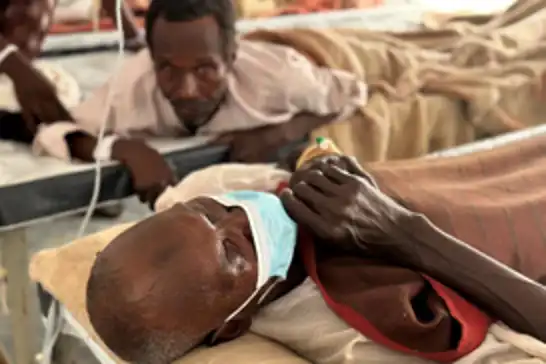
A rapidly spreading cholera outbreak has claimed more than 100 lives in war-ravaged Sudan, raising fears of a wider public health emergency as ongoing fighting continues to obstruct humanitarian access and strain an already collapsing healthcare system, the World Health Organization (WHO) has warned.

The Ebola outbreak caused by the Bundibugyo virus continues to affect the Democratic Republic of the Congo (DRC) and Uganda, with the number of confirmed infections in the DRC approaching 1,800, according to the latest health update issued on Friday.