Conquest of Mecca commemorated in Istanbul with emphasis on Islamic principles of peace
 13 oC
13 oC 
Güneşli

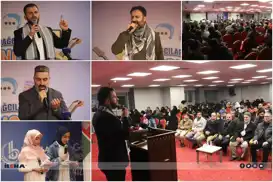
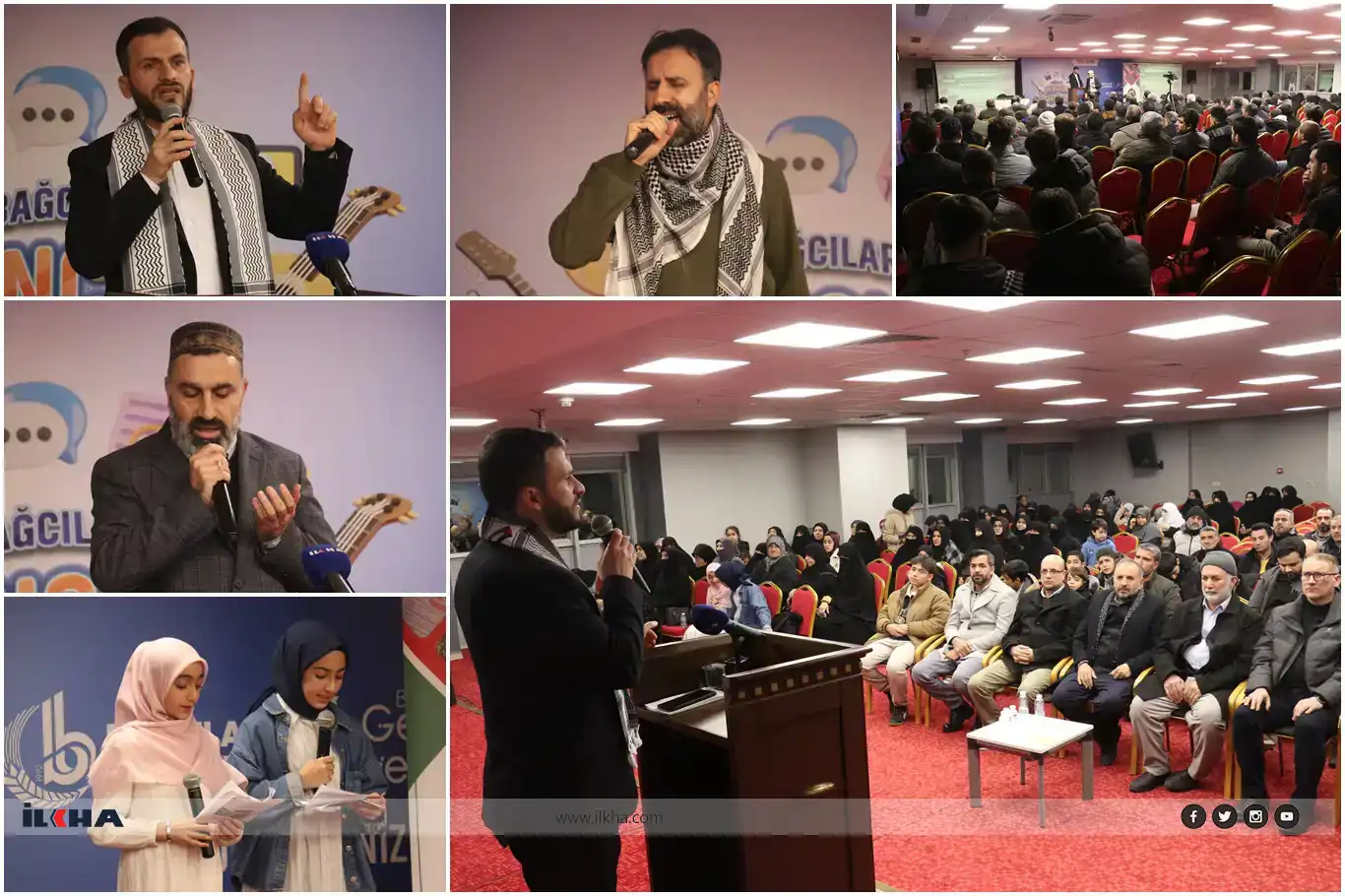
The annual commemoration of the Conquest of Mecca, a pivotal event in Islamic history, was held on Wednesday evening at the Bağcılar Youth Center in Istanbul.
Organized by the Peygamber Sevdalıları Vakfı (The Prophet’s Lovers Foundation), the event drew a large crowd of participants from all age groups. Although the Conquest of Mecca occurred on January 11 in the Gregorian calendar, the commemoration has traditionally been observed through various programs on New Year's Eve.
The event opened with a recitation from the Holy Qur’an by Hamza Tarhan, setting a spiritual tone for the program. Following the recitation, Süleyman Kızılçınar, Chairman of the Free Jerusalem Platform, delivered a comprehensive address focusing on the meaning of “fetih” (conquest) in Islam and how it differs fundamentally from colonial occupation.
“Conquest Is Not Occupation”
“We are living in a period where some deliberately try to confuse the concept of conquest with occupation,” Kızılçınar said. “They attempt to portray Islam’s understanding of conquest as invasion and exploitation. However, Islamic conquest has nothing to do with occupation. Conquest is not merely about capturing territory; it is about opening hearts to truth, justice, and faith.”
He emphasized that throughout Islamic history, conquests were never carried out to exploit land or resources, nor to erase the identity or beliefs of local populations. Instead, he said, Islamic conquests aimed to remove oppression and ensure justice, freedom of belief, and social harmony.
“The Prophet Never Advocated War”
Drawing a sharp contrast with European colonial history, Kızılçınar noted that Western societies historically sought to expand their power by occupying lands, exploiting natural resources, and subjugating indigenous populations.
“When Muslims conquered a land, they did not touch the sacred places of others, nor did they interfere with people’s beliefs,” he said. “They never forced anyone to become Muslim. The Messenger of Allah (peace and blessings be upon him) was never a supporter of war and never adopted a policy that incited conflict.”
He stressed that the Prophet Muhammad always prioritized peace and reconciliation, resorting to armed struggle only when unavoidable and solely to remove obstacles to the message of Islam. “His mission was to guide people with wisdom and mercy, not with coercion,” Kızılçınar added.
The Road to the Conquest: Hudaybiyyah
Kızılçınar devoted a significant portion of his speech to explaining the Treaty of Hudaybiyyah, describing it as the key turning point that paved the way for the Conquest of Mecca. He recalled that in the sixth year of the Hijrah, the Prophet informed his companions of his intention to travel to Mecca to perform Umrah.
“Nearly 1,500 companions set out with the Prophet, carrying only light weapons for protection,” he said. “They had no intention of fighting. Their sole purpose was to worship.”
However, upon reaching Hudaybiyyah, the Muslims were prevented from entering Mecca by the polytheists, despite repeated assurances that they sought only to perform pilgrimage and return peacefully. According to Kızılçınar, the Meccan leadership feared that allowing the Prophet and his followers to enter Mecca would strengthen his legitimacy among the Arab tribes.
When Uthman ibn Affan was sent as an envoy to negotiate and rumors spread that he had been killed, the Prophet gathered his companions under a tree and took a pledge of allegiance known as the Pledge of Ridwan. “This moment demonstrated the unwavering loyalty and unity of the companions,” Kızılçınar said, noting that it instilled fear among the Meccan leaders, who then agreed to negotiations.
A Treaty That Changed History
The Treaty of Hudaybiyyah that followed appeared, on the surface, to be unfavorable to Muslims. Some of its clauses deeply disturbed the companions, including provisions regarding asylum and the postponement of Umrah until the following year. Nevertheless, the Prophet accepted the treaty, prioritizing long-term peace over short-term gains.
“This decision once again showed that the Prophet was not driven by emotion or pride, but by wisdom and foresight,” Kızılçınar said.
“Hudaybiyyah Was Itself a Victory”
Although Muslims returned to Medina with a sense of disappointment, Kızılçınar explained that the ten-year truce created conditions that allowed Islam to spread rapidly.
“The Messenger of Allah’s struggle was never about domination,” he said. “It was about removing the barriers between people and the truth. This is the essence of jihad in Islam.”
During the peaceful period following Hudaybiyyah, the Prophet sent envoys to major powers of the time, including Byzantium and Persia, as well as to Yemen. Within two years, the Muslim community grew from approximately 1,500 to 10,000 people, as large numbers embraced Islam voluntarily.
“In reality,” Kızılçınar emphasized, “the Treaty of Hudaybiyyah was the most critical step leading to the Conquest of Mecca. As stated in the Qur’an, it was itself a clear victory.”
Criticism of Western Occupation and Modern Conflicts
In the concluding section of his speech, Kızılçınar drew parallels between historical European colonialism and contemporary global conflicts. He argued that the so-called discovery of the Americas was, in fact, an occupation marked by genocide, slavery, and exploitation.
“Millions of indigenous people were massacred, and millions of Africans were forcibly transported as slaves,” he said. “Those who today present America as a symbol of freedom built it on blood and tears.”
He further criticized Western powers for their ongoing roles in conflicts across Gaza, Iraq, Syria, Yemen, and other regions, while simultaneously accusing Muslims of barbarism and distorting Islamic concepts such as jihad.
“Our civilization,” Kızılçınar concluded, “is the civilization demonstrated by the Messenger of Allah during the Conquest of Mecca—a civilization based on mercy, justice, forgiveness, and dignity. This is Islamic civilization.”
The commemoration continued with devotional hymns performed by artists from Özlem Agency and poetry recited by young girls, highlighting the transmission of Islamic values to future generations. The program concluded with a heartfelt supplication led by İsmail Pekgöz, as participants prayed for peace, justice, and the unity of the Muslim Ummah.
Organizers stated that the event aimed not only to commemorate a historic milestone, but also to remind society of the ethical and humanitarian principles that the Conquest of Mecca represents—principles they said remain urgently relevant in today’s world. (ILKHA)
LEGAL WARNING: All rights of the published news, photos and videos are reserved by İlke Haber Ajansı Basın Yayın San. Trade A.Ş. Under no circumstances can all or part of the news, photos and videos be used without a written contract or subscription.
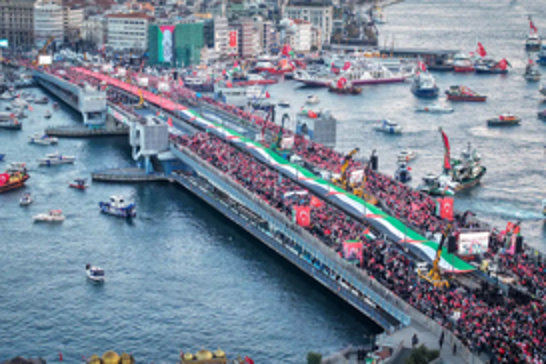
An estimated 520,000 people gathered in the freezing pre-dawn hours of New Year's Day, transforming Istanbul's iconic Galata Bridge into a "tribune of conscience" for Palestine.

Türkiye has introduced visa-free entry for Chinese citizens holding ordinary passports, allowing stays of up to 90 days within any 180-day period for tourism and transit purposes.
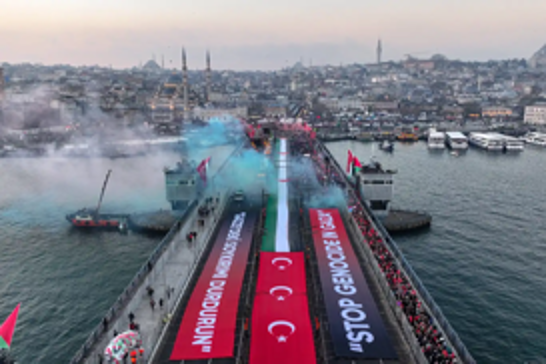
Thousands of supporters of Palestine gathered in central Istanbul before dawn on Thursday to take part in the “Big Gaza March,” a powerful show of solidarity with the besieged people of Gaza amid Israel’s ongoing war and blockade.