China postpones historic Chang’e-7 lunar mission launch
 13 oC
13 oC 
Güneşli

China has postponed the launch of its ambitious Chang’e-7 lunar mission, which is designed to explore the Moon’s south pole and search for water ice in permanently shadowed craters.
The China Manned Space Agency (CMSA) announced Sunday that the mission would not be launched during its planned 2026 window after a comprehensive assessment determined that it did not meet the required launch conditions.
The agency said the decision was made according to the principles of “prudence, reliability and absolute mission success,” but did not provide specific details about the technical or operational issues behind the postponement.
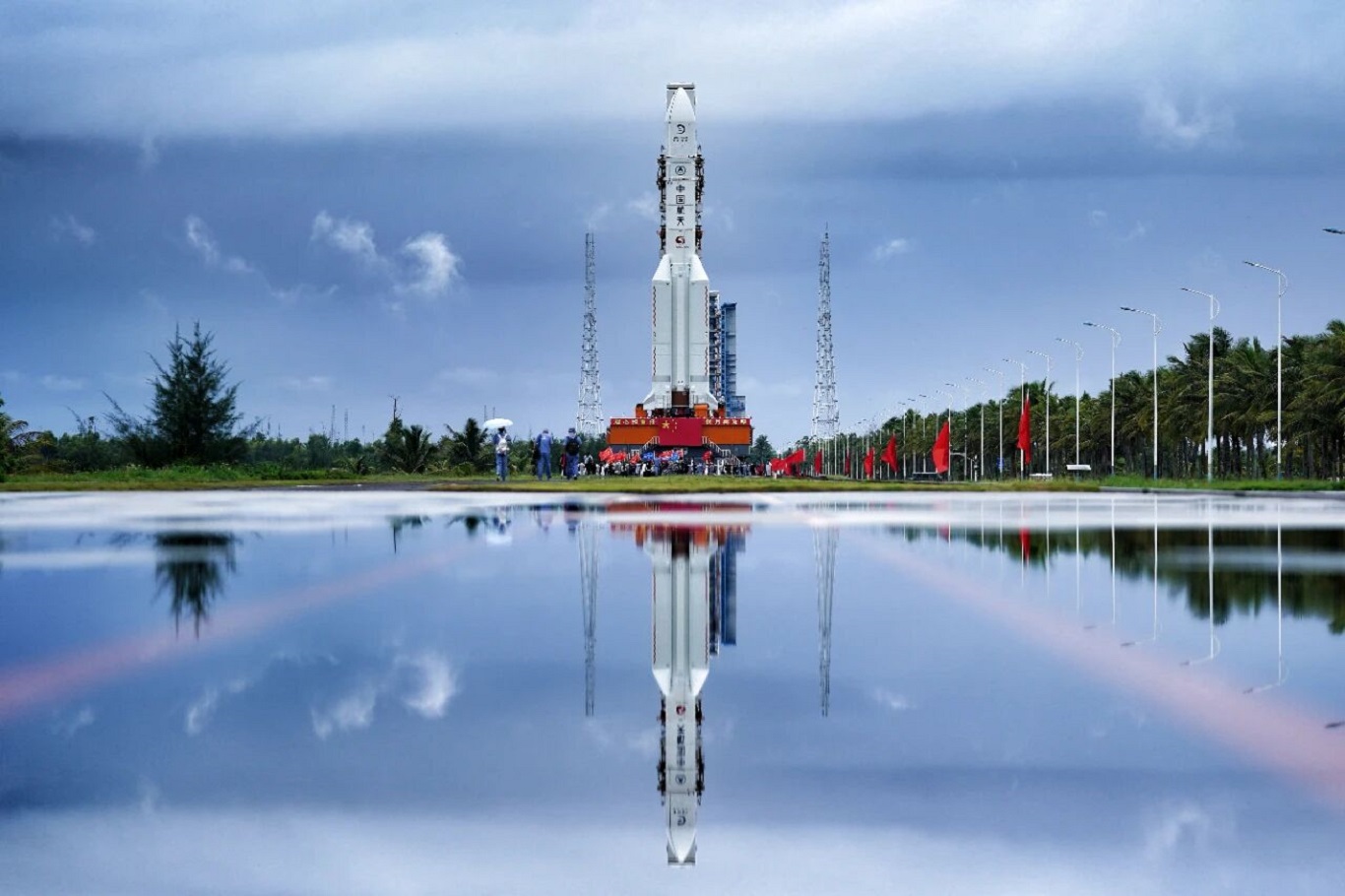
The spacecraft and its Long March-5 Y14 carrier rocket had already been moved to the launch area at the Wenchang Spacecraft Launch Site on China's southern island province of Hainan. Preparations had been underway for weeks, with the launch expected to take place in the coming days.
The official announcement did not identify weather as the reason for the postponement. However, Thailand's National Astronomical Research Institute (NARIT), which is involved in the mission, said earlier that developing Tropical Storm Narra had disrupted preparations around Wenchang.
The storm and the highly specific launch window required for a south-pole lunar mission may have contributed to the decision. Because Chang’e-7 is targeting the Moon's south polar region, launch timing must be carefully coordinated with the Moon's position, lighting conditions and the mission's intended trajectory.
No new launch date has yet been officially announced.
Chang’e-7 is one of China's most ambitious robotic lunar missions to date.
The spacecraft is designed to conduct a comprehensive survey of the Moon's south pole using an orbiter, lander, rover and hopping vehicle. The mission will examine permanently shadowed craters and investigate the region's environment and potential resources.
Scientists are particularly interested in the possibility of water ice trapped inside permanently shadowed craters. These regions receive little or no direct sunlight and are among the coldest locations in the Solar System.
Water deposits could have enormous significance for future lunar exploration because water could potentially be converted into drinking water, oxygen and hydrogen-based rocket propellant.
Chang’e-7 is therefore intended not merely as a scientific expedition but as an important technological step toward sustained human activity on the Moon.
The postponement comes as China accelerates its broader lunar program.
Beijing has set a goal of sending Chinese astronauts to the Moon before 2030 and has been developing technologies for future crewed lunar missions. Chang’e-7 is expected to provide valuable scientific and engineering experience for those plans.
The mission is also connected to China's longer-term plans for an International Lunar Research Station, which China has been developing in cooperation with international partners, including Russia.
Chang’e-8, planned for the latter part of the decade, is expected to build on the technologies and scientific knowledge developed through Chang’e-7.
The delay follows one of China's most significant achievements in lunar exploration.
In 2024, the Chang’e-6 mission successfully returned samples from the Moon's far side to Earth, becoming the first mission in history to accomplish that feat. The samples provided scientists with new material for studying a region of the Moon that remains comparatively unexplored.
Chang’e-7 represents the next major stage of the program, shifting China's focus toward the lunar south pole and the resources that could support future exploration.
The postponement also comes less than two weeks after a separate Chinese rocket failure at the Wenchang spaceport.
On Aug. 10, a Long March-7A rocket suffered an in-flight anomaly shortly after liftoff while carrying the ChinaSat-4B communications satellite. An investigation into the failure remains underway.
The Long March-7A and the Long March-5 assigned to Chang’e-7 are different launch vehicles, and the recent failure is not currently reported to be the cause of the lunar mission's postponement.
Nevertheless, the latest developments have placed additional attention on China's launch operations and the country's decision to prioritize reliability and mission success over maintaining the original timetable.
For Beijing, Chang’e-7 is too strategically and scientifically important to risk launching under unfavorable conditions.
The decision to postpone the mission demonstrates the importance China places on the reliability of a program that forms part of its long-term effort to establish a sustained presence around and eventually on the Moon.
While the delay is a setback for China's 2026 lunar timetable, the mission itself remains a central component of Beijing's ambitious lunar exploration strategy.
The next launch opportunity will depend on the technical, weather and orbital conditions required for the complex south-pole mission. Chinese authorities have yet to announce when Chang’e-7 will fly. (ILKHA)
LEGAL WARNING: All rights of the published news, photos and videos are reserved by İlke Haber Ajansı Basın Yayın San. Trade A.Ş. Under no circumstances can all or part of the news, photos and videos be used without a written contract or subscription.

US President Donald Trump has proposed replacing the term “artificial intelligence” with “super intelligence,” saying the word “artificial” makes the technology sound less authentic than it is.
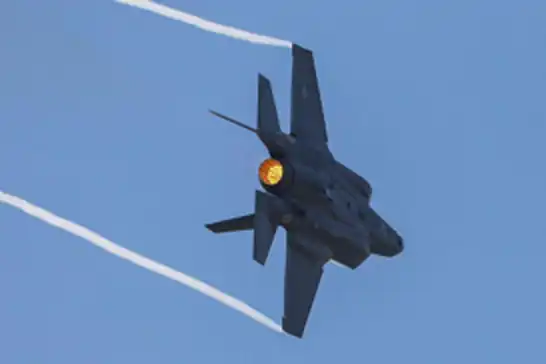
Sensitive components from the F-35 stealth fighter were unexpectedly diverted to Hong Kong while being shipped from Australia to the United States for repairs, with some of the parts subsequently reported missing, raising concerns in Washington over the possible exposure of highly sensitive military technology.

Geoffrey Hinton, the Nobel Prize-winning computer scientist widely known as the “Godfather of AI,” has warned U.S. lawmakers that they may have only about a year to establish meaningful safeguards for artificial intelligence before humans risk losing control over increasingly autonomous systems.

United Nations Secretary-General António Guterres has called for greater international cooperation to address the risks posed by rapidly advancing artificial intelligence, warning that AI development may be moving faster than the world’s understanding of its potential dangers.