German Court rules ChatGPT violated copyright using musicians’ songs without permission

 13 oC
13 oC 
Güneşli

A German court has ruled that OpenAI’s ChatGPT unlawfully used lyrics from several songs, including hits by renowned musician Herbert Grönemeyer, in violation of Germany’s copyright laws.
The Munich Regional Court announced on Tuesday that OpenAI incorporated protected content from nine German songs, including Grönemeyer’s “Männer” and “Bochum,” while training its artificial intelligence models.
The case was filed by the German music copyright organization GEMA on behalf of composers, lyricists, and publishers. The ruling is being seen as a landmark in the global legal battle over how artificial intelligence accesses and uses copyrighted material.
Presiding Judge Elke Schwager ordered OpenAI to pay damages for using copyrighted works, though the amount was not disclosed.
GEMA legal advisor Kai Welp said, “Following this decision, we hope constructive discussions can take place with OpenAI regarding proper compensation for copyright holders.”
In its defense, OpenAI argued that its language models do not store or copy specific data but learn patterns from large datasets. The company added that content is generated based on user prompts, placing responsibility on the user rather than the AI itself.
However, the court determined that memorization of copyrighted material by AI models and reproduction in chatbot outputs constitutes a copyright violation.
GEMA CEO Tobias Holzmueller emphasized, “The internet is not a self-service store; human creativity cannot be treated as a free template. Today, we have affirmed the protection of authors’ rights. AI tools like ChatGPT must also comply with copyright laws.”
An OpenAI spokesperson stated, “We disagree with the ruling and are considering next steps. This decision concerns a limited number of song lyrics and does not affect millions of users in Germany.”
Earlier this year, Indian music companies similarly filed a lawsuit in the New Delhi High Court against OpenAI, claiming AI models had used audio recordings without permission. Experts say the German court ruling could intensify global concerns over AI and music copyright issues.(ILKHA)
LEGAL WARNING: All rights of the published news, photos and videos are reserved by İlke Haber Ajansı Basın Yayın San. Trade A.Ş. Under no circumstances can all or part of the news, photos and videos be used without a written contract or subscription.

The European Commission has imposed a €120 million fine on X (formerly Twitter) for multiple violations of the Digital Services Act (DSA), marking the first non-compliance decision issued under the landmark EU regulation.
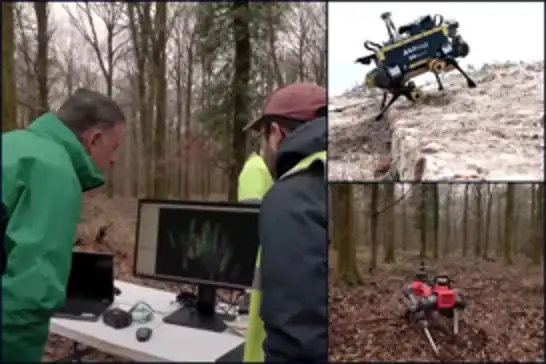
Researchers at the University of Bradford in the United Kingdom are developing an advanced system that uses robot dogs to improve artificial intelligence–driven early wildfire detection.

People implanted with Elon Musk’s Neuralink brain chip can now operate robotic arms through thought alone, marking a new stage in the company’s brain–computer interface (BCI) trials as capabilities expand beyond controlling digital devices.

Türkiye has officially entered a new era in space technology with the successful deployment of FGN-TUG-S01, the country’s first orbital transfer vehicle (OTV), developed entirely with national resources by the Ankara-based aerospace company Fergani Space.