Afghanistan expands trade links with China through Wakhan road project
 13 oC

Güneşli

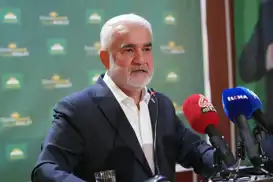
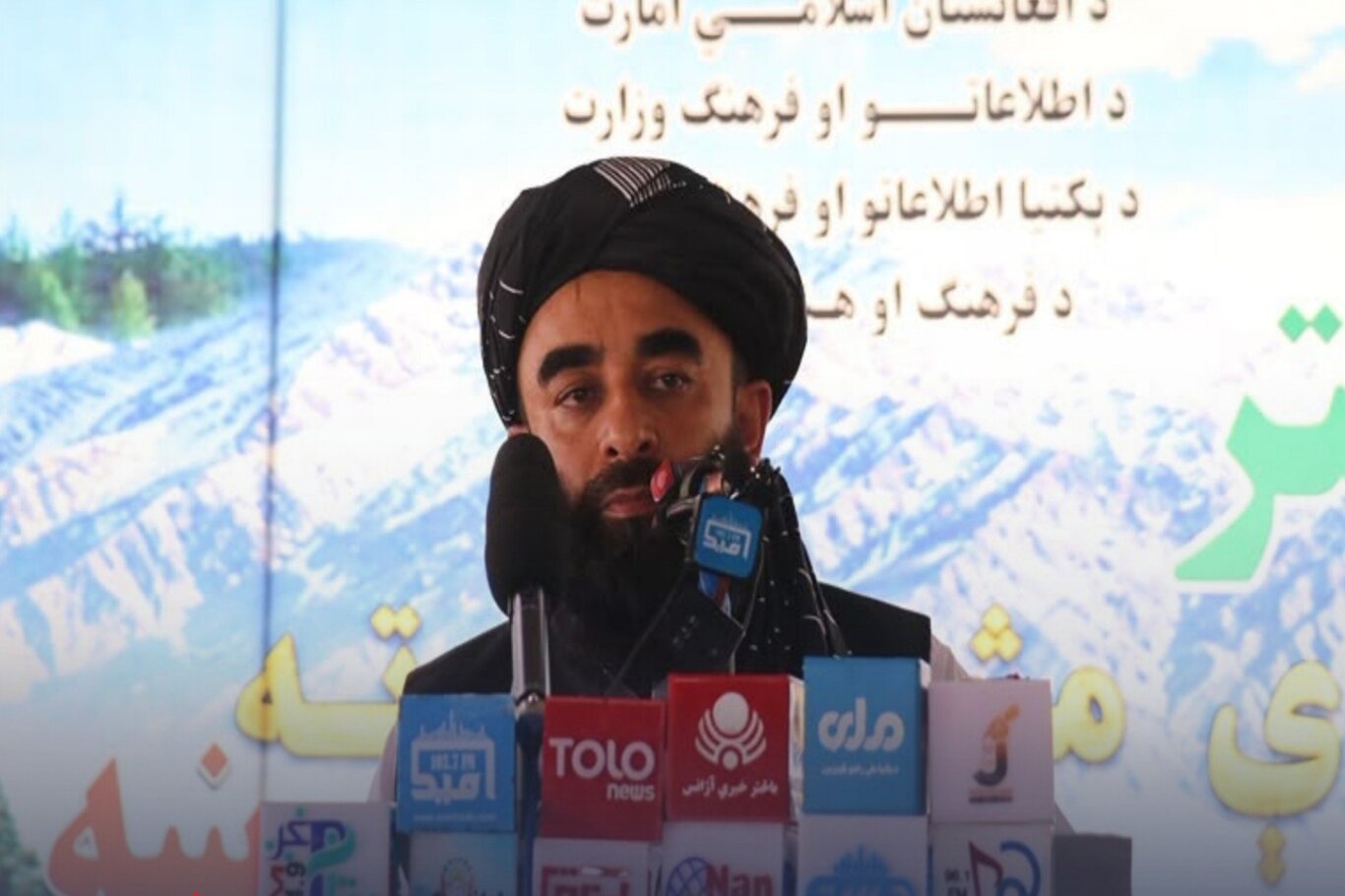
Zabihullah Mujahid, spokesperson for Afghanistan's Islamic Emirate, has announced that construction of the Wakhan road has been extended to the Chinese border, describing the project as a major step toward strengthening the country's regional trade links and achieving economic self-sufficiency.
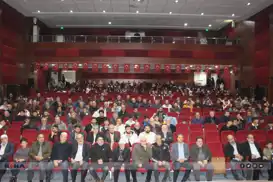
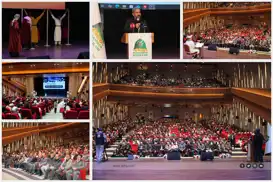
Speaking at the traditional Nashtar poetry gathering held in Paktia province in honor of Wakhan, Mujahid said the Islamic Emirate was pursuing major infrastructure and economic projects to improve Afghanistan's economic prospects and reduce its dependence on foreign assistance.
He noted that the Wakhan Corridor had historically served as an important trade and economic route but had remained largely inaccessible due to various challenges. He said the Islamic Emirate was determined to revive the route and expand Afghanistan's economic connections with neighboring countries.
Mujahid also described the promotion of Wakhan from Paktia as a demonstration of national unity, stressing that Afghanistan was an indivisible country.
Addressing Afghanistan's economic situation, Mujahid claimed that significant progress had been made across several sectors since the Islamic Emirate returned to power in August 2021.
He said approximately 1.04 million government employees were currently working within the country's administrative structure. Comparing the figure with the previous administration, he claimed that around 100,000 of its 800,000 government employees had been ghost workers.
Mujahid further stated that 1,500 factories had started operating in Herat province alone since the Islamic Emirate's return to power. He also claimed that Afghanistan had achieved self-sufficiency in 300 sectors, although he did not provide further details about these industries.
According to the spokesperson, Afghanistan's exports increased by seven percent during the 1404 solar year, while the national budget is now entirely financed through domestic revenues. He contrasted this with the previous administration, when, according to him, approximately 70 percent of the national budget came from foreign sources.
Mujahid also announced that 12.5 billion afghanis in cash assistance was being provided to support impoverished families, beggars, people struggling with drug addiction, widows and orphans.
Referring to the closure of several trade crossings with Pakistan, Mujahid said nearly a year had passed since the routes were shut down.
He claimed that the Islamic Emirate had managed to identify alternative commercial routes, preventing shortages of essential commodities and significant price increases in domestic markets.
He also highlighted major national development initiatives, including the Turkmenistan-Afghanistan-Pakistan-India (TAPI) gas pipeline, the Qosh Tepa Canal, the Wakhan road project and mining operations, saying their completion would contribute significantly to Afghanistan's economic development and self-reliance.
Turning to Afghanistan's cultural environment, Mujahid said poetry gatherings and other cultural activities had made progress, although further efforts were needed to support the country's cultural sector.
He described poetry and anthems as powerful instruments during the Islamic Emirate's two-decade struggle, saying their influence had been comparable to that of weapons. He called for greater support for poets and cultural figures.
On education, Mujahid expressed hope that existing challenges would eventually be resolved. He claimed that educational standards had improved in schools, universities and religious seminaries, adding that more than one million people were currently pursuing religious and modern education across the country.
Regarding security, he attributed the current situation to public cooperation and the continued efforts of security and intelligence forces to prevent potential threats.
Mujahid also maintained that court rulings issued over the past five years had been based on Sharia law, asserting that Islamic justice had been implemented throughout the judicial system.
Mujahid also criticized the ongoing situation surrounding Afghanistan's seat at the United Nations, arguing that the exclusion of the Islamic Emirate's representatives prevented Afghans from defending their positions and responding to allegations raised against the country at the international level.
He stressed that the implementation of major infrastructure projects, expansion of domestic industries and development of regional trade connections remained central to Afghanistan's efforts to achieve economic independence.
The Wakhan road, in particular, could provide Afghanistan with an additional route for trade with China and strengthen its position as a potential regional transit hub. (ILKHA)
LEGAL WARNING: All rights of the published news, photos and videos are reserved by İlke Haber Ajansı Basın Yayın San. Trade A.Ş. Under no circumstances can all or part of the news, photos and videos be used without a written contract or subscription.
At least 11 people were killed after a passenger bus and a truck collided in the Ras Al Khaimah emirate of the United Arab Emirates (UAE).
China is preparing to launch the Shenzhou-24 spacecraft, which will carry Pakistani astronaut Muhammad Zeeshan Ali as the first foreign astronaut to participate in a Chinese crewed space mission and travel to the country's Tiangong Space Station.
Ukrainian President Volodymyr Zelensky has urged NATO to admit Ukraine into the military alliance, arguing that full membership would provide the country with more reliable security guarantees amid escalating tensions with Russia.