Artificial intelligence reshapes the world: From experiment to everyday reality
 13 oC
13 oC 
Güneşli

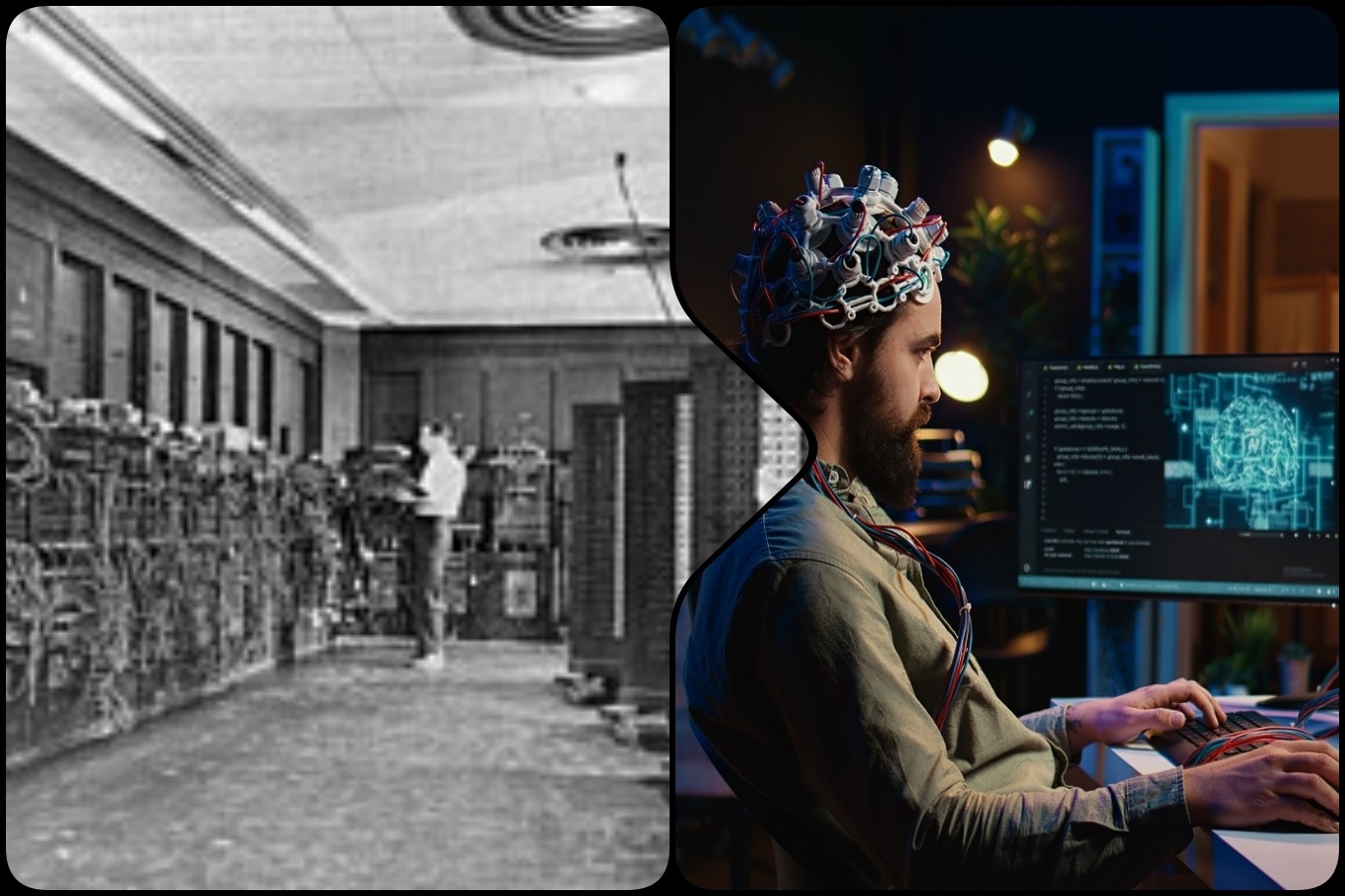
Artificial intelligence (AI), once a scientific concept debated by researchers, has evolved over the past seven decades into a technology shaping economies, healthcare, education and everyday life. While its capabilities continue to expand, concerns over employment, misinformation, privacy and security are also intensifying.
From early research to the AI revolution
Artificial intelligence emerged as a scientific field at the 1956 Dartmouth Conference in the United States, where researchers first explored whether machines could simulate human intelligence. Progress remained slow for decades due to limited computing power, leading to periods known as the "AI winters."
Advances in computing, the rise of big data and breakthroughs in deep learning revived the field in the 2010s. The introduction of the Transformer architecture in 2017 paved the way for modern generative AI, while the public launch of ChatGPT in late 2022 brought the technology into everyday use.
A turning point in 2022
The launch of ChatGPT marked a watershed moment, bringing artificial intelligence out of research laboratories and into the daily lives of millions of people. AI rapidly became a widely used tool for writing, coding, translation, image generation and data analysis.
According to the Stanford AI Index, generative AI reached roughly 53 percent of the world's population within three years, making it one of the fastest-adopted technologies in history, outpacing both the internet and personal computers.
Global investment race
The rapid expansion of AI has fueled unprecedented investment worldwide. Stanford data show that global private investment in artificial intelligence exceeded $252 billion in 2024, with funding more than doubling again in 2025.
Business adoption has accelerated as well. A McKinsey survey found that 88 percent of organizations now use AI in at least one business function.
Productivity and scientific advances
Artificial intelligence is helping companies reduce costs and improve productivity while opening new opportunities in healthcare and scientific research. AI systems are increasingly used to analyze large datasets, accelerate drug discovery and assist in medical imaging.
Education is also undergoing rapid change. According to the Stanford AI Index, more than 80 percent of students in the United States use AI tools for school-related work.
Jobs undergoing transformation
The impact of AI on employment remains one of the most debated issues surrounding the technology.
The International Labour Organization (ILO) says generative AI is more likely to transform jobs than eliminate them entirely, although occupations involving repetitive digital tasks could face growing pressure.
Stanford data also point to declining employment opportunities for some entry-level software developers, while experts generally expect AI to reshape existing professions rather than replace the workforce altogether.
Misinformation and security concerns
The rapid development of AI has also created new risks.
Deepfake videos, synthetic voices and AI-generated misinformation have emerged as significant challenges, raising concerns about election integrity, public trust and cybersecurity.
According to the Stanford AI Index, documented AI-related incidents increased from 233 in 2024 to 362 in 2025, reflecting growing concerns as AI becomes more widely deployed.
Public opinion remains divided
Surveys suggest that public attitudes toward AI remain mixed. While many people believe artificial intelligence can save time and improve efficiency, concerns persist about its impact on employment, privacy and the broader economy.
Looking ahead
Seventy years after researchers first asked whether machines could think, the debate has shifted from whether AI can match human capabilities to how governments, businesses and societies should manage its growing influence.
As AI continues to reshape industries and everyday life, it offers significant opportunities for innovation and economic growth while presenting complex challenges related to employment, security, misinformation and regulation.
Artificial intelligence is no longer a technology of the future—it has become a defining force of the present.(ILKHA)
LEGAL WARNING: All rights of the published news, photos and videos are reserved by İlke Haber Ajansı Basın Yayın San. Trade A.Ş. Under no circumstances can all or part of the news, photos and videos be used without a written contract or subscription.

A U.S. journalist who pleaded guilty to assisting the Chinese government in gathering sensitive “secrets” inside the United States was sentenced to two years in prison on Tuesday.

Israel’s far-right National Security Minister Itamar Ben-Gvir has unveiled a plan to forcibly displace Palestinians from the Gaza Strip and push them abroad, proposing the removal of 250,000 Palestinians in the first year and the displacement of Gaza’s remaining population over the following six years.

Kenyan President William Ruto has ordered Tata Chemicals Magadi, one of the country’s largest mineral exporters and Africa’s leading soda ash producers, to leave the country, accusing the Indian-owned company of failing to invest adequately in its operations.

Estonian Defense Minister Hanno Pevkur has resigned following controversy over the advance payment of €70 million to Indian companies that had no previous record of selling artillery shells, in a procurement deal intended to provide ammunition for Ukraine.