Egypt hosts Eritrea, Sudan, Somalia leaders as regional tensions rise
 13 oC
13 oC 
Güneşli

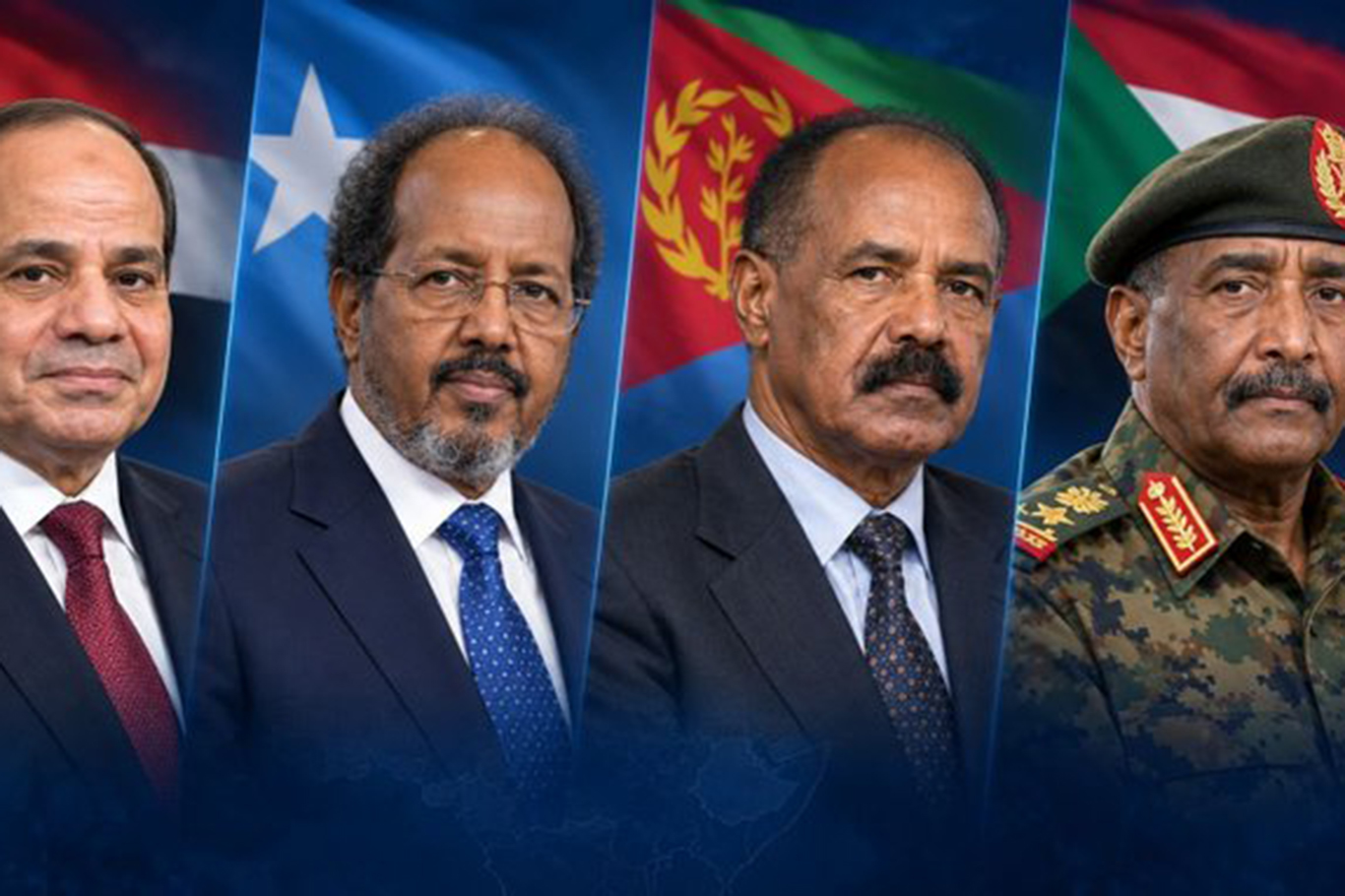
Egypt, Eritrea, Somalia and Sudan agreed to strengthen political and security coordination at a quadrilateral summit in New Alamein on Sunday, as tensions involving Ethiopia, the Nile water dispute and renewed fighting in the Horn of Africa raise fears of a wider regional crisis.
Egyptian President Abdel Fattah El-Sisi hosted Eritrean President Isaias Afwerki, Somali President Hassan Sheikh Mohamud and Sudan’s Transitional Sovereignty Council Chairman Abdel Fattah Al-Burhan for consultations on regional security, the Red Sea and developments across the Horn of Africa.
In a joint declaration, the four leaders reaffirmed their commitment to the sovereignty, unity and territorial integrity of states, support for national institutions and the principle of non-interference in internal affairs. They also called for disputes to be resolved through peaceful and diplomatic means.
The leaders stressed the importance of closer coordination in confronting shared security challenges and promoting economic integration and development in the region.
The summit also placed the long-running dispute over the Nile at the center of regional concerns.
The leaders emphasized the need to respect international law governing transboundary rivers and rejected unilateral measures that could affect the established water uses of Egypt and Sudan, the two downstream countries.
The position comes amid years of tensions between Egypt and Ethiopia over the Grand Ethiopian Renaissance Dam (GERD), which Addis Ababa built on the Blue Nile. Egypt considers the river vital to its national survival and has repeatedly called for a legally binding agreement governing the dam’s filling and operation.
The latest summit effectively brought Nile water security into a broader regional framework involving the Red Sea and the strategic Horn of Africa.
The meeting comes at a particularly sensitive moment, with relations between Ethiopia and Eritrea deteriorating sharply.
Eritrea announced on Oct. 1 that it was severing diplomatic ties with Ethiopia after Addis Ababa accused Asmara of supporting an opposition alliance involved in renewed fighting in Ethiopia’s northern Tigray region. Eritrea denied the allegations.
Ethiopian government forces subsequently regained control of Mekelle, the capital of Tigray, after opposition forces withdrew from the city, according to Reuters. The renewed conflict has raised concerns that fighting could spread beyond Ethiopia's borders and draw in neighboring states.
The developments have added another layer to the already complex regional rivalry involving access to the Red Sea, the Nile waters and competing security alliances.
The African Union Commission urged Ethiopia, Eritrea and Egypt on Oct. 1 to exercise maximum restraint, maintain communication channels and resolve their differences through diplomatic means.
Egypt objected to the statement, arguing that the crisis in Ethiopia was an internal matter and that Cairo should not be portrayed as a party to it.
The AU subsequently clarified that its statement was not intended to assign responsibility to Egypt or any neighboring state for developments inside Ethiopia. The commission said its intervention was aimed solely at preventing further escalation following the expulsion of diplomats between the countries.
The summit also carries significance for Sudan, which has been engulfed in war since April 2023. Egypt has maintained close ties with Sudan's state institutions and has repeatedly called for preserving the country's unity and territorial integrity.
For Egypt, the stability of Sudan is closely linked to its own national security because of the countries' shared border and Nile connection. Eritrea and Somalia, meanwhile, occupy strategically important positions along the Red Sea and Gulf of Aden, giving the four countries a common interest in maritime security.
The leaders also discussed the need to promote stability, development and economic cooperation across the Horn of Africa.
The summit marks a further effort by Cairo and its regional partners to coordinate their positions at a time when renewed fighting in Ethiopia, the unresolved Nile dispute, the war in Sudan and wider Red Sea tensions are converging into an increasingly volatile security environment. (ILKHA)
LEGAL WARNING: All rights of the published news, photos and videos are reserved by İlke Haber Ajansı Basın Yayın San. Trade A.Ş. Under no circumstances can all or part of the news, photos and videos be used without a written contract or subscription.

The UK Green Party has formally adopted an anti-Zionist position, describing Zionism as a form of racism and reaffirming its support for Palestinian liberation and the right of return.
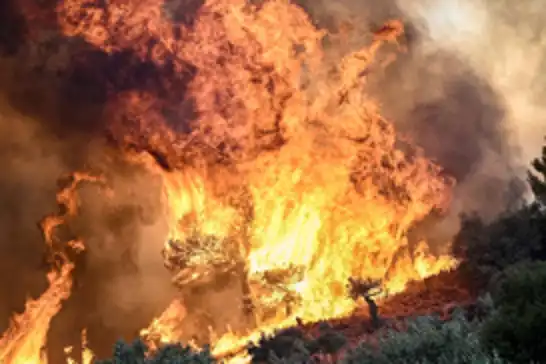
A forest wildfire that broke out in southern Bulgaria has crossed the border into northeastern Greece, prompting a large-scale firefighting operation as authorities in both countries work to contain the blaze.
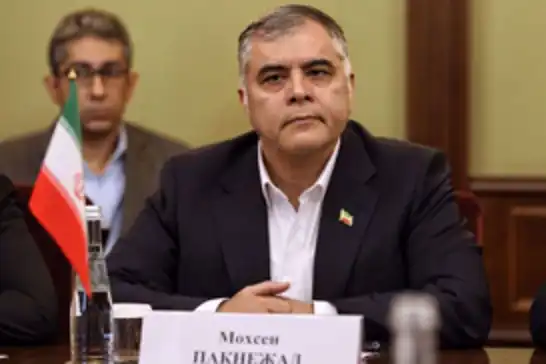
Iranian President Masoud Pezeshkian has accepted the resignation of Oil Minister Mohsen Paknejad, with National Iranian Oil Company (NIOC) Managing Director Hamid Boverd appointed as acting oil minister.