Erdoğan and Qatar Emir discuss Gaza, energy security and bilateral cooperation in New York
 13 oC
13 oC 
Güneşli

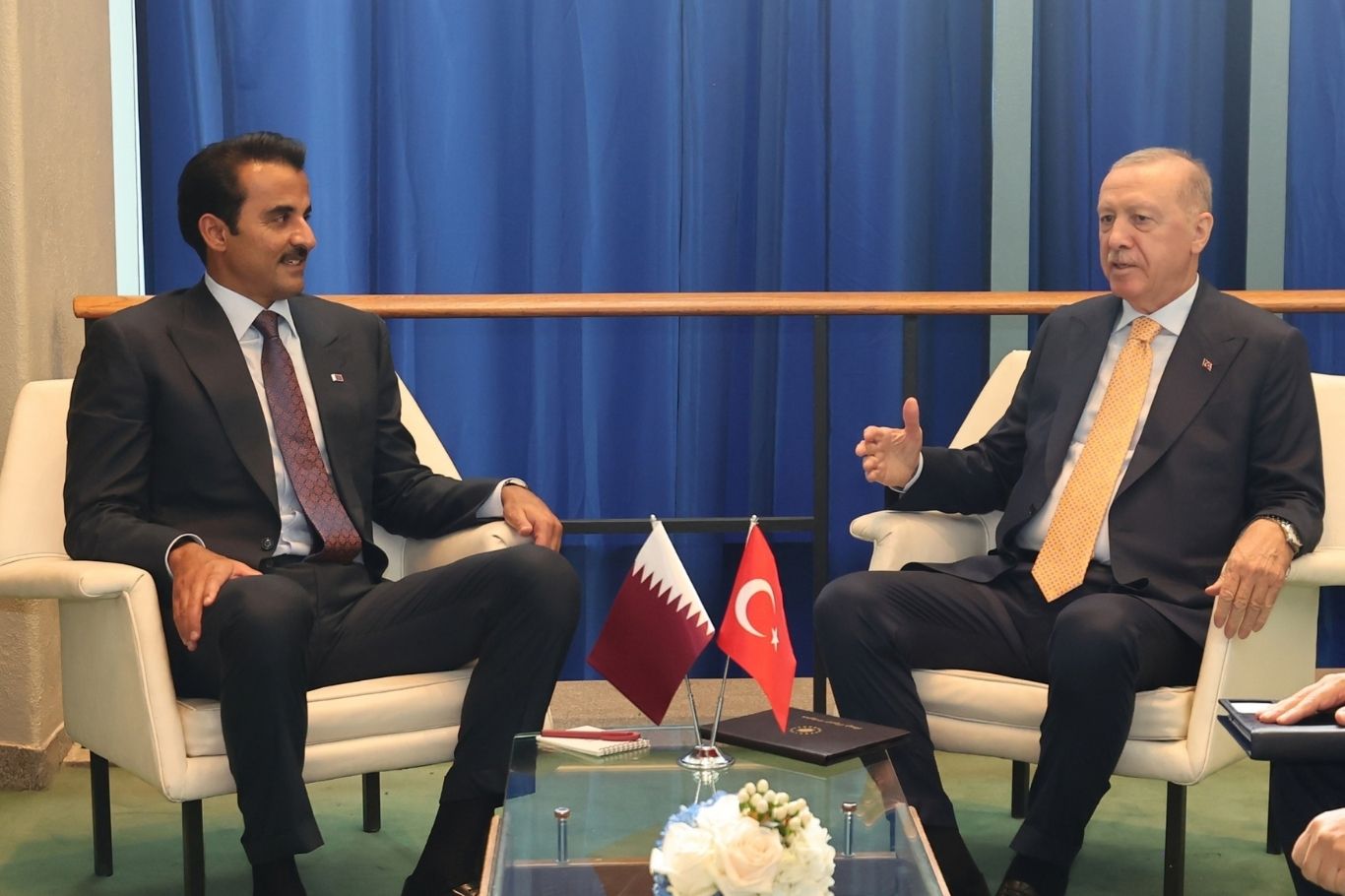
Turkish President Recep Tayyip Erdoğan and Qatar’s Emir Sheikh Tamim bin Hamad Al Thani discussed bilateral ties, regional developments and global issues during a meeting in New York on Tuesday on the sidelines of the 81st session of the United Nations General Assembly.
The closed-door meeting came as world leaders gathered in New York for the annual high-level UN General Assembly meetings, with the wars and security crises across the Middle East, particularly the situation in Gaza, dominating diplomatic discussions.
According to information released by Türkiye’s Communications Directorate, Erdoğan said Ankara and Doha would continue efforts to deepen cooperation across a range of sectors, with particular emphasis on investment, trade, energy and the defence industry.
The talks also addressed growing concerns over energy supplies and transportation routes in the region.
Erdoğan said recent developments that have negatively affected energy supplies were creating difficulties for countries across the region, stressing the importance of strengthening cooperation on energy and transportation corridors.
The remarks come amid heightened regional tensions that have disrupted established energy and trade routes and raised concerns over the security of infrastructure critical to global energy markets. Energy security and the protection of transportation corridors have emerged as increasingly important issues in discussions among regional governments and their international partners.
Gaza at the center of regional discussions
The situation in Gaza was another major issue raised during the meeting.
Erdoğan said Israel continued to refrain from taking steps toward peace in Gaza and stressed the importance of strong international pressure to restrain what he described as Israeli aggression in the region, according to the Turkish Communications Directorate.
The comments reflected Ankara's broader position on the Gaza conflict, which Erdoğan reiterated earlier on Tuesday in his address to the UN General Assembly.
In his speech, Erdoğan called for greater international pressure on Israel over the situation in Gaza and urged countries that have not recognized a Palestinian state to reconsider their positions. He also criticized the structure of the UN Security Council, arguing that a system in which decisions affecting more than 190 countries can effectively be blocked by five permanent members undermines confidence in the international organization.
Gaza has remained a central issue in Türkiye-Qatar diplomatic contacts. The two countries have maintained close coordination over the conflict and humanitarian situation, while Qatar has continued to play a role in regional mediation and humanitarian diplomacy. Qatar's Foreign Ministry said this week that Doha and several Arab and Muslim countries had expressed deep concern over the humanitarian situation in Gaza and called for the implementation of outstanding commitments related to humanitarian assistance and early recovery.
Focus on economic and strategic cooperation
Beyond the regional crises, the Erdoğan-Tamim meeting highlighted the broadening strategic relationship between Türkiye and Qatar.
Ankara and Doha have developed extensive political and economic ties in recent years, with cooperation spanning trade, investment, energy, defence and infrastructure.
Erdoğan's reference to investment and trade during Tuesday's meeting underscored the economic dimension of the relationship, while the inclusion of energy and defence in the discussions pointed to sectors that have acquired increasing strategic importance for both countries.
The defence industry has become a particularly prominent area of Türkiye's expanding cooperation with Gulf states, while Qatar has remained an important economic partner for Ankara.
The two countries have also maintained regular high-level diplomatic contacts over regional conflicts and security issues, particularly those affecting the Middle East.
Energy routes and regional stability
The emphasis on energy and transportation corridors comes at a time of heightened uncertainty over regional supply routes.
The Middle East remains central to global energy flows, while conflicts and military tensions have increased concerns over the security of major maritime and land-based transportation routes.
Recent developments have also placed additional pressure on Gulf states seeking to protect energy exports and maintain the uninterrupted movement of goods.
In this environment, closer coordination between Türkiye and Qatar on energy infrastructure and transportation corridors could have implications extending beyond their bilateral relationship, particularly as both countries seek to maintain trade and energy connectivity amid wider regional instability.
Qatar is one of the world's major liquefied natural gas exporters, while Türkiye occupies a strategically important position between energy-producing regions and European markets. Ankara has repeatedly sought to strengthen its role as an energy transit hub by developing infrastructure connecting suppliers in the Middle East, the Caucasus and Central Asia with European consumers.
Senior Turkish officials attend meeting
The breadth of the Turkish delegation accompanying Erdoğan underscored the range of issues discussed during the talks.
Foreign Minister Hakan Fidan, Energy and Natural Resources Minister Alparslan Bayraktar, Trade Minister Ömer Bolat, National Intelligence Organization (MİT) Director Ibrahim Kalın and Defence Industry Agency President Haluk Görgün attended the meeting.
The participation of senior officials responsible for foreign policy, energy, trade, intelligence and defence reflected the strategic scope of Türkiye-Qatar relations and the importance Ankara attaches to coordination with Doha on both economic and regional matters.
The meeting was part of Erdoğan's wider diplomatic engagements in New York during the UN General Assembly.
Earlier on Tuesday, Erdoğan met UN Secretary-General Antonio Guterres, while he also held separate talks with several foreign leaders. His meetings have focused on Gaza, regional security, energy and other international issues alongside efforts to strengthen Türkiye's bilateral relationships.
With Gaza continuing to dominate the diplomatic agenda and energy security becoming increasingly intertwined with regional stability, the Erdoğan-Tamim meeting brought together two closely aligned regional partners seeking to deepen economic cooperation while coordinating their positions on the major crises confronting the Middle East. (ILKHA)
LEGAL WARNING: All rights of the published news, photos and videos are reserved by İlke Haber Ajansı Basın Yayın San. Trade A.Ş. Under no circumstances can all or part of the news, photos and videos be used without a written contract or subscription.
Iran’s Parliament has moved forward with new measures aimed at strengthening security, legal oversight and sustainable development in the strategically vital Strait of Hormuz, approving key provisions of a proposed law designed to regulate maritime passage and protect the interests of the Islamic Republic.
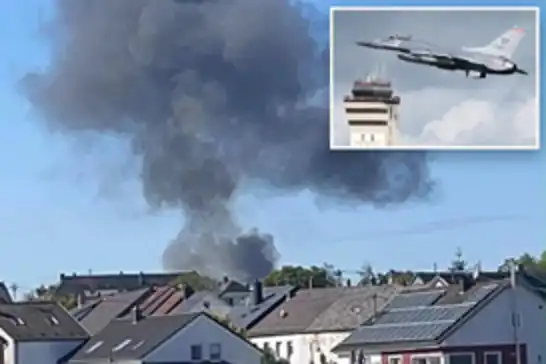
A US Air Force F-16 fighter jet crashed on Tuesday after taking off from Spangdahlem Air Base in Germany's western state of Rhineland-Palatinate, while the pilot ejected safely and survived the incident.
European Union member states have reached an agreement to extend sanctions against more than 3,000 Russian individuals and entities for another 36 months, while removing businessmen Alisher Usmanov and Mikhail Fridman from the sanctions list.