Halabja Massacre still haunts the Kurdish people after nearly four decades
 13 oC
13 oC 
Güneşli

Thirty-eight years have passed since the chemical bombing of Halabja, yet the memory of March 16, 1988, remains etched in the collective consciousness of humanity as one of the darkest chapters of modern history.
On that day, thousands of Kurdish civilians fell victim to one of the most brutal chemical weapons attacks ever deployed against a civilian population.
It began with children playing in the streets of this Kurdish city in northern Iraq. Suddenly, they inhaled a strange, sweet scent—like apples, some said. "Daye behna sêvan tê (Mom, I feel the scent of apple)," children cried out moments before collapsing like sparrows onto the ground. That apple-like fragrance was the signature of death itself: a cocktail of mustard gas and nerve agents raining down from Iraqi aircraft.
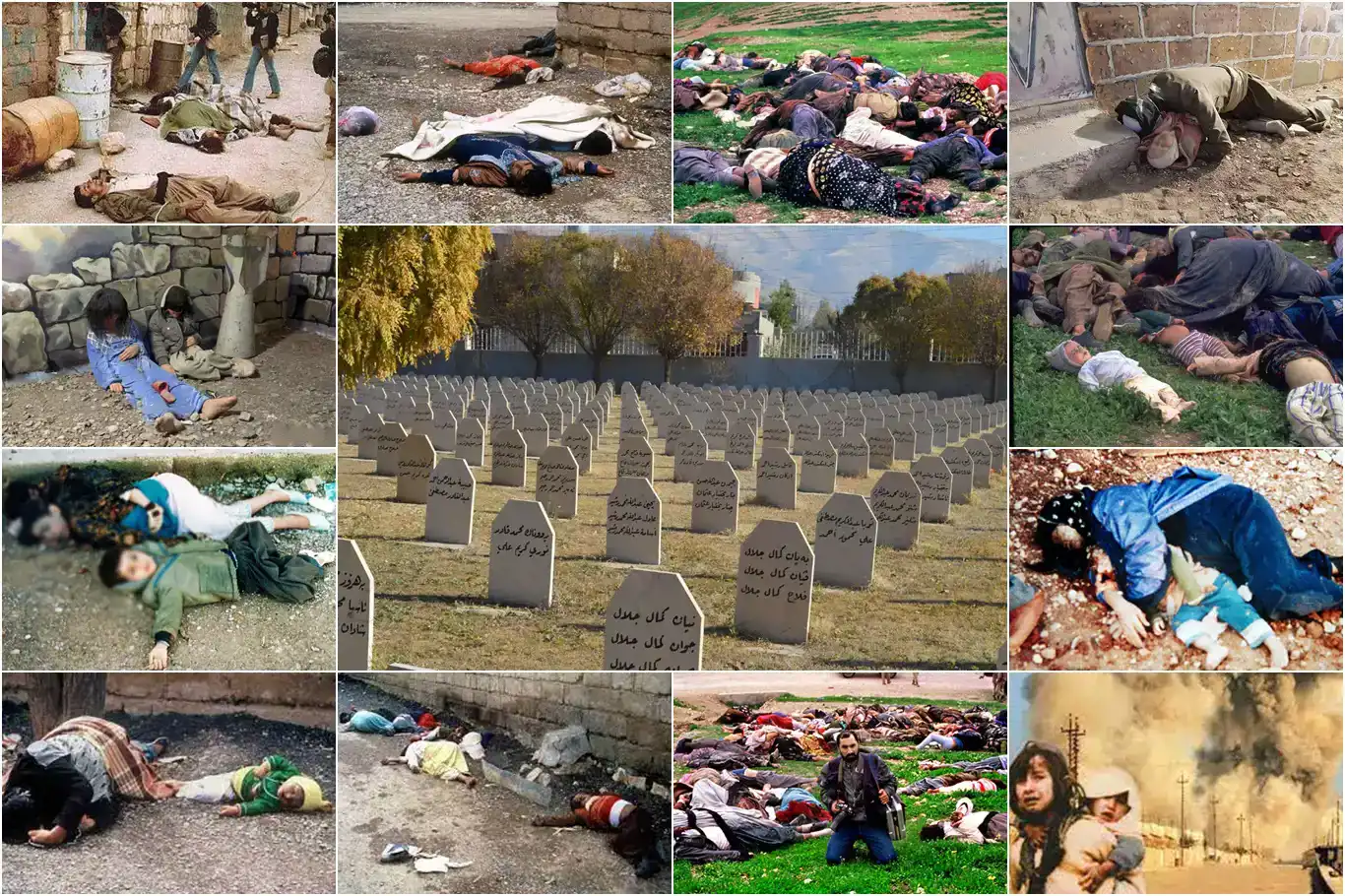
By the time the chemical clouds dissipated, more than 5,000 people lay dead, their bodies frozen in the final moments of unimaginable suffering. At least 14,765 others were injured, many permanently disabled. The attack targeted civilians almost exclusively—women, children, and the elderly who had no connection to the Iran-Iraq War then raging nearby.
A Historical Context of Division and Oppression
To understand Halabja, one must understand the century of fragmentation that preceded it. Following the collapse of the Ottoman Empire, Western imperial powers redrew the map of the Middle East. The Sykes-Picot Agreement of 1916 and subsequently the Treaty of Lausanne carved up Kurdish ancestral lands into four separate nations: Turkey, Iraq, Iran, and Syria.
This division subjected the Kurdish people—predominantly Muslim and historically resistant to colonial domination—to the rule of disparate regimes: secular Baathists in Iraq and Syria, Kemalists in Turkey, and the Shah's monarchy in Iran. Each pursued varying degrees of assimilation and oppression against Kurdish identity and aspirations.
Saddam's Rise and the Iran-Iraq War
When Saddam Hussein al-Tikriti seized absolute power in Iraq in 1979, he brought with him the radical nationalist ideology inherited from his mentor, Michel Aflaq, founder of Baathist thought. For Iraq's Kurds, this meant intensified Arabization campaigns, forced displacement, and systematic suppression of their cultural and political rights.
Simultaneously, revolution was transforming neighboring Iran. The overthrow of the Shah—another Western proxy—replaced a pro-Western monarchy with an Islamic Republic under Ayatollah Khomeini. Fearing the loss of its regional puppets, the West found a willing partner in Saddam. Thus began the eight-year Iran-Iraq War, a conflict that would provide cover for atrocities against Iraqi Kurds.
The Kurdish population, long suffering under Saddam's boot, largely sympathized with Iran during this conflict—a stance that Saddam would punish with genocidal fury.
"Chemical Ali" and the Anfal Campaign
Saddam appointed his cousin, Ali Hassan al-Majid, to command military operations in Kurdish regions. History would remember him by a different name: "Chemical Ali." His tactics were simple and brutal. Between February and September 1988, the Anfal campaign systematically targeted Kurdish civilians, combining mass executions, forced disappearances, and the destruction of over 2,000 villages.
Halabja represented the campaign's horrifying apex.
On that March morning, Iraqi aircraft descended upon the city of approximately 80,000 residents, releasing bombs filled with a lethal mixture of mustard gas and the nerve agents Tabun, Sarin, and VX. The attack continued for several hours, with waves of aircraft ensuring maximum exposure.
The Aftermath: A City of Corpses
Journalists and investigators who entered Halabja afterward described scenes that defied comprehension. Streets littered with bodies frozen in their final moments—mothers clutching children, families huddled together in doorways, entire neighborhoods rendered lifeless. Survivors wandered in shock, their skin blistered and blackened, eyes blinded, lungs seared by chemical agents.
Unlike the atomic bombs dropped on Hiroshima and Nagasaki, which killed primarily through blast and radiation, chemical weapons kill slowly. Mustard gas causes excruciating blisters on any exposed skin and within the respiratory tract. Nerve agents attack the nervous system, causing convulsions, paralysis, and death by asphyxiation. Victims suffocated while fully conscious, drowning in their own fluids.
Iranian physicians who treated survivors reported symptoms consistent with cyanide poisoning, while mustard gas exposure caused long-term health consequences including cancers, respiratory diseases, and devastating birth defects in subsequent generations.
"Unlike ionizing radiation in Nagasaki and Hiroshima, mustard gas causes incredibly damaging long-term effects on future generations, particularly damaging DNA," medical experts later explained.
International Silence and Complicity
Perhaps most damning than the attack itself was the world's response—or lack thereof. The United Nations dispatched a medical team that confirmed the use of chemical weapons, including mustard gas and unidentified nerve agents. Yet the Security Council issued a mild statement that did not even name Iraq as the perpetrator.
Halabja was not an isolated incident. Documented records show at least 21 smaller-scale chemical attacks against Kurdish civilians before March 16, 1988. None prompted meaningful international action.
More disturbingly, evidence emerged that the chemical weapons used at Halabja originated in Western Europe. Investigative reporting following the attack revealed that precursor chemicals and manufacturing technology came primarily from West German, Swiss, Belgian, and Dutch companies—exported with government knowledge if not explicit approval. These materials traveled by sea to Turkish ports, including Mersin, before crossing into Iraq by land.
Turkish newspapers approximately one month after the massacre ran headlines declaring, "We have become a tool in the massacre," acknowledging Turkey's inadvertent role as a transit route for weapons of mass destruction.
Why Halabja? The Religious Dimension
While strategic considerations partly explain the attack—Halabja had recently been captured by Iranian forces and their Kurdish allies—deeper factors may account for its particular ferocity. Halabja was not merely a Kurdish city; it was a center of Islamic activism and religious identity that challenged both Saddam's secular Baathism and Western regional interests.
The Islamic Movement in Kurdistan, led by Sheikh Osman (reverently called Abu Halabja, "Father of Halabja"), represented the third major political force in Iraqi Kurdistan alongside the two dominant secular parties. Its growing influence and armed capabilities attracted concern not only from Baghdad but from Western powers who preferred secular, controllable actors in the region.
Some analysts suggest this religious dimension explains why Halabja specifically was targeted for such overwhelming destruction—to eliminate not just a military threat but a model of Islamic Kurdish self-governance that challenged both regional and international interests.
A Continuing Reckoning
The full death toll from the Halabja attack remains disputed. International organizations estimate at least 5,000 killed immediately, with thousands more dying from injuries and long-term health effects. Foreign observers who visited after the war suggest actual numbers may be significantly higher.
Survivors continue to bear physical and psychological scars. Generations born after the attack carry genetic damage from mustard gas exposure. The city rebuilt but never forgotten, with memorials preserving the memory of that March day when humanity itself seemed to die alongside the victims.
Ali Hassan al-Majid was captured after the 2003 Iraq invasion, tried by an Iraqi court, and executed in 2010 for crimes against humanity. Saddam Hussein himself faced trial for multiple charges including the Anfal campaign, though his 2006 execution occurred before a verdict on those specific charges was reached.
For the international community, Halabja remains an indictment—a reminder that when the world chooses silence over action, it becomes complicit in atrocity. The names of Hiroshima, Nagasaki, and Halabja stand together as monuments to what happens when weapons of mass destruction meet civilian populations, and when global powers prioritize interests over humanity.
The children who fell like sparrows, murmuring of apple scents, did not die in vain if their memory compels us to ensure such horrors never recur. Thirty-eight years later, Halabja's ghosts still whisper their warning to a world that too often refuses to listen. (ILKHA)
LEGAL WARNING: All rights of the published news, photos and videos are reserved by İlke Haber Ajansı Basın Yayın San. Trade A.Ş. Under no circumstances can all or part of the news, photos and videos be used without a written contract or subscription.
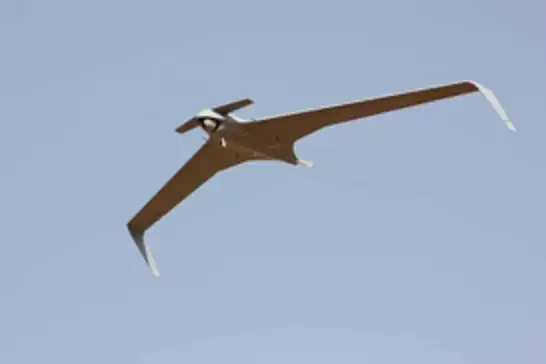
Iran’s air defense forces have intercepted and destroyed an advanced Orbiter reconnaissance drone over the Strait of Hormuz, the Iranian Army said Sunday, in the latest reported confrontation involving an American unmanned aircraft and Iran’s integrated air defense network.

US President Donald Trump has threatened Iran with the possibility of destroying the country, while saying he remains open to meeting Iranian President Masoud Pezeshkian at the United Nations General Assembly in New York.
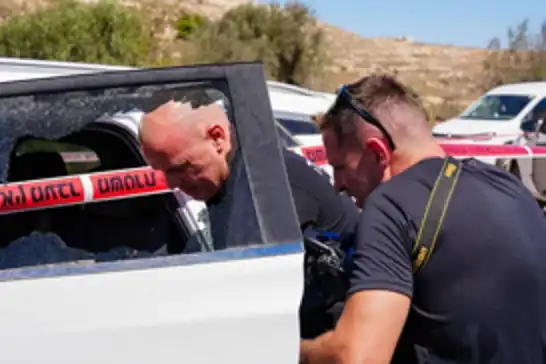
An Israeli settler was killed and several others were wounded in a shooting near the illegal Halamish settlement, northwest of Ramallah in the occupied West Bank, amid escalating Israeli military raids, settler violence and restrictions on Palestinian movement across the territory.

Iran will keep the Strait of Hormuz closed until its conditions are fulfilled and the United States implements its commitments, Iranian Parliament Speaker Mohammad Bagher Ghalibaf said Sunday, reaffirmingn’s dete Tehrarmination to combine military resistance with diplomacy.