Hamas: Oslo Accords became a tool to entrench Israeli occupation
 13 oC
13 oC 
Güneşli

Senior Hamas official Ali Baraka has condemned the Oslo Accords as a failed political process, saying that 33 years after their signing, Palestinians remain under occupation and have yet to achieve freedom, independence, security or the right to return to their homeland.
In a statement issued Sunday, Baraka said the accords, which were presented as a temporary path toward Palestinian statehood and a resolution to the refugee issue, had instead been used by successive Israeli governments to expand settlements, seize more Palestinian land and impose new realities on the ground.
Baraka said the continued expansion of Israeli settlements has further fragmented the occupied West Bank, turning Palestinian communities into isolated and disconnected enclaves while undermining the possibility of a viable and sovereign Palestinian state.
He also condemned what he described as accelerating Israeli efforts to alter the character of occupied Jerusalem, alongside continued restrictions and violations targeting Palestinian worshippers at Al-Aqsa Mosque.
“The occupied West Bank has been transformed as a result of Israeli settlement policies into fragmented, disconnected enclaves,” Baraka said, adding that Judaization measures and violations in Jerusalem and at Al-Aqsa were escalating.
He further highlighted the devastating situation in the Gaza Strip, where Palestinians have endured war, mass destruction, blockade and severe humanitarian deprivation.
According to Baraka, the Oslo process failed to address the fundamental rights of the Palestinian people and instead contributed to preserving the structures of occupation.
“The Oslo Accords were introduced as a five-year transitional path towards a Palestinian state and a solution for refugees, but ultimately served to entrench the occupation, strengthen security coordination, weaken the Palestinian national position, and shackle resistance groups,” he said.
The Hamas official stressed that the Palestinian people must not remain bound by a political framework that, in his assessment, has failed to deliver the promised independence or end Israeli control over Palestinian territories.
Baraka called for the reconstruction of the Palestine Liberation Organization (PLO) on democratic and national foundations through free, fair and direct elections. He said Palestinians across the political spectrum, both inside Palestine and in the diaspora, should be able to participate in determining the future of the Palestinian national movement.
He argued that Palestinian political unity and representation are essential to confronting the ongoing occupation and defending Palestinian national rights.
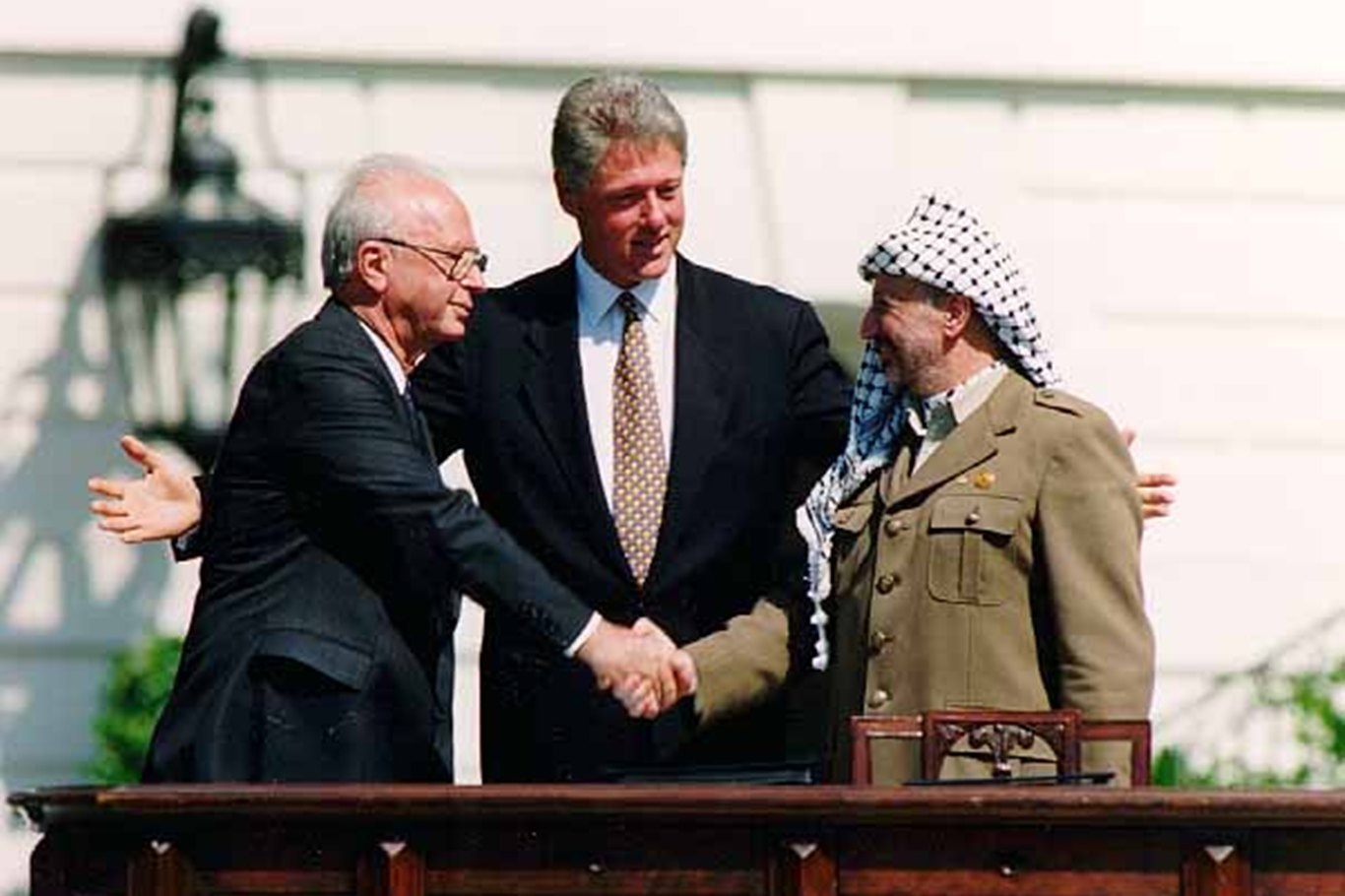
The Oslo Accords were signed in September 1993 between Israel and the Palestine Liberation Organization and established the Palestinian Authority and limited Palestinian self-rule in parts of the occupied West Bank and Gaza Strip. Key issues—including Jerusalem, borders, Israeli settlements and Palestinian refugees—were left for negotiations that were intended to lead to a permanent agreement.
For Palestinians, however, the decades since Oslo have been marked by continued occupation, settlement expansion and repeated cycles of violence, while the goal of an independent Palestinian state remains unrealized.
Baraka’s remarks come as Palestinians continue to demand an end to the occupation, the establishment of an independent state with Jerusalem as its capital, the protection of their national rights and the implementation of the right of return for Palestinian refugees. (ILKHA)
LEGAL WARNING: All rights of the published news, photos and videos are reserved by İlke Haber Ajansı Basın Yayın San. Trade A.Ş. Under no circumstances can all or part of the news, photos and videos be used without a written contract or subscription.

A major search-and-rescue operation was underway Sunday night after a migrant boat carrying 77 people capsized and sank about 38 nautical miles south of Gavdos, Greece's southernmost inhabited island, Greek authorities and local media reported.
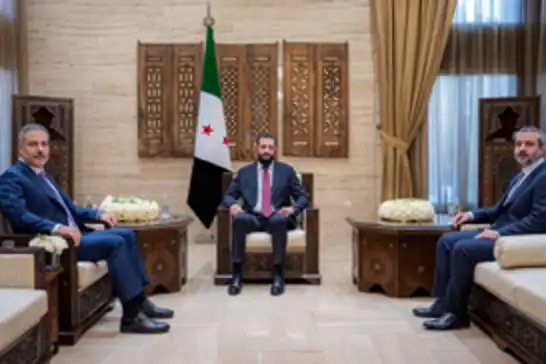
Turkish Foreign Minister Hakan Fidan was received by Syrian President Ahmad al-Sharaa in Damascus on Sunday as Ankara and Damascus seek to deepen bilateral cooperation and coordinate on regional security and political developments.

At least six people were killed and 129 remain missing after a passenger ship capsized in Indonesia's Java Sea, while search and rescue teams continue efforts to locate survivors.