25 years after his martyrdom, Selahaddin Ürük’s legacy continues to inspire generations
 13 oC
13 oC 
Güneşli

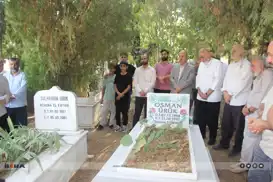
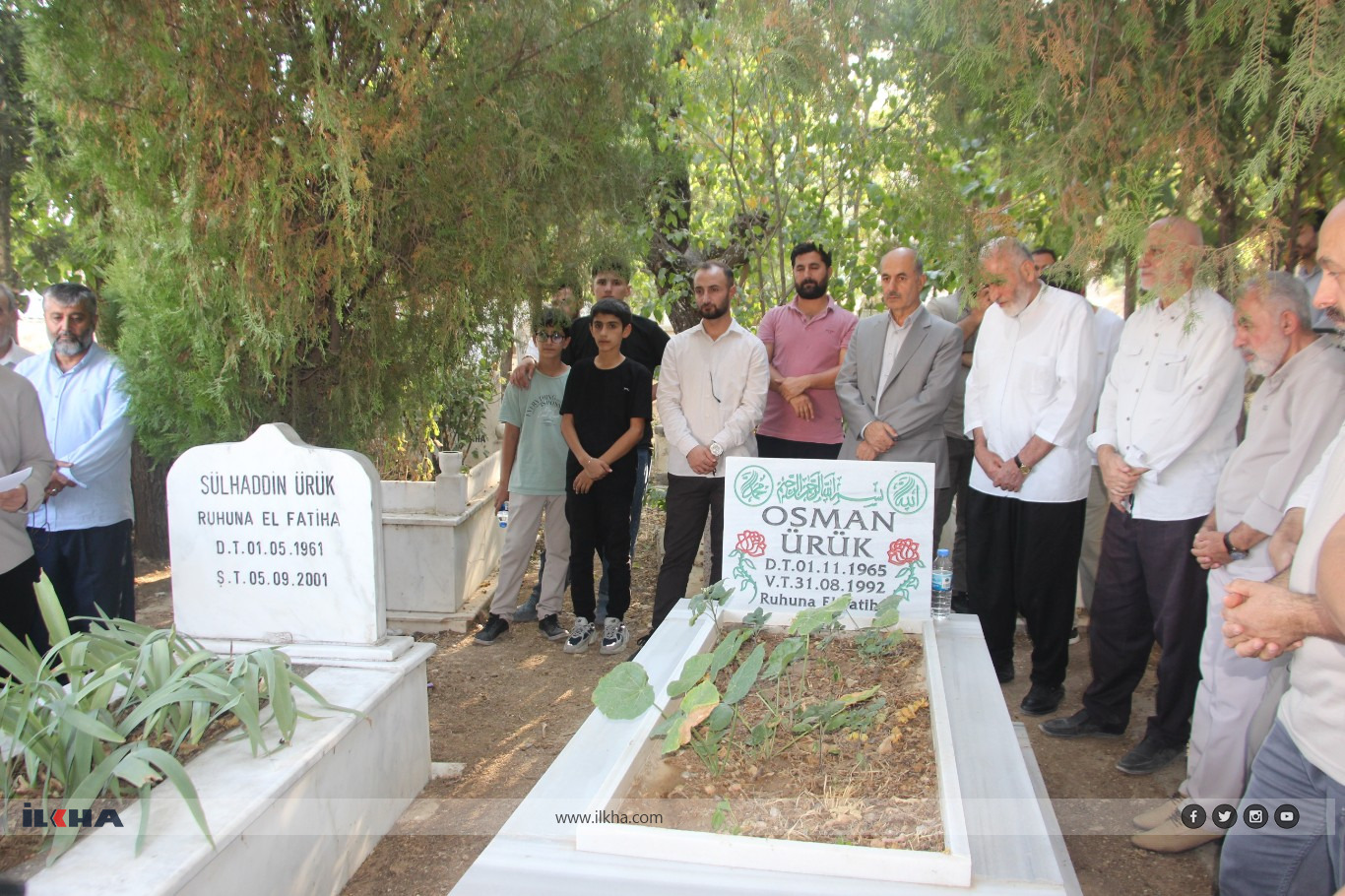
Twenty-five years after his death, Selahaddin Ürük was remembered with prayers, Qur’anic recitation and words of devotion at a commemorative gathering held at his grave in Mazıdağı, Mardin.
Ürük was killed on September 5, 2001, during a raid on the house where he was staying in Adana’s Pozantı district. A quarter of a century later, relatives, friends and fellow believers gathered at his grave to honor his memory and reflect on the faith and spiritual values they say he left behind.
The ceremony opened with the recitation of the Holy Qur’an, setting the tone for a gathering centered on remembrance, faith, sacrifice and steadfastness.
‘He walked the path of the prophets’
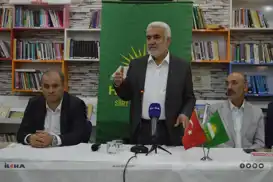
Molla Sıraç Şanlı, who addressed the gathering, spoke at length about Ürük’s life and the spiritual legacy attributed to him, emphasizing that remembering those who sacrificed their lives for their beliefs also carries a responsibility for those who remain.
“Our martyr became a martyr on the path of the prophets and messengers,” Şanlı said. “Our martyr is the martyr of the path of Allah’s 124,000 prophets. Our martyr is the martyr of Islam’s struggle against unbelief, of truth against falsehood, and of justice against oppression.”
Referring to the prophets Hud, Salih, Shuayb, Yahya, Yusuf and Yaqub, Şanlı placed Ürük’s memory within a broader tradition of faith and perseverance.
“We have once again taken up that legacy. We have once again joined that caravan,” he said.
His words reflected the central message of the gathering: that the memory of those who devoted themselves to their faith should not remain confined to the past, but should continue to inspire believers in the present.
‘A path without sacrifice is not the path to Paradise’
Şanlı also spoke about the hardships faced by believers in previous generations, stressing that faith requires perseverance in the face of trials and the ability to resist worldly and personal desires.
“A path without the ordeal of prison and without standing against the desires of the self is not the path to Paradise,” he said.
He urged believers to understand sacrifice not merely as suffering, but as a test of sincerity, patience and commitment to one's principles.
The deeper meaning of visiting the graves
The ceremony also became an occasion to reflect on the significance of visiting the graves of those remembered as martyrs.
Standing before Ürük’s grave, Şanlı questioned what such a visit should mean for those who come to remember him.
“O brothers! We went and stood at the grave of that noble one, the leader of the martyrs, Martyr Selahaddin. So why?” he asked.
He argued that visiting the graves of martyrs should be more than an act of remembrance. It should encourage believers to examine their own lives and renew their commitment to the values they associate with those who came before them.
“The meaning of visiting the graves of the martyrs is this: to dedicate oneself to their cause,” Şanlı said.
He added that remembrance loses its deeper meaning if people leave a graveyard without allowing the sacrifice of those they honor to influence their own lives.
‘Let the Qur’an return to our lives’
Another major theme of the gathering was the central place of the Qur’an in the life of Muslims.
Calling for a renewed connection with the Qur’an, Şanlı said believers should strive to bring its teachings more deeply into both their personal and social lives.
“Let the Qur’an and the life of the Qur’an return once again to our lives; let us live with the Qur’an as in the Age of Bliss, as in the time of the Prophet,” he said.
He described the legacy of those who devoted themselves to their faith as a trust that must be protected and passed on to future generations.
Şanlı also called for the raising of a generation inspired by the life and example of the Prophet Muhammad, emphasizing that honoring the memory of the martyrs requires preserving the faith and moral principles they are remembered for.
‘The martyrs left us a spiritual inheritance’
Bahattin Temel, one of Ürük’s fellow comrades in the cause, also addressed the gathering.
Temel emphasized that those who lost their lives in the past left behind something more valuable than material possessions: a spiritual inheritance built on faith, patience and sacrifice.
He said those who seek to follow their path should strive to embody the same qualities, remaining patient and steadfast when confronted with hardship.
The difficulties and trials faced by earlier generations, Temel noted, may continue to appear in different forms. For this reason, he urged believers to remain firm in their faith and committed to their principles.
A legacy carried from one generation to another
The commemoration concluded with prayers and a visit to Ürük’s grave.
For those gathered in Mazıdağı, the 25th anniversary of his death was more than a remembrance of a life that ended 25 years ago. It was presented as an opportunity to reflect on the enduring values of faith, patience, sacrifice, justice and devotion to Allah.
As prayers were offered beside his grave, participants reaffirmed the importance of preserving the spiritual legacy they believe was left by Ürük and others who came before them.
For the attendees, remembering the martyrs was ultimately not only about looking back — it was about carrying their faith, principles and example forward into the generations to come. (ILKHA)
LEGAL WARNING: All rights of the published news, photos and videos are reserved by İlke Haber Ajansı Basın Yayın San. Trade A.Ş. Under no circumstances can all or part of the news, photos and videos be used without a written contract or subscription.
At least 21 people, including women and children, have been killed in a fresh attack in Sudan’s South Kordofan state, according to the Sudan Doctors Network, as fighting in the strategically important region continues to intensify.
The United States has launched attacks on three oil tankers allegedly linked to Iran, further escalating tensions between Washington and Tehran as Iran warns that continued US aggression will trigger a stronger response.
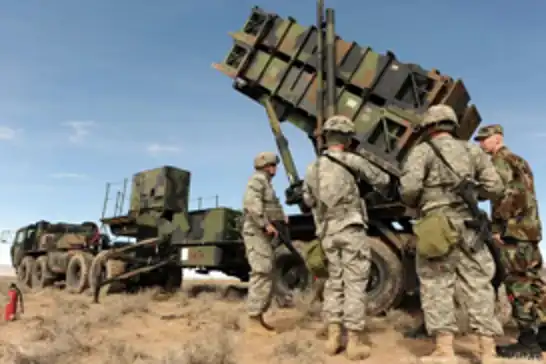
The Pentagon has administered polygraph tests to around 50 military officers and civilian officials as part of an investigation into leaks about declining U.S. munitions stocks amid the ongoing war with Iran, according to multiple U.S. media reports.