Herzog tasks Netanyahu rival Eisenkot with forming Israel's next government
 13 oC

Güneşli

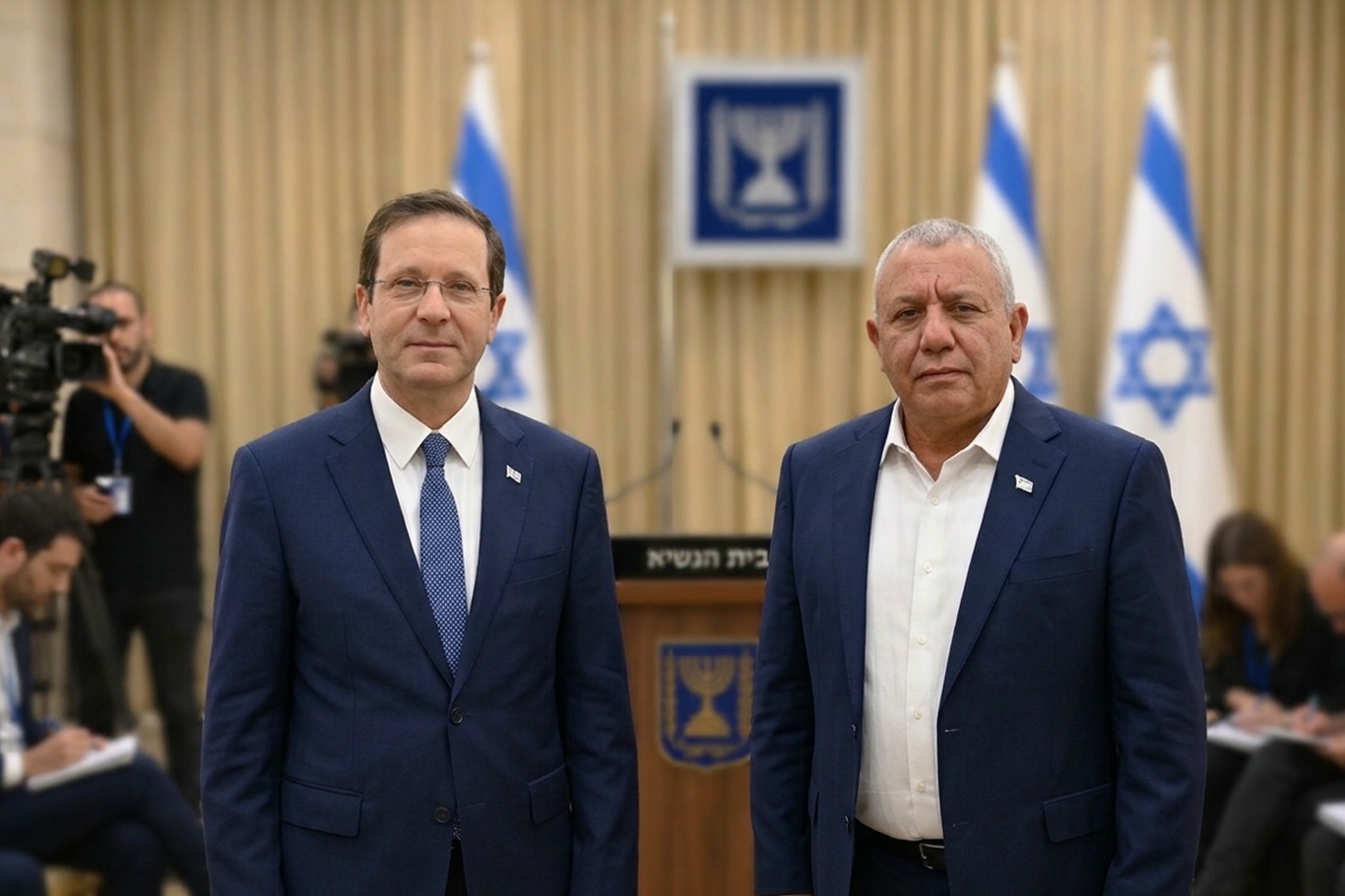
Israeli President Isaac Herzog has tasked opposition Yashar party leader Gadi Eisenkot with forming the country's next government, dealing a major political setback to Prime Minister Benjamin Netanyahu following the inconclusive October 27 parliamentary elections.
Herzog announced his decision on Saturday after consultations with representatives of political parties, during which lawmakers representing 67 of the 120-member Knesset recommended Eisenkot for the task, compared with 46 who backed Netanyahu.
Eisenkot will have 28 days to assemble a governing coalition, with the possibility of receiving an additional 14-day extension.
The president's decision came after neither political camp secured the 61 parliamentary seats required to form a majority government.
According to the final election results, Netanyahu's Likud party won 27 seats, while his right-wing and religious coalition secured 53 seats. The opposition bloc led by Eisenkot obtained 48 seats, while Arab-led parties won a combined 19 seats, marking an unprecedented parliamentary representation for them.
Despite receiving the largest number of recommendations from lawmakers, Eisenkot faces significant obstacles in assembling a stable coalition, particularly over the question of cooperation with Arab political parties.
Yashar accuses Netanyahu of hypocrisy over unity government proposal
Earlier on Saturday, Eisenkot's Yashar party accused Netanyahu of hypocrisy after the prime minister called for the formation of a national unity government.
In a video message, Netanyahu argued that a government led by Eisenkot and supported by Arab political parties would "destroy Israel from within." He instead called for a unity government involving Likud and its far-right nationalist and ultra-Orthodox allies.
Yashar rejected Netanyahu's proposal, accusing him of contributing to divisions within Israeli society and undermining previous attempts to establish national unity governments.
The party argued that Netanyahu could demonstrate his commitment to national unity by ending his alliance with far-right factions and joining a government led by Eisenkot.
Netanyahu's proposal comes amid mounting political pressure following his coalition's failure to retain a parliamentary majority.
Coalition negotiations face major obstacles
Under Israel's parliamentary system, the president assigns a lawmaker the task of forming a government after consulting elected political parties. The designated candidate must secure the support of at least 61 Knesset members to establish a majority coalition.
If Eisenkot fails to reach an agreement within the allotted period, Herzog may give another lawmaker an opportunity to form a government. Continued failure could eventually lead to another election.
The backing of the Arab-led parties has strengthened Eisenkot's position in the coalition negotiations, although their participation remains politically contentious.
Meanwhile, disagreements within the opposition camp and Netanyahu's continued influence over right-wing parties could further complicate efforts to establish a stable government.
Political deadlock raises prospect of fresh elections
Earlier on November 1, Berale Crombie, head of the Israeli Tkuma Movement and a political campaign strategist, warned that the political deadlock could lead to another election.
Speaking to Channel 14, Crombie described new elections as the most likely scenario, while outlining several possible political developments, including Netanyahu remaining in office with his existing coalition partners.
He also raised the possibility of parliamentary initiatives aimed at preventing Netanyahu from running in future elections through legislation targeting politicians facing criminal proceedings.
Crombie further warned that a government supported by Arab parties could face significant political resistance and pointed to the possibility of alternative alliances involving left-wing and ultra-Orthodox factions.
The latest developments have intensified uncertainty over Netanyahu's political future after years in power, with Eisenkot's ability to overcome ideological divisions and secure a parliamentary majority likely to determine whether Israel gets a new government or heads toward another election. (ILKHA)
LEGAL WARNING: All rights of the published news, photos and videos are reserved by İlke Haber Ajansı Basın Yayın San. Trade A.Ş. Under no circumstances can all or part of the news, photos and videos be used without a written contract or subscription.
French left-wing leader Jean-Luc Mélenchon has outlined his political platform for the 2027 presidential election, pledging a sweeping change in domestic and foreign policy and placing support for Palestine and opposition to Israel's military aggression at the centre of his international agenda.
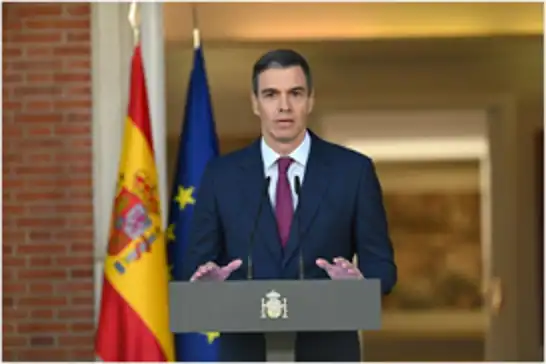
Spanish Prime Minister Pedro Sánchez has reiterated his opposition to military escalation against Iran and Israel's genocidal war on Gaza, declaring that Spain's November 29 general election will demonstrate that the country is governed by its own people rather than foreign powers.

A 5.7-magnitude earthquake struck central Japan early Sunday, injuring dozens of people, shattering windows and disrupting railway services, according to Japanese authorities and local media.