Iceland heads to referendum on resuming EU membership talks
 13 oC
13 oC 
Güneşli

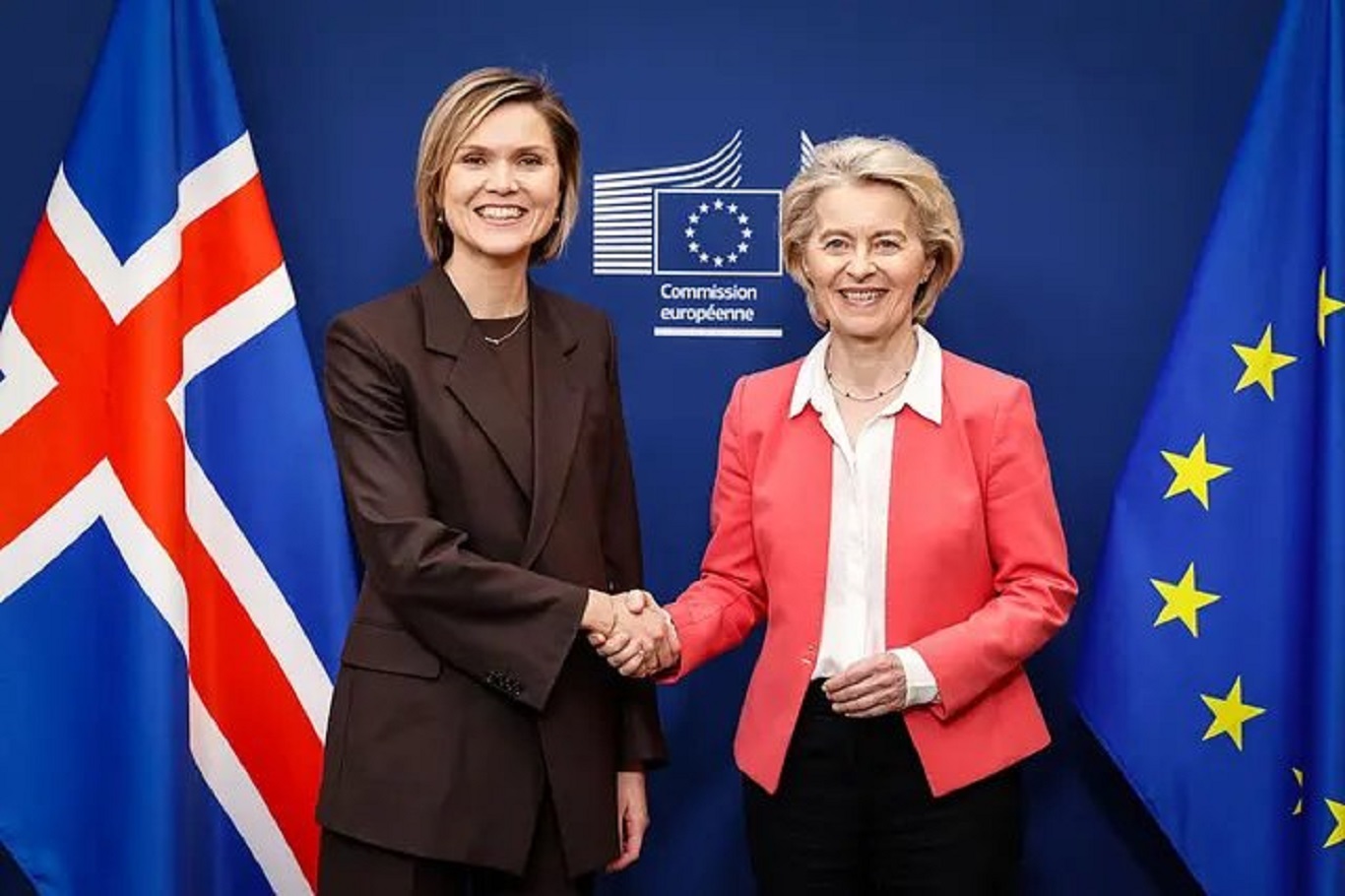
Icelanders will vote on Saturday on whether the country should resume negotiations to join the European Union, with the outcome likely to have implications not only for Reykjavík's future relationship with Brussels but also for the bloc's wider enlargement ambitions.
The Aug. 29 referendum will not determine whether Iceland becomes an EU member. Instead, voters will decide whether the government should reopen accession negotiations that were suspended more than a decade ago.
A “Yes” vote would give the government a mandate to restart talks with Brussels, while a “No” would effectively put the question of EU membership back on the shelf for the foreseeable future.
Prime Minister Kristrún Frostadóttir has described the referendum as an opportunity for Icelanders to decide whether they want to explore membership.
“It is quite clear that this vote is about getting a mandate to negotiate,” Frostadóttir told parliament in May, stressing that Icelandic voters would ultimately have the final say on any membership agreement.
From financial crisis to renewed EU debate
Iceland's relationship with the EU has undergone several major shifts over the past two decades.
The country applied for EU membership in 2009 following a severe financial crisis. Accession negotiations subsequently progressed, but were suspended in 2013 after a Eurosceptic coalition came to power.
As Iceland's economy recovered, enthusiasm for EU membership declined. The most difficult issue proved to be fisheries, a sector closely linked to the country's economy, sovereignty and national identity.
In 2015, the Icelandic government formally informed Brussels that it did not intend to resume accession negotiations and asked for Iceland no longer to be considered a candidate country.
The issue returned to the political agenda after a pro-European coalition took office in 2024 and committed to holding a referendum on whether to restart negotiations.
Geopolitical tensions give vote added significance
The referendum comes amid major changes in the security and geopolitical environment surrounding Iceland.
The Arctic and North Atlantic have become increasingly important strategic regions as competition over shipping routes, energy resources and critical minerals intensifies.
US President Donald Trump's repeated interest in acquiring Greenland has also heightened attention to the security of the North Atlantic, while Washington's broader foreign policy has prompted European countries to reassess their strategic relationships.
Iceland's Foreign Minister Þorgerður Katrín Gunnarsdóttir has argued that the international system established after World War II is undergoing significant change and that closer cooperation with the EU could help protect Icelandic interests.
Nevertheless, the referendum campaign has remained largely focused on economic issues rather than defence and security.
Fisheries dominate the debate
Fishing is expected to be the most difficult issue if Iceland resumes negotiations with Brussels.
Fish and marine products account for roughly 40% of Iceland's exports, making control over fishing resources a particularly sensitive issue.
EU membership would normally require Iceland to participate in the bloc's Common Fisheries Policy (CFP), which establishes rules governing fishing quotas, access to waters and management of marine resources.
Iceland's fishing industry has strongly opposed surrendering control over its territorial waters.
The country's main fishing industry federation, SFS, has warned that EU membership could deprive Iceland of the ability to act independently as a coastal state.
Icelandic authorities have also acknowledged that agriculture and fisheries are likely to be among the most difficult chapters in any future accession negotiations.
The “mackerel wars”
The dispute over fisheries has previously caused serious tensions between Iceland and the EU.
One of the most contentious issues was the management of North Atlantic mackerel stocks.
Iceland adopted its own unilateral position on mackerel quotas, while the EU argued that Iceland's quotas were excessive. Reykjavík, meanwhile, objected to agreements reached between the EU, Norway and the Faroe Islands.
The disagreement became known as the “mackerel wars” and remains a reminder of how difficult negotiations over fisheries could become.
Iceland is therefore expected to seek special arrangements or exemptions from certain elements of the EU's fisheries policy if accession talks resume.
Such concessions could create complications elsewhere, with fishing interests in other EU member states potentially demanding similar treatment.
A “Yes” vote would restart negotiations, not membership
A victory for the “Yes” camp would not automatically make Iceland an EU member.
Instead, it would trigger a new round of negotiations between Reykjavík and Brussels over the terms of possible accession.
Iceland has already completed 11 of the 33 negotiating chapters required for EU membership, meaning the process could potentially move faster than negotiations with many other candidate countries.
EU officials have indicated that Iceland could become one of the bloc's leading accession candidates if voters approve the talks.
EU foreign policy chief Kaja Kallas has described Iceland as a potential frontrunner in the enlargement process.
European Commissioner for Enlargement Marta Kos has also signaled that Brussels would take Iceland's specific circumstances into account during negotiations.
The European Commission has increasingly made enlargement a strategic priority, particularly since Russia's invasion of Ukraine and growing uncertainty over US foreign policy.
Polls point to a close contest
Opinion polls suggest the referendum could be decided by a narrow margin.
A July poll by Maskína found 53% support for restarting EU talks, compared with 47% opposed.
A more recent Gallup survey showed an even closer race, with 46% supporting a “Yes” vote and 46% backing “No,” while 8% remained undecided.
Turnout could therefore prove decisive.
With the race so close, the final days of campaigning are expected to focus heavily on the economic consequences of closer integration with the EU, particularly for Iceland's fishing and agricultural industries.
What a “No” vote would mean
A rejection would represent a significant setback for Iceland's pro-European government and could push the country's EU membership debate into political hibernation for years.
It would also be a setback for Brussels, which sees Iceland as a strategically important potential addition to its presence in the North Atlantic and Arctic regions.
A “No” result could raise questions about whether EU membership remains sufficiently attractive to prosperous northern European countries, particularly at a time when several EU members are seeking to control the bloc's budget amid difficult negotiations over future spending.
Unlike many other EU candidate countries, Iceland is already a wealthy European economy and is deeply integrated into the European single market through the European Economic Area (EEA).
The EEA gives Iceland access to the EU's single market without requiring full EU membership.
A decision with consequences beyond membership
The referendum therefore presents Icelanders with a choice between maintaining the existing relationship with the EU or opening negotiations that could eventually lead to full membership.
A “Yes” would give Reykjavík an opportunity to negotiate special arrangements on sensitive issues such as fisheries while potentially strengthening Iceland's position within Europe's evolving security and geopolitical architecture.
A “No,” meanwhile, would preserve the status quo but could close the door on serious EU membership discussions for many years.
Whatever the outcome, Saturday's vote will be closely watched in Brussels and across Europe as the EU seeks to determine the future direction of its enlargement strategy in an increasingly uncertain geopolitical environment. (ILKHA)
LEGAL WARNING: All rights of the published news, photos and videos are reserved by İlke Haber Ajansı Basın Yayın San. Trade A.Ş. Under no circumstances can all or part of the news, photos and videos be used without a written contract or subscription.
Yetimler Vakfı (Orphans Foundation) is continuing its hot meal assistance for Palestinian families struggling to meet their basic needs amid the humanitarian crisis in the Gaza Strip.
Twelve migrants, including an infant, were killed in two separate boat accidents in the Aegean Sea overnight, the Greek Coast Guard said.
At least nine people were killed and several others injured after a mortar shell exploded during military training at a security camp in western Libya, according to local media and emergency officials.
The Sufa 53 project being carried out by the Israel regime in the countryside of Syria's southern Quneitra province has intensified concerns over the gradual expansion and consolidation of the occupation inside the buffer zone established under the 1974 Disengagement Agreement.