Sufa 53 project expands Israel regime's occupation in Syria's Quneitra countryside
 13 oC

Güneşli

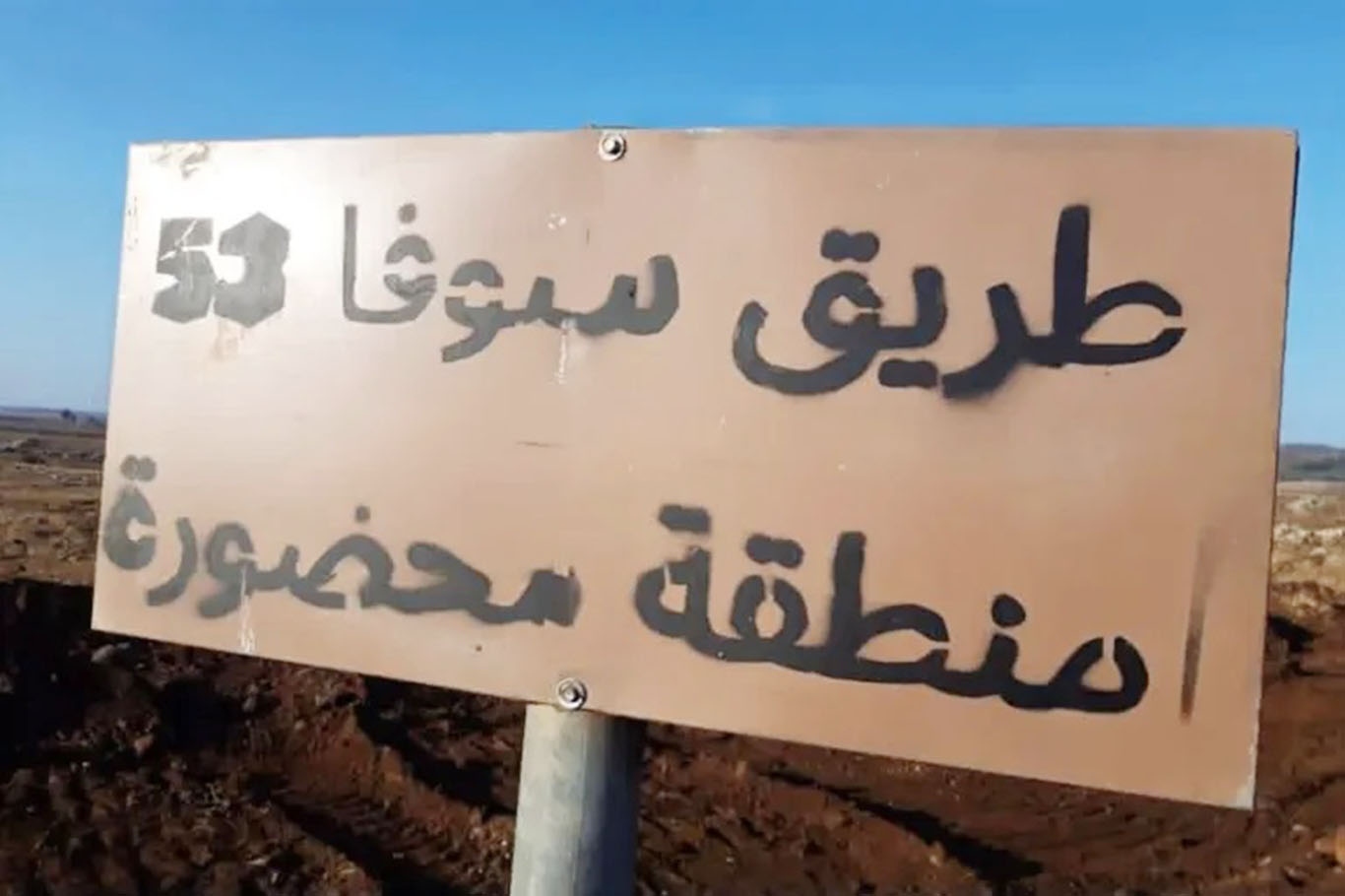
The Sufa 53 project being carried out by the Israel regime in the countryside of Syria's southern Quneitra province has intensified concerns over the gradual expansion and consolidation of the occupation inside the buffer zone established under the 1974 Disengagement Agreement.
The military engineering project, also referred to as the "Great Storm" project, consists of an approximately eight-metre-wide military road, earthen embankments, trenches and observation posts extending across parts of the buffer zone near the occupied Golan Heights. The construction has also caused extensive damage to agricultural land, grazing areas and natural vegetation.
The Israel regime began the project around the town of Hader in mid-2022 before expanding the works to the surroundings of Jubata al-Khashab, Al-Hamidiyah, Qahtaniyah, Ruwayhinah, Bir Ajam, Bariqa and Al-Asha in the Quneitra countryside.
Construction accelerated significantly in late 2024 and expanded further following the security vacuum that emerged after the fall of Bashar al-Assad's government.
While the Israel regime says the project is intended to strengthen security along the frontier, developments on the ground have raised growing concerns that it is creating a new military reality inside Syrian territory and gradually extending the occupation beyond the occupied Golan Heights.
The Syrian government has reaffirmed its commitment to the 1974 Disengagement Agreement and continues to demand the withdrawal of the occupation forces from areas brought under their control.
Excavation work resumes
On 4 October, occupation forces resumed excavation work near Al-Asha village in southern Quneitra as part of the Sufa 53 project. During the same period, local sources also reported the advance of occupation forces near Sayda al-Golan and Abidin villages in the western countryside of Daraa province.
Witnesses said bulldozers and military vehicles were deployed while earthen embankments were constructed along the route. The works are intended to establish a continuous military corridor parallel to the occupied Golan Heights, allowing faster troop movement and improved logistical support.
The project includes an approximately eight-metre-wide road, embankments reaching up to five metres in height, trenches and fortified observation points.
Israeli media have described the route as a defensive and offensive military line designed to counter potential threats from Iran and allied groups in the region. However, because the project is advancing inside the buffer zone established under the 1974 agreement, critics argue that it goes beyond security considerations and is creating new facts on the ground inside Syrian territory.
Agricultural land and livelihoods affected
The impact of the Sufa 53 project extends beyond military infrastructure. Large areas of farmland, grazing land and natural vegetation across the Quneitra countryside have reportedly been damaged.
According to field reports, occupation forces have advanced between 300 metres and one kilometre inside the buffer zone, bringing parts of agricultural land under their control.
In Jubata al-Khashab, approximately 7,000 dunams of land have reportedly been cut off or rendered unusable because of the project. Resident Hasan Saadeddin Ahmed said occupation forces seized his 16-dunam orchard, while nearly 2,000 dunams belonging to one of his relatives were also affected.
In Al-Hamidiyah and its surrounding areas of Hurriyah, Rusum, Abu Shabta and Fujair, local officials estimated that nearly 6,000 dunams of farmland have been damaged. Al-Hamidiyah Mayor Ahmed Suleiman said the construction has seriously affected livelihoods dependent on agriculture and livestock.
Residents also reported similar losses in grazing areas west of Bir Ajam, where access to privately owned agricultural land has been restricted following the construction works.
Concerns over violation of the 1974 agreement
One of the main criticisms of the Sufa 53 project is that it is being carried out inside the buffer zone established under the 1974 Disengagement Agreement between Syria and the Israeli occupation authorities.
The agreement created a demilitarized buffer zone monitored by the United Nations Disengagement Observer Force (UNDOF) to prevent military escalation following the 1973 Arab-Israeli war. Critics argue that the construction of military roads, embankments and observation posts alters the status of the buffer zone and undermines the framework established under the agreement.
Although Syria says it remains committed to the accord, the continued expansion of the Israel regime's military presence has deepened concerns over violations of Syrian sovereignty and the gradual consolidation of the occupation.
The destruction of orchards, grazing land and natural vegetation has also threatened the livelihoods of local communities, many of whom depend on farming and livestock for their income.
As a result, the Sufa 53 project is increasingly viewed not merely as a road construction programme but as a broader military infrastructure project aimed at expanding the Israel regime's control in southern Syria and establishing a more permanent presence inside the buffer zone.
The continuation of unilateral military construction and restrictions on access to agricultural land have reinforced concerns that the occupation is becoming entrenched, prompting renewed calls for respect for Syria's sovereignty and the restoration of the arrangements established under the 1974 Disengagement Agreement.(ILKHA)
LEGAL WARNING: All rights of the published news, photos and videos are reserved by İlke Haber Ajansı Basın Yayın San. Trade A.Ş. Under no circumstances can all or part of the news, photos and videos be used without a written contract or subscription.
At least nine people were killed and several others injured after a mortar shell exploded during military training at a security camp in western Libya, according to local media and emergency officials.

French President Emmanuel Macron has rejected Interior Minister Laurent Nuñez’s resignation following a weekend of widespread violence and looting, citing the need to maintain continuity in the command of security forces, the Elysee Palace said on Monday.

Four Canadian Armed Forces members were killed and dozens injured in a fire at a training area at Canadian Forces Base Wainwright in Alberta, Prime Minister Mark Carney said.