Iran rejects US pressure, sets seven conditions for reopening Strait of Hormuz: Rezaei
 13 oC

Güneşli

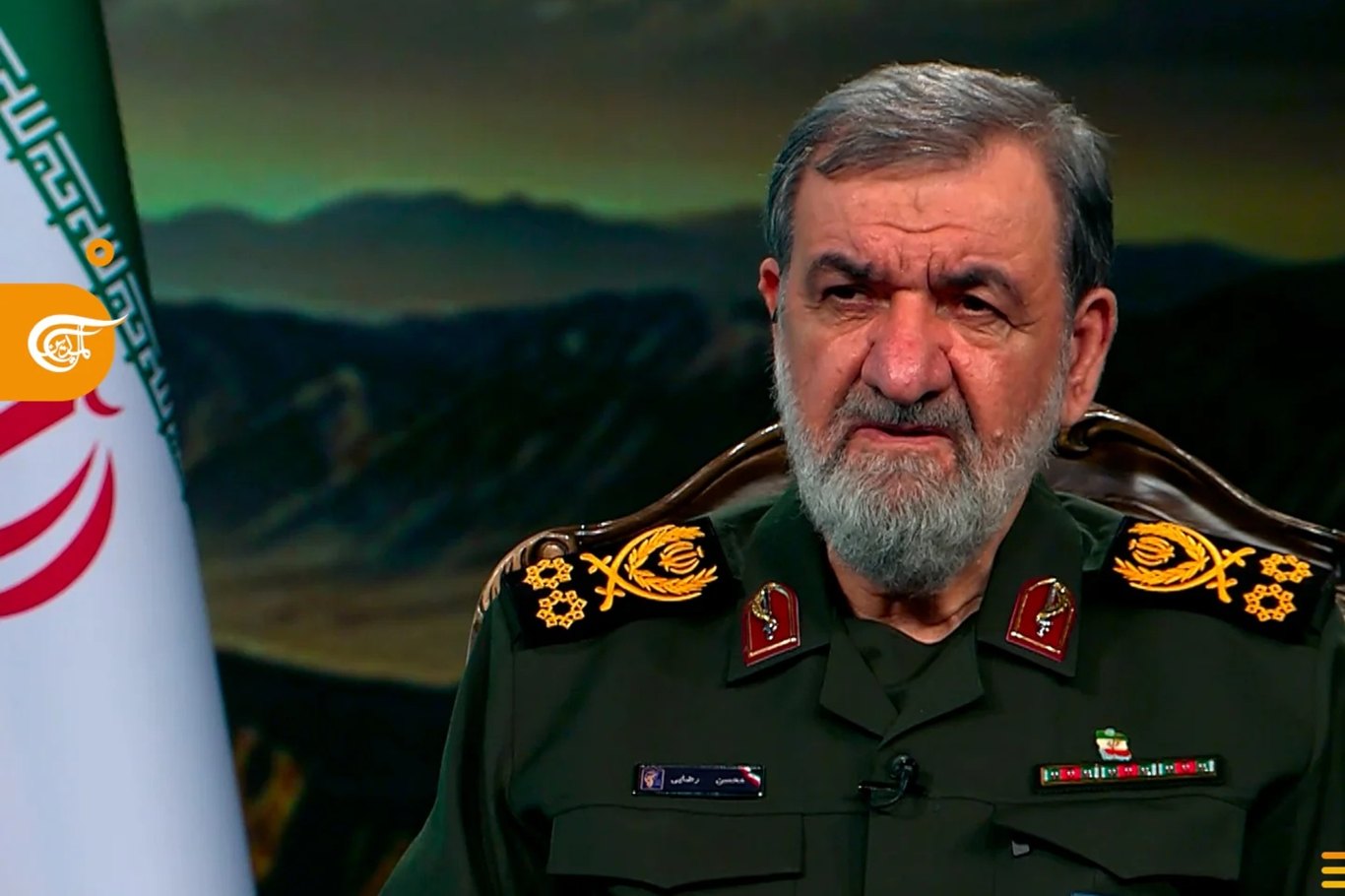
Iran remains firm in defending its national sovereignty and will not reopen the Strait of Hormuz until Washington meets seven conditions reflecting the rights of the Iranian people, General Mohsen Rezaei, secretary of Iran’s Supreme National Security Council, has said.
In an interview with Al Mayadeen, Rezaei warned that any renewed US aggression would trigger a wider Iranian response, potentially targeting American military bases far beyond the region, including facilities in Europe. He also accused Washington of violating an agreement signed in Islamabad, saying the United States had once again demonstrated its lack of commitment to diplomatic commitments.
Iran rules out negotiations under US pressure
Rejecting reports of a possible agreement covering Iran’s nuclear programme, the Strait of Hormuz and the regional situation, Rezaei said no negotiations were currently taking place between Tehran and Washington.
“I affirm that we are not conducting any talks with the Americans at the present time; there are no negotiations between the United States and us at present,” he said.
He described reports of meetings in Qatar or Iranian officials travelling there to meet US representatives as fabricated stories designed to reduce economic pressure on the United States and push oil prices lower.
Tehran, he stressed, has already communicated its conditions and is awaiting a clear response from Washington.
“We have informed the Americans of our conditions, and we are awaiting from them a frank and clear response,” he said, ruling out reports that he would meet US Vice President JD Vance.
Rezaei accuses Washington of violating Islamabad agreement
Rezaei recalled three rounds of diplomatic engagement with the United States, arguing that each had exposed Washington’s unwillingness to honour its commitments.
He said the first round was undermined before the United States entered the war, while the second, held in Geneva, was abandoned before a new act of aggression.
His strongest criticism concerned the third round in Islamabad, where he said both sides had reached and signed an agreement before Washington reneged on it.
“In Islamabad, despite our reaching an agreement and both sides signing it, the Americans reneged on their signature,” he said, describing the move as an unusual breach of diplomatic practice.
Despite what he described as repeated American violations, Rezaei said Iran remained serious about diplomacy, provided its national rights and security were respected.
Seven conditions determine reopening of Strait of Hormuz
Rezaei said the Strait of Hormuz would remain closed until the United States fulfilled seven conditions announced by Tehran.
“We have set seven conditions, and if the Americans implement these conditions, we will open the Strait of Hormuz,” he said, stressing that the demands represented the rights of the Iranian people.
He described Washington’s response as ambiguous and evasive, adding that Tehran had called on the US administration to provide a direct and unambiguous answer.
Pakistan and Qatar have been among the most active mediators, Rezaei said, while messages have also reached Tehran through Iraq, the United Arab Emirates and other regional channels. However, he maintained that none of these efforts had yet produced a response meeting Iran’s conditions.
Ending the war on all fronts
Rezaei identified an end to the war on all fronts, particularly in Lebanon, as the first priority in Iran’s diplomatic demands.
“West Asian states are like communicating vessels; if insecurity arises in any country, its consequences extend to the other countries,” he said, underlining the interconnected nature of regional security.
Iran will retain enriched nuclear materials
Rezaei said Iran's nuclear programme was not currently under negotiation and made clear that Tehran would retain its enriched nuclear materials.
He said the materials were needed for Iran's civilian nuclear ambitions, including the development of nuclear-powered ships and submarines and potentially small modular reactors.
“Not a single atom, even a tiny one, of the enriched materials will leave Iran; all of these materials will remain at our disposal,” he said.
Rezaei stressed that Iran remained a party to the Nuclear Non-Proliferation Treaty (NPT) and was entitled to exercise its rights under the agreement. He argued that Iran had fulfilled its obligations but was nevertheless subjected to military aggression and denied its legitimate rights.
He said Tehran's approach had consequently shifted towards strengthening deterrence and ensuring that any future attack would carry a heavy cost.
“We want to impose on the Americans a cost that makes aggression against Iran costly and turns into a deterrent factor,” he said.
“This war has proven that reliance on the United States brings nothing but insecurity,” he added.
Iran warns of wider retaliation against US bases
Rezaei argued that US President Donald Trump and Israeli Prime Minister Benjamin Netanyahu had lost the political capacity to sustain a prolonged war against Iran.
He said any new offensive would be difficult for Washington and Tel Aviv to maintain, adding that Iran's response would be broader than its previous military actions.
“If the Americans make a mistake and attack us, we will not content ourselves with targeting nearby bases, but will strike all nearby bases, and we will also target distant American bases,” he warned.
He said US military facilities in Europe could also become targets if aircraft operating from them were used in attacks against Iran.
“Any place from which American planes take off, we will regard as a threat to us,” he said, urging countries hosting US forces not to facilitate military operations against the Islamic Republic.
Rezaei added that Iran's defensive and offensive capabilities had grown considerably since the beginning of the war.
Rezaei describes war as strategic defeat for US and Israel
Rezaei said Iran had inflicted a major defeat on the forces that attacked it, arguing that the confrontation had exposed the limits of American and Israeli military power.
“I can say that we inflicted a severe defeat on the enemy that attacked Iran in this war, on the military, diplomatic, political and economic levels,” he said.
He argued that the conflict had challenged the assumption that advanced Western military technology alone could guarantee victory, saying Iranian forces had demonstrated the importance of determination, faith and effective battlefield management.
Rezaei claimed that Iranian forces had targeted F-35, AWACS, F-15, F-16 and F-18 aircraft, downed approximately 200 advanced drones and taken control of US drones. He also claimed that Iran had captured seven drones intact.
He criticised US War Secretary Pete Hegseth, arguing that American military leadership had failed to match the performance of Iranian commanders.
Rezaei says US military presence fuels regional insecurity
The Iranian official said the war had undermined the longstanding argument that the United States guarantees security in West Asia.
“Before the war, everyone believed that the United States provides security,” he said. “Now, who in the region can say that America is not a source of insecurity?”
He argued that Washington and Tel Aviv had sought a short, high-profile military operation that could deliver political gains, but that Iran's handling of the conflict had prevented them from achieving their objectives.
Rezaei also dismissed threats to strike Iran's nuclear facilities, including the site reportedly located beneath Pickaxe Mountain, describing such military action as a largely symbolic move that would not achieve its intended purpose.
Axis of Resistance remains central to regional security
Addressing the Axis of Resistance, Rezaei described the alliance as a key force preventing US and Israeli domination of the region.
He argued that without Iran and the resistance movements, Washington and Tel Aviv would have been able to advance their regional objectives, including the expansion of Israeli control.
“I see that the Axis of Resistance is a wronged hero in the Islamic world,” he said, adding that resistance forces had played a crucial role in confronting what he described as the project of a so-called “Greater Israel.”
Rezaei pointed to the situation in Gaza and Lebanon, citing the destruction and civilian suffering as evidence of the continuing consequences of Israeli military operations.
Rezaei says Israeli forces keep their distance from Hezbollah positions
Rezaei praised Hezbollah's role in confronting Israeli military operations in Lebanon, claiming that Israeli forces were keeping their distance from the group's positions.
He also referred to the resistance of Hamas in Gaza, arguing that the battlefield had exposed the limits of Israeli military power.
Questioning Israel's objectives in southern Lebanon, he accused Israeli forces of demolishing residents' homes and undermining civilian life in the area.
Rezaei further argued that resistance movements had helped protect several regional countries from Israeli expansion, describing their fighters as making sacrifices in defence of the wider Islamic world.
Iran proposes Gulf union based on regional cooperation
Despite his warnings against further US aggression, Rezaei called for stronger cooperation among the countries bordering the Persian Gulf.
He proposed establishing a regional union comprising Iran, Iraq, Oman, the United Arab Emirates, Saudi Arabia, Qatar, Bahrain and Kuwait.
Rezaei said Iranian military operations had targeted US military bases rather than the citizens of neighbouring Arab countries, stressing that Tehran remained open to cooperation with regional governments.
“Our hands are still extended, and we are open to cooperation with the brotherly and friendly Arab states,” he said.
He argued that regional countries should take responsibility for their own security rather than rely on external powers whose military presence, in Iran's view, has contributed to instability.
Rezaei highlights strategic cooperation with Russia and China
Rezaei described his recent visit to Moscow as significant, saying he had delivered a message from Iran's Leader Sayyed Mojtaba Khamenei to Russian President Vladimir Putin.
According to Rezaei, the message reaffirmed Iran's commitment to continuing the cooperation established under the late Sayyed Ali Khamenei.
He said discussions with Putin covered strategic transport and trade routes, particularly the North-South Corridor, as well as energy cooperation and the possibility of transporting Russian natural gas to Iran for domestic consumption and onward distribution to neighbouring countries.
Rezaei said Putin had praised the Iranian people's resilience and acknowledged Iran's importance to regional security.
“President Putin greatly praised the courage of the Iranian people, and said that the view of Iran has changed in the region, and that everyone now realizes that achieving security in the region is not possible without Iran’s participation,” he said.
He added that Iran's political system was firmly established and did not depend on any single individual.
“The Islamic Republic does not depend on individuals. It has turned into a firmly rooted tree,” Rezaei said.
He also said a visit to China by his deputy had received a positive response, highlighting Tehran's efforts to strengthen strategic ties with major international partners.
Rezaei praises Iran's leadership and national resilience
Rezaei said he had recently met Sayyed Mojtaba Khamenei and found him fully informed about the country's political, military and diplomatic situation.
He praised the Iranian leader's understanding of military affairs and his ability to maintain coordination with the armed forces, saying there had been no leadership vacuum during the transition.
He described the continuity of Iran's leadership as a source of strength for the Islamic Republic during the conflict.
Rezaei pledges continued service in IRGC uniform
Rezaei, who joined the Islamic Revolution Guard Corps (IRGC) in 1980 and served as its commander-in-chief from 1981 to 1997, explained why he had returned to wearing the Guards' uniform.
He said he had considered himself a soldier serving the Iranian people since the age of 17 and recalled his early involvement in opposition to the Shah's government.
Although he later moved into political and economic roles, Rezaei said he returned to military service when the war began.
He described wearing the IRGC uniform as a personal commitment to defending Iran and its people.
“I pledged to Abu Abdullah al-Hussein [Imam Hussein] that I would remain wearing this green uniform of the Revolution Guards, and offer myself to defend the Iranian people until the end,” he said.
Concluding the interview, Rezaei asked viewers to pray for him to be granted martyrdom while serving in the IRGC uniform.
“I ask you to pray for me, that God Almighty grant me martyrdom while I am wearing this uniform, God willing,” he said. (ILKHA)
LEGAL WARNING: All rights of the published news, photos and videos are reserved by İlke Haber Ajansı Basın Yayın San. Trade A.Ş. Under no circumstances can all or part of the news, photos and videos be used without a written contract or subscription.
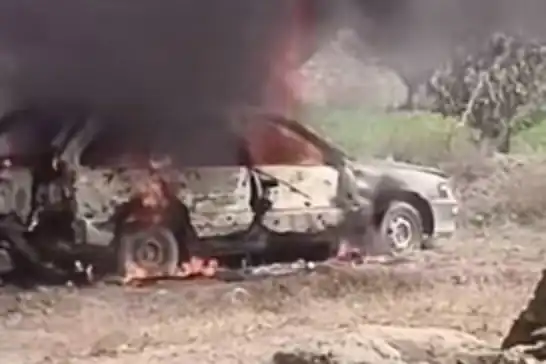
Ten police officers were killed after militants ambushed a police convoy in Pakistan's northwestern Khyber Pakhtunkhwa province, authorities said, in one of the deadliest attacks on security forces in the region in recent months.
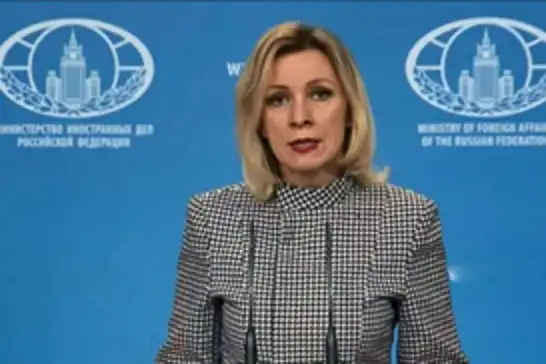
Russian Foreign Ministry spokesperson Maria Zakharova has called on the Israeli occupation regime to immediately remove restrictions on humanitarian aid entering Gaza and halt its attacks on Lebanon, warning that the humanitarian situation in the besieged Palestinian territory continues to deteriorate.
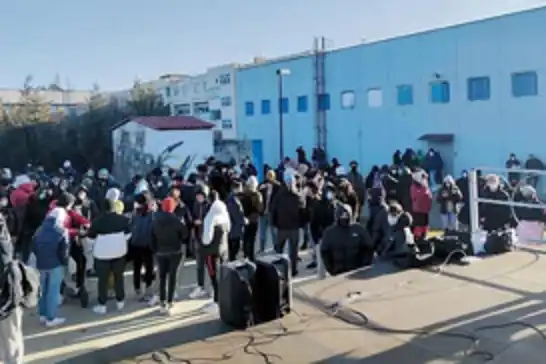
Hundreds of schools across Italy were evacuated on Wednesday after a wave of bomb threat emails prompted a nationwide security response, with police and bomb disposal teams searching educational institutions in several regions.