Iran says Hormuz reopening depends on US meeting Tehran’s conditions
 13 oC
13 oC 
Güneşli

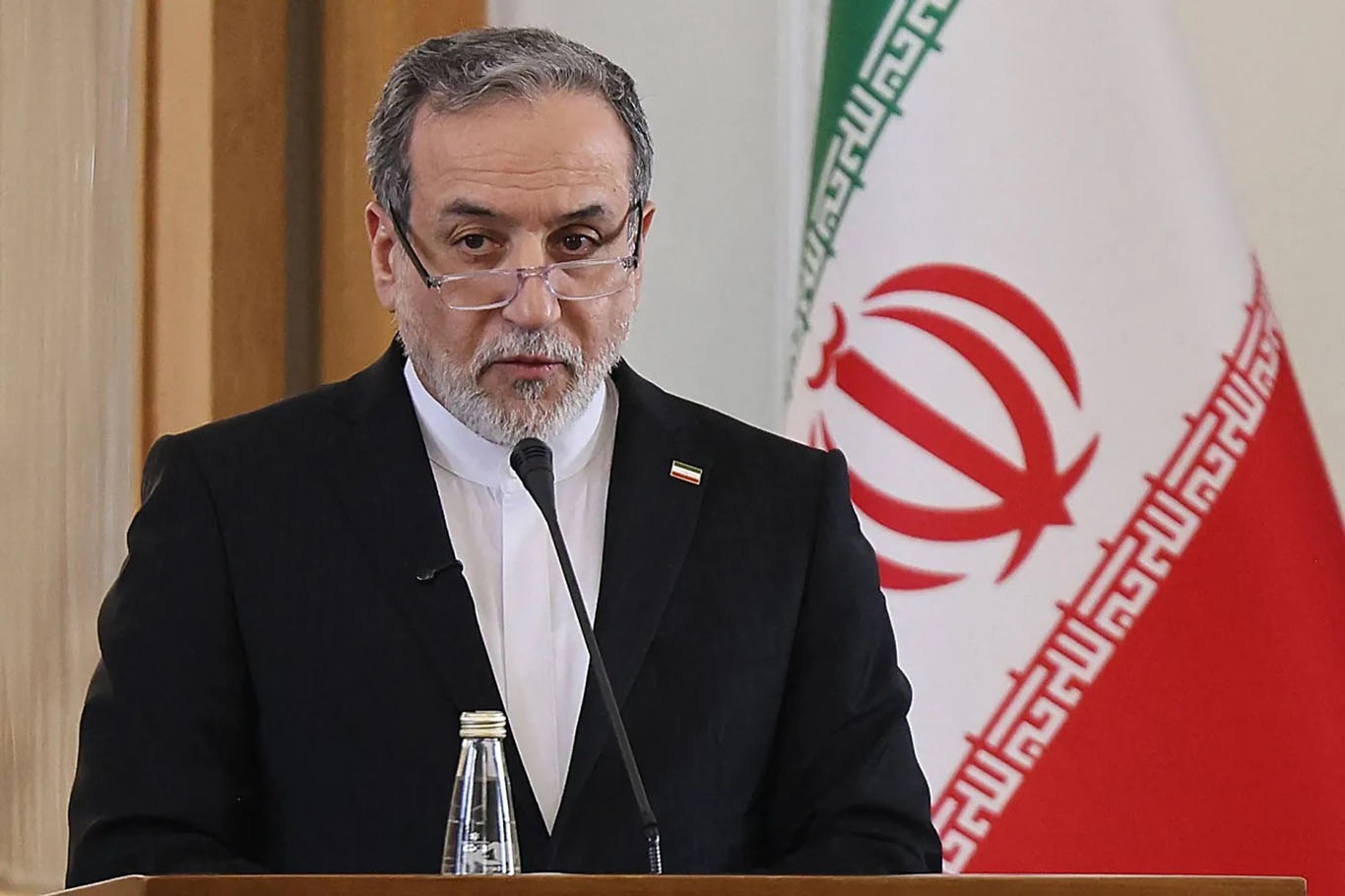
Iranian Foreign Minister Abbas Araghchi said Monday that the Strait of Hormuz would be reopened only after the United States meets Tehran's conditions, as diplomatic efforts intensified through Qatari and Pakistani mediators to end the months-long conflict.
Araghchi said Iranian officials held another meeting with Qatari mediators in New York to discuss proposals aimed at finding a way to implement Iran's conditions. The ideas will be presented to Washington, after which the U.S. response is expected to be conveyed to Tehran through Qatar.
Speaking to Iranian reporters, Araghchi said one of the main objectives of Iran's delegation in New York had been to communicate Tehran's position to Washington and inform the international community of the conditions it considers necessary for reopening the strategic waterway.
He said he was due to return to Tehran and expressed hope that Iran would receive a final U.S. response through the Qatari mediators by Tuesday.
Iran's latest proposal envisages reopening the Strait of Hormuz within seven days after Washington accepts its conditions and resuming negotiations over a broader settlement. The proposal has included demands for an end to the U.S. naval blockade, the lifting of sanctions affecting Iranian oil exports and the release of frozen Iranian assets.
Araghchi said Tehran had offered a diplomatic path if Washington genuinely sought an agreement, while emphasizing that Iran remained prepared to defend itself if the conflict resumed.
"Iran is as ready for diplomacy as it is for war," Araghchi said, according to Iranian media.
The latest meeting marked another round of indirect contacts between Tehran and Washington during the UN General Assembly in New York.
Araghchi said Qatari mediators had brought their own ideas for addressing Iran's conditions and that the proposals would now be taken to the U.S. side.
Contacts involving Qatar and Pakistan had remained open throughout the crisis but became more serious after Tehran presented its latest proposal, he said.
U.S. and Iranian officials have not held direct negotiations in the latest round. Instead, regional mediators have been carrying messages between the two sides.
The renewed diplomatic activity follows U.S. President Donald Trump's rejection of Iran's initial seven-day proposal. Trump has nevertheless indicated that further discussions could take place, while U.S. officials have continued to insist that any agreement must address Iran's nuclear program.
A U.S. official said discussions through mediators were continuing in a constructive manner but stressed that Washington would not agree to a deal without addressing the nuclear issue.
The nuclear question remains one of the main obstacles to an agreement.
Iran has insisted that its position on its nuclear rights is not subject to compromise, while Washington has sought restrictions and assurances concerning Tehran's nuclear activities.
The latest U.S. position reportedly includes potential economic relief, including sanctions relief and access to some frozen Iranian funds, in return for concrete measures concerning Iran's nuclear program.
The dispute has complicated efforts to reach an agreement over the Strait of Hormuz, one of the world's most important energy transit routes.
Iran has linked the reopening of the waterway to broader political and economic conditions, while the United States has sought guarantees concerning maritime access and Iran's nuclear activities.
The latest mediation efforts follow Trump's rejection of Tehran's initial seven-day proposal over the weekend.
Under the Iranian plan, Washington would take steps including lifting the naval blockade and easing sanctions, while Iran would reopen the Strait of Hormuz and resume negotiations over its nuclear program.
Araghchi said Iran had received Trump's public reaction but had not initially received a formal response through the mediators. He said Tehran would make its next decision after receiving Washington's official position.
Trump has meanwhile said he expects negotiations with Iran to continue, despite rejecting Tehran's first proposal.
The diplomatic dispute has major international economic implications because the Strait of Hormuz is a crucial route for global oil shipments.
The continuing conflict has disrupted maritime traffic and contributed to a sharp rise in energy prices. Recent market reports put Brent crude above $100 a barrel as uncertainty over the U.S.-Iran negotiations persisted.
The latest mediation efforts therefore face significant obstacles, particularly over Iran's nuclear program, sanctions, the U.S. naval blockade and the conditions governing the reopening of the Strait of Hormuz.
For now, Tehran says the waterway will remain subject to its conditions, while Washington continues to demand concessions on the nuclear issue.
With Qatar preparing to relay further proposals between the two sides, Iranian officials are awaiting Washington's response as diplomatic efforts continue in New York. (ILKHA)
LEGAL WARNING: All rights of the published news, photos and videos are reserved by İlke Haber Ajansı Basın Yayın San. Trade A.Ş. Under no circumstances can all or part of the news, photos and videos be used without a written contract or subscription.
Russia struck the headquarters of Ukraine's largest mobile operator, Kyivstar, in Kyiv on Sunday, as Moscow intensified attacks on data centers and communications infrastructure across the country, Ukrainian officials and the company said.

The Muslim Brotherhood on Tuesday condemned the storming of the courtyards of Al-Aqsa Mosque in occupied East Jerusalem by hundreds of Israeli settlers, accusing them of violating the sanctity of the holy site and provoking Muslims.
Afghanistan has inaugurated the first phase of the fourth section of the strategically important Herat-Khaf railway, marking another step toward strengthening the country's regional transport and trade links.