Iranian strikes expose growing vulnerability of U.S. military bases across Middle East
 13 oC
13 oC 
Güneşli

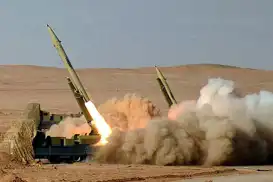
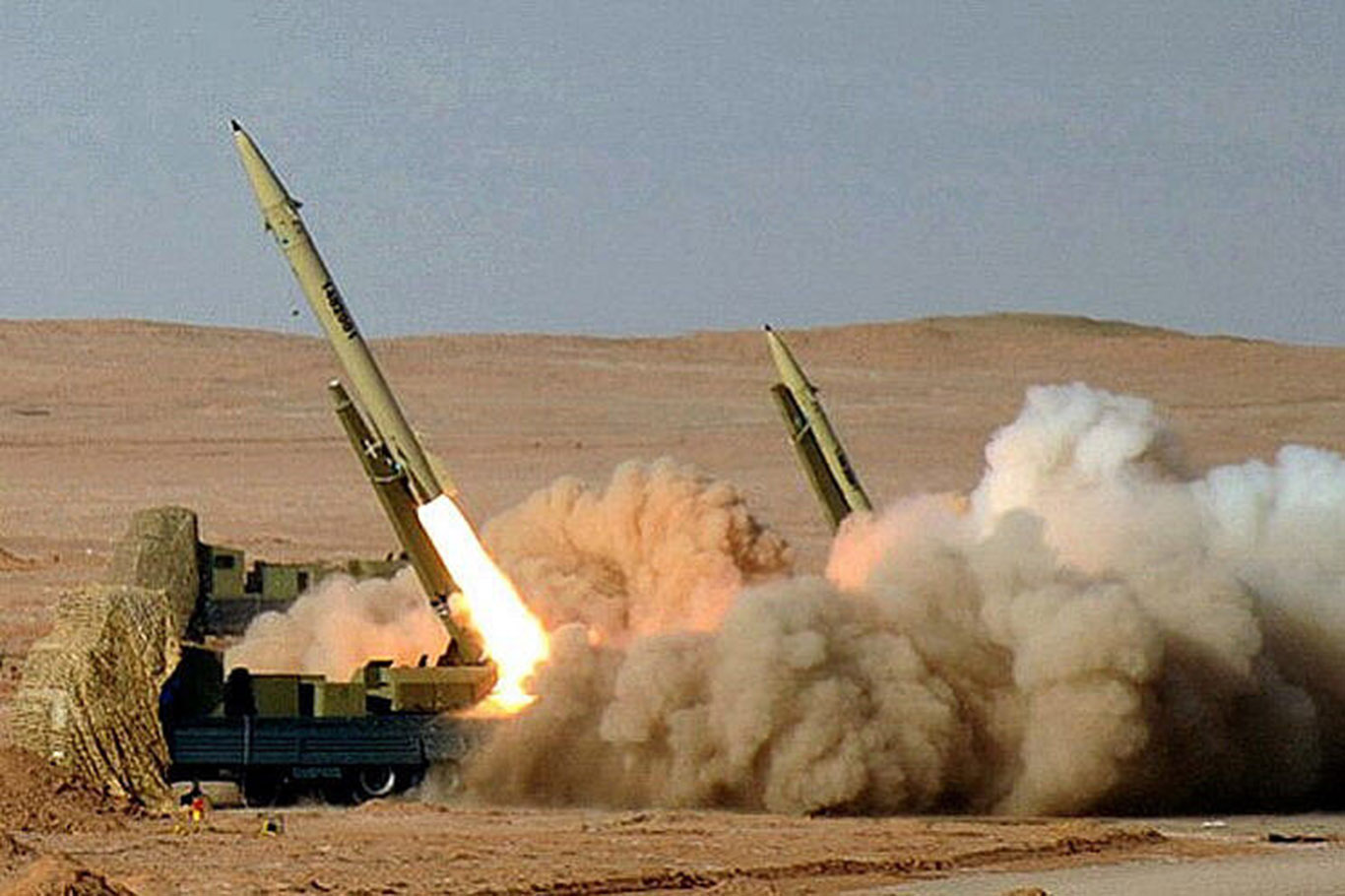
Repeated Iranian missile and drone strikes have exposed the growing vulnerability of the sprawling U.S. military presence across the Middle East, damaging hundreds of buildings and structures and raising questions in Washington over whether the region’s network of American bases remains worth the cost and risk.
The strikes damaged or destroyed facilities at U.S. bases in Bahrain, Kuwait, Qatar, the United Arab Emirates, Saudi Arabia, Iraq, Oman and Jordan, according to the U.S. Defense Department’s inspector general. U.S. Central Command told investigators that Iranian attacks had caused damage to hundreds of buildings and structures across the region during the conflict.
The disclosure is significant because U.S. bases in the Gulf have for decades been central to Washington’s ability to project military power in the Middle East. Their proximity to potential conflict zones allowed U.S. fighter aircraft to conduct more sorties, shortened supply lines and provided staging areas for troops and equipment.
But Iran’s ability to strike these installations with relatively inexpensive drones and increasingly accurate missiles has challenged that model.
A recent analysis by Defense Priorities said the proliferation of precision-guided weapons has effectively eroded the “sanctuary” that U.S. bases once enjoyed. The think tank argued that Iran’s growing ability to accurately target bases near the Persian Gulf has made the installations both more vulnerable and less indispensable to U.S. military operations.
Iran turns U.S. basing strategy into a costly equation
The Iranian strikes have also imposed costs well beyond physical damage.
The Pentagon inspector general estimated that Operation Epic Fury cost $33.4 billion between Feb. 28 and June 30, including $22.3 billion in expended munitions, $7.4 billion in obligations and $3.7 billion in equipment losses. The report said the heavy expenditure of weapons had produced strategic inventory shortfalls and bottlenecks in the U.S. defense-industrial base.
The report also recorded significant damage to U.S. aircraft. Four F-15E fighter jets and up to 30 MQ-9 Reaper drones were destroyed, while an F-35A, KC-135 tanker aircraft and helicopters were among the equipment damaged, according to reporting on the inspector general's findings. The attacks also reached one of the U.S. Navy’s most important regional facilities in Bahrain, home to the headquarters of the Navy’s 5th Fleet and a major logistics hub.
For Iran, the ability to threaten such facilities from its own territory demonstrates the strategic value of maintaining a large missile and drone arsenal rather than attempting to match the United States aircraft-for-aircraft or ship-for-ship.
Precision weapons changing the balance
Defense Priorities analyst Benjamin Friedman wrote that the development of accurate missiles and drones has transformed the strategic equation that once favored Washington.
For decades, the United States possessed highly accurate strike weapons while many of its adversaries lacked the ability to hit American bases with comparable precision. That technological gap allowed U.S. bases to function as relatively secure platforms from which Washington could conduct military operations.
Iran, however, has increasingly acquired the ability to threaten those bases.
The analysis said U.S. facilities in Kuwait, Bahrain, Qatar and the UAE are within range of Iran’s most accurate missiles, while other bases farther away remain potentially vulnerable as Iranian missile ranges and accuracy improve.
The result is an increasingly expensive defensive problem for the Pentagon. Hardening bases, dispersing aircraft, expanding missile defenses and protecting runways and aircraft shelters can reduce the danger, but Iran can potentially increase the number of missiles and drones at considerably lower cost than the United States can spend defending against them, the analysis said.
Washington faces difficult choices
The Pentagon has yet to determine which damaged facilities should be rebuilt and what the future U.S. military presence in the Middle East should look like.
A separate Washington Post report in August said the Pentagon was examining whether to reduce the American military footprint in the Persian Gulf after months of Iranian attacks damaged major U.S. facilities.
Defense Priorities has gone further, arguing that Washington could conduct many future operations from greater distances using long-range bombers, cruise missiles and aircraft carriers rather than maintaining large permanent air bases close to Iran.
Such an approach would not eliminate the need for forward support infrastructure. Long-range aircraft still require refueling tankers, maintenance and logistical support, while carrier operations are constrained by the number of available ships and their deployment cycles.
Nevertheless, the analysis argues that the changing missile environment makes the traditional model of large, exposed bases increasingly difficult to justify.
Iran’s asymmetric advantage
The emerging debate highlights an important feature of modern warfare: a country does not necessarily need to match a superpower’s conventional military strength to impose significant costs on it.
Iran’s missile and drone capabilities allow it to threaten expensive aircraft, logistics facilities, command centers and infrastructure without maintaining a conventional force comparable to that of the United States.
The U.S. military still retains overwhelming advantages in aircraft carriers, strategic bombers, intelligence systems, airpower and long-range strike capabilities. But the Iranian strikes have demonstrated that those advantages do not make American bases immune from retaliation.
Defense Priorities said the attacks illustrate a broader shift in which smaller powers can increasingly challenge U.S. military dominance by acquiring precision weapons capable of threatening forward-deployed forces.
The Pentagon therefore faces a strategic dilemma: rebuilding the damaged bases could restore the infrastructure that Washington has relied upon for decades, but doing so could also place billions of dollars of military assets back within the reach of Iran’s missile and drone forces.
The debate suggests that Iran’s ability to impose costs on the U.S. military is no longer limited to the battlefield itself. It is also forcing Washington to reconsider where American forces can safely operate, how much a permanent regional military presence costs and whether the traditional U.S. basing model remains sustainable. (ILKHA)
LEGAL WARNING: All rights of the published news, photos and videos are reserved by İlke Haber Ajansı Basın Yayın San. Trade A.Ş. Under no circumstances can all or part of the news, photos and videos be used without a written contract or subscription.
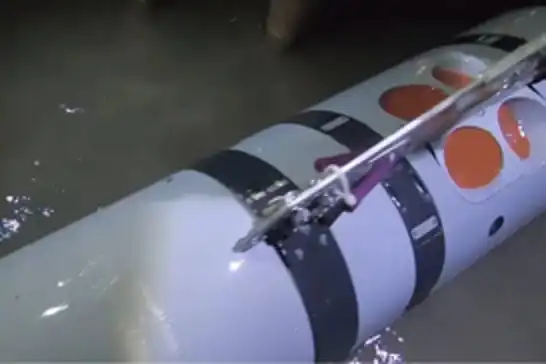
Iran’s Islamic Revolution Guards Corps (IRGC) Navy said Sunday it had seized a second U.S. military unmanned underwater vehicle in the Strait of Hormuz, accusing Washington of conducting intelligence and surveillance activities in the strategic waterway.

At least 12 people were killed and dozens remained missing after a boat capsized on Lake Kivu in eastern Democratic Republic of the Congo, local media reported Sunday.

At least 14 people are missing after an avalanche struck the base camp of the 7,126-metre (23,379-foot) Himlung Himal in Nepal's Manang district, with severe weather hampering efforts to reach the mountain, local officials and expedition organisers said.