Iran strikes US bases in Jordan and Bahrain in powerful retaliatory operation
 13 oC
13 oC 
Güneşli

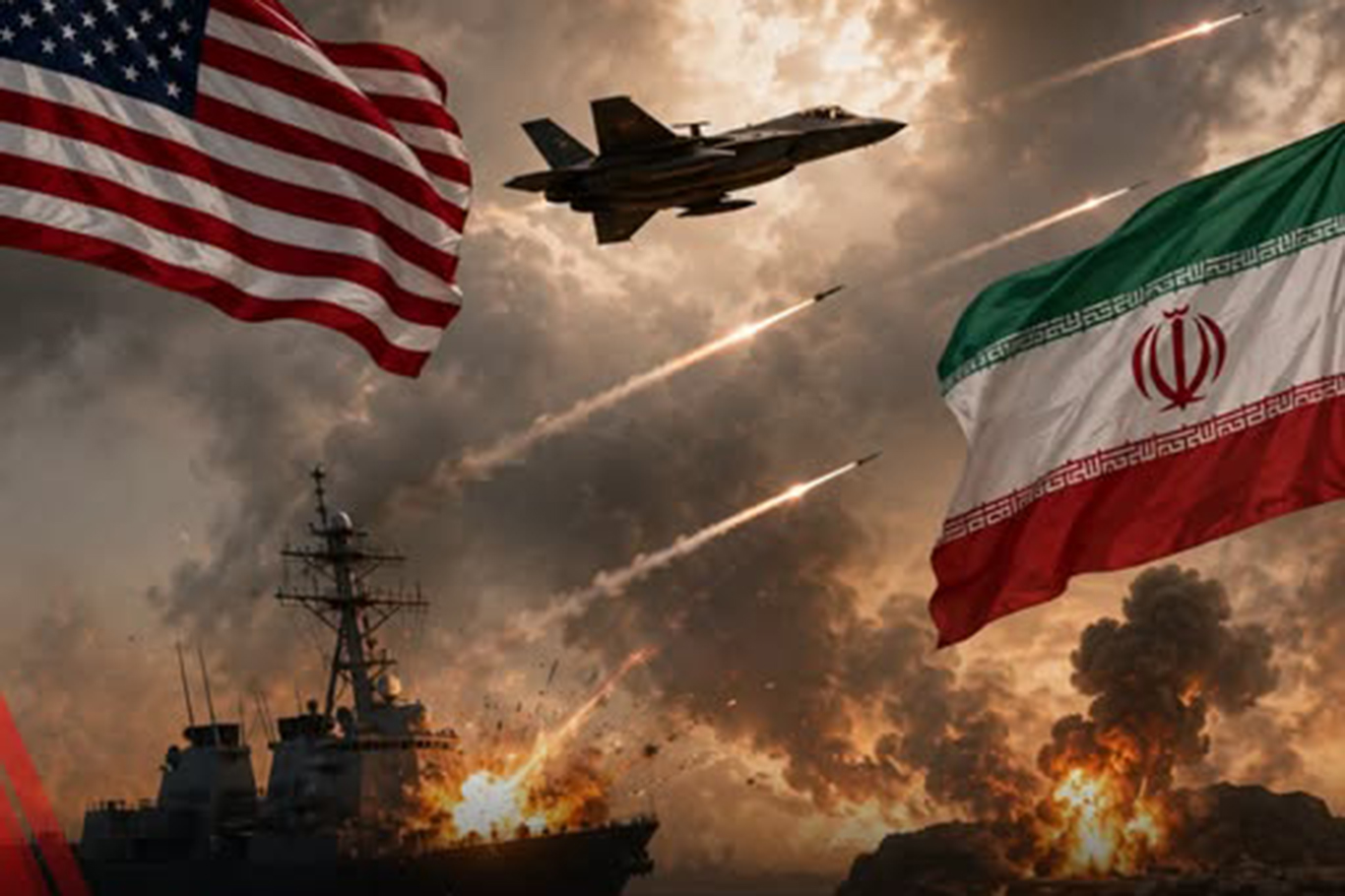
Iranian forces have launched a series of powerful missile operations against US military positions in Jordan and Bahrain, striking key American facilities as Tehran intensifies its response to Washington's expanding war of aggression against Iran.
The Islamic Revolution Guard Corps (IRGC) announced that it had fired ballistic missiles at Camp Titin, a US Marine Corps facility in Jordan, while the Iranian Army separately targeted US military infrastructure at Sheikh Isa Air Base in Bahrain.
The operations represent a major escalation in Iran's military response and send a clear message to Washington and its regional allies: US military bases across the Middle East are within Iran's reach and will not remain immune from retaliation.
IRGC missiles strike US Marine Corps base in Jordan
The IRGC said its ballistic missiles struck Camp Titin, a US Marine Corps facility in Jordan, inflicting heavy losses on American forces and destroying important military infrastructure and attack helicopters.
Although the IRGC did not disclose a precise casualty figure, it said a large number of US personnel were killed and that significant damage was inflicted on the base.
The operation represents another demonstration of Iran's expanding missile capabilities and intelligence reach. By striking a US military facility outside Iran's immediate borders, Tehran has shown that Washington cannot freely use its network of regional bases to wage war against the Islamic Republic without facing consequences.
Iranian news agency Tasnim described Camp Titin as a strategically important American facility located near the northern end of the Red Sea and close to the ports of Aqaba and Eilat.
The base's proximity to the Saudi border and its location near critical maritime infrastructure reportedly make it particularly valuable to the US Marine Corps for training, logistical operations and rapid deployment.
According to Tasnim, Washington had reportedly assumed that Iran did not possess complete intelligence concerning the facility and had therefore sought to deploy forces there.
The Iranian strike shattered that assumption.
Tasnim said the operation demonstrated that Iranian intelligence had obtained detailed information about US military movements and could identify sensitive American positions before launching a surprise attack.
The agency described the attack as a “special and strategic” operation in the ongoing US-Israeli war against Iran.
Sheikh Isa Air Base comes under Iranian attack
Iranian forces also struck American military positions in Bahrain.
The Iranian Army said it targeted radar installations and locations where US troops had gathered at Sheikh Isa Air Base during the 29th phase of Operation Saegheh.
The Army described the facility as one of the most important and sensitive US military bases in the Gulf.
The Iranian military did not immediately provide detailed casualty figures or a full assessment of the damage.
Nevertheless, the simultaneous targeting of American military infrastructure in Jordan and Bahrain highlights the geographical reach of Iran's retaliation.
For Tehran, the message is unmistakable: the United States cannot attack Iran while expecting its forces and bases throughout the region to remain untouched.
Iranian retaliation exposes vulnerabilities in US military network
The latest operations also expose a growing vulnerability in Washington's extensive military presence across the Middle East.
For decades, the United States has maintained a dense network of military bases and installations throughout the region, presenting them as instruments of deterrence and regional security.
Iran's recent missile and drone operations, however, have challenged that assumption.
American forces must now defend a sprawling network of military facilities while simultaneously confronting Iranian strikes and preserving expensive air-defense ammunition.
Iran's sustained missile and drone campaign has reportedly forced US forces to expend significant numbers of costly interceptors, placing additional pressure on American weapons stocks and defensive capabilities.
The result is an increasingly difficult strategic calculation for Washington: every additional attack against Iran risks triggering another wave of Iranian retaliation against American military assets across the region.
IRGC accuses US of killing civilians in Sirik
At the same time, Iran has accused the United States of carrying out attacks against civilian areas.
The IRGC said a US strike on a residential house in Sirik, southern Iran, killed and wounded around 50 people, including a child, during a wedding ceremony.
According to the IRGC Public Relations Department, the house was hosting the wedding ceremony of a young couple when it was attacked.
The organization condemned the strike as another example of what it described as American disregard for civilian life and accused the US military of demonstrating deep hostility toward the Iranian people.
The IRGC said the incident brought back memories of previous deadly attacks on civilian locations, including Minab School and Lamerd Stadium.
The reported civilian casualties have further intensified anger inside Iran and strengthened Tehran's determination to respond militarily to American attacks.
Iran refuses to surrender to US pressure
The expanding confrontation demonstrates that Washington's campaign of military pressure has failed to force Iran into submission.
Instead, each new American strike has been met with increasingly direct Iranian retaliation.
Iran is now demonstrating that the battlefield is not confined to its own territory. US bases in Jordan, Bahrain and other parts of the region can become targets whenever Washington chooses to escalate its attacks.
Security and political sources cited by Al Mayadeen described Iran's overnight response as “powerful, precise and destructive,” emphasizing the intensity of the attacks against American military centers.
The operations also underline the strategic importance of Iran's missile forces. Despite years of US sanctions and military pressure, Tehran has developed an arsenal capable of threatening American military infrastructure throughout the region.
Washington's regional military presence under growing pressure
The United States has repeatedly relied on its military bases and alliances across the Middle East to project power and maintain influence.
Iran's response is increasingly challenging that strategy.
Every American base in the region now carries a greater strategic risk, as Tehran has demonstrated its determination to retaliate against US military infrastructure rather than absorb attacks without response.
The situation is particularly sensitive around the Persian Gulf and the Strait of Hormuz, where any further escalation could have consequences far beyond the immediate battlefield.
Iran's strategy appears increasingly focused on imposing a cost on Washington for its military intervention while demonstrating that American power in the region is not unlimited.
The strikes against Camp Titin and Sheikh Isa therefore represent more than isolated military operations. They are a warning from Tehran that the era in which the United States could attack Iran without facing a serious regional response is coming to an end.
As Washington expands its military campaign, Iran is making clear that it will answer force with force and that American bases across the Middle East cannot be treated as untouchable sanctuaries.
For Tehran, the message remains direct: aggression against Iran will carry a price, and that price can be paid wherever American military forces are deployed. (ILKHA)
LEGAL WARNING: All rights of the published news, photos and videos are reserved by İlke Haber Ajansı Basın Yayın San. Trade A.Ş. Under no circumstances can all or part of the news, photos and videos be used without a written contract or subscription.
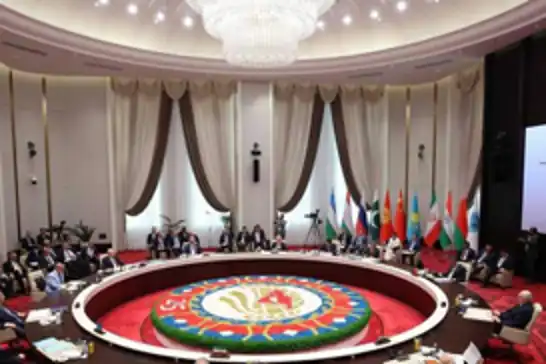
Heads of state of the Shanghai Cooperation Organisation (SCO) member states have adopted the Bishkek Declaration, reaffirming their commitment to strengthening the organisation and promoting a more inclusive and representative system of global governance.

Ukrainian President Volodymyr Zelensky has warned airlines, insurers and foreign governments that Russian airspace is becoming increasingly dangerous because of Ukraine’s expanding drone operations, as the war enters another phase of intensifying long-range strikes and Russia continues its aerial assault on Ukrainian cities.

Germany, France, Spain and eight other European Union members have called for reforms to the bloc’s foreign policy decision-making system, arguing that the current unanimity rule allows individual countries to block collective action.