Israeli blockade pushes Gaza’s aid network to the brink, Euro-Med warns
 13 oC
13 oC 
Güneşli

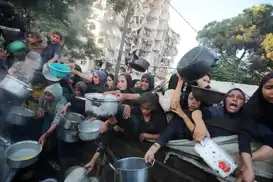
Israel’s ongoing siege and restrictions on the Gaza Strip have severely crippled the enclave’s transport and aid-distribution system, threatening to further deepen hunger and humanitarian suffering, according to the Euro-Mediterranean Human Rights Monitor (Euro-Med Monitor).
The rights group said Israel has systematically disrupted the movement of humanitarian and commercial goods by destroying trucks and warehouses, targeting and detaining drivers, restricting the entry of spare parts and essential maintenance materials, and obstructing the movement of vehicles through Gaza’s crossings.
According to the organization, these measures have created a bottleneck throughout Gaza’s entire humanitarian supply chain. Even when trucks carrying food, medicine and other essential goods are permitted to enter, their cargo is not guaranteed to reach Palestinians in need because much of the transportation, storage and distribution infrastructure has been destroyed or severely damaged.
Gaza’s truck fleet reduced to a fraction of its former capacity
Nahed Shuhibar, head of Gaza’s Private Transport Association, told Euro-Med Monitor that Gaza had approximately 1,200 trucks operating before the Israeli assault.
Those vehicles transported food, medicine, fuel, animal feed, construction materials and other essential supplies throughout the enclave.
Today, only around 400 trucks remain, according to Shuhibar. About 100 of those are reportedly out of service because restrictions on spare parts, tires, oils and batteries have made repairs virtually impossible.
That leaves only around 300 operational trucks — roughly one-quarter of Gaza’s pre-war fleet.
The shortage of maintenance supplies has driven operating costs to extraordinary levels. Shuhibar said the cost of changing the oil in a truck has risen from approximately 450 shekels before the war to around 100,000 shekels, while a kilogram of engine oil, when available, can cost nearly $1,100.
Workers have reportedly been forced to dismantle damaged vehicles and reuse their parts simply to keep other trucks operating.
More than 150 trucks reportedly damaged or destroyed
Field data cited by Euro-Med Monitor indicates that Israeli attacks have damaged or destroyed more than 150 trucks, particularly along roads leading to or near the Kerem Shalom crossing.
The attacks have reportedly killed more than 20 drivers, including four since the October 2025 ceasefire, while another 15 drivers have been arrested. Some of those detained have reportedly spent as long as two years in custody.
Euro-Med Monitor said several of the affected drivers had been operating within convoys that had previously undergone coordination and security procedures involving Israeli authorities through the United Nations, the World Food Programme and the UN Office for the Coordination of Humanitarian Affairs.
The organization argued that such coordination meant Israeli authorities were aware of the drivers’ identities, their humanitarian roles and their planned routes.
It stressed that international humanitarian law continues to protect civilians and humanitarian personnel regardless of such coordination and requires parties to a conflict to take precautions to prevent harm and facilitate the delivery of relief.
Destruction of warehouses further disrupts aid distribution
The humanitarian crisis has been compounded by extensive damage to Gaza’s logistics infrastructure.
Euro-Med Monitor said approximately 150 transport-company offices and warehouses have been destroyed, leaving Gaza without sufficient storage, refrigeration and distribution capacity.
The resulting delays can last between 24 and 72 hours, while inspections, damaged roads and vehicle breakdowns further slow deliveries. The organization warned that perishable food, medicines and other vital supplies can spoil before reaching Palestinians who desperately need them.
The group also reported that drivers have repeatedly been stopped at military checkpoints and at the Kerem Shalom crossing and subjected to beatings and degrading treatment despite having prior security approval to work in the area.
Trucks reportedly seized after entering Gaza
Euro-Med Monitor also raised concerns over the seizure of newly imported trucks.
According to the organization, approximately 100 trucks entered Gaza through private commercial arrangements but were later found to remain registered to Israeli owners or to be subject to outstanding ownership and security interests held by Israeli banks.
The report said Israeli authorities subsequently seized 23 trucks, prompting operators of other vehicles to stop using them for fear of losing their property.
UN warns Gaza remains at risk of extreme food insecurity
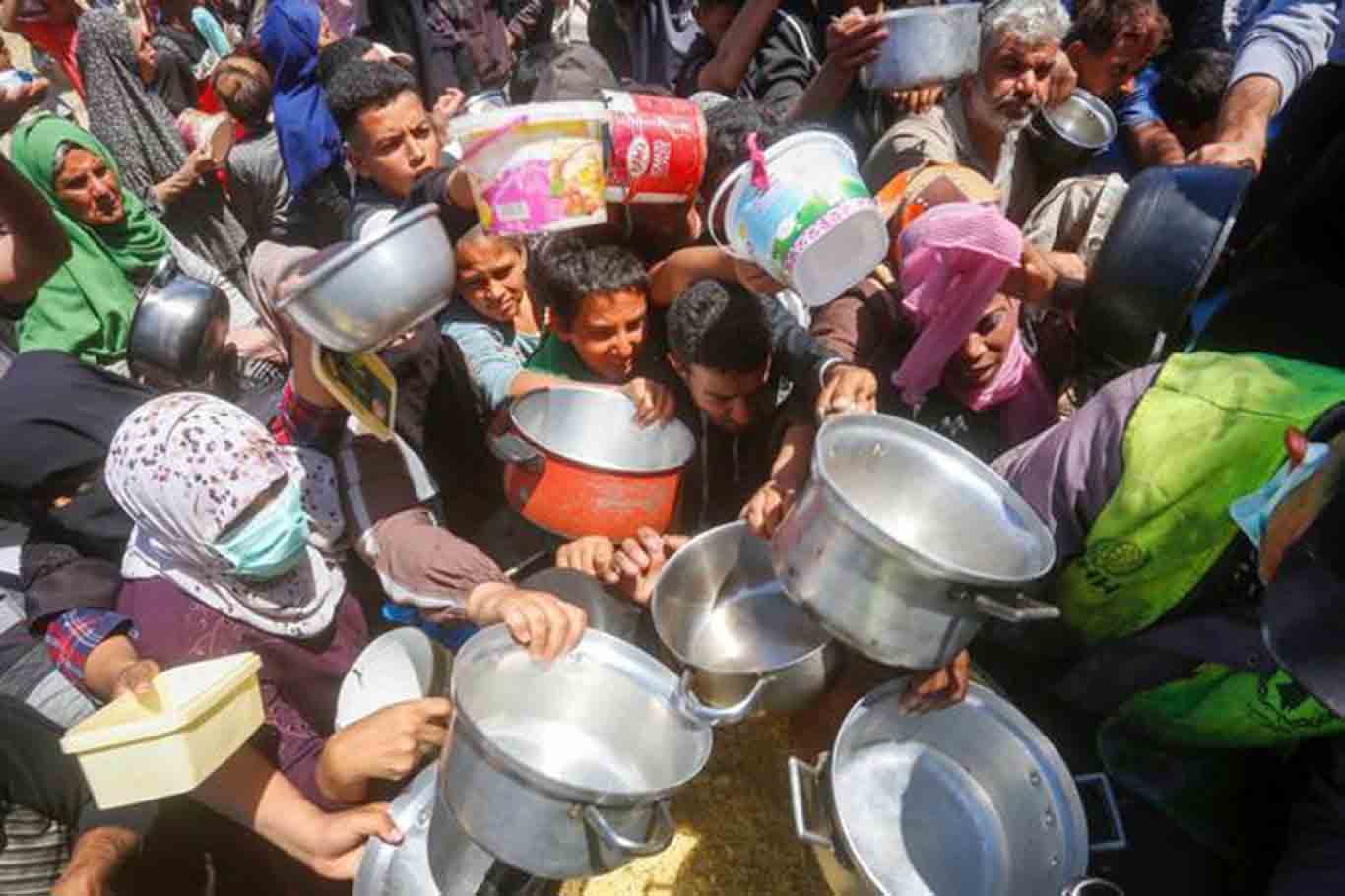
The transport crisis comes as humanitarian agencies warn that Gaza remains dangerously dependent on uninterrupted aid deliveries.
Justin Brady, head of the UN Office for the Coordination of Humanitarian Affairs in Palestine, warned that Gaza faces a food emergency that could deteriorate to IPC Phase 5, the highest level of food insecurity, if humanitarian assistance declines.
An assessment involving more than 60 experts from 20 organizations projected that more than 1.4 million people — around 67 percent of Gaza’s population — could face Crisis-level food insecurity or worse between July and December 2026.
The assessment also estimated that approximately 212,000 people, nearly 10 percent of the population, would remain in Emergency-level food insecurity, with many living close to the Israeli-imposed Yellow Line where access to humanitarian assistance and essential services is particularly restricted.
Some areas could not be fully assessed because humanitarian teams were unable to reach them.
The assessment further found that approximately 83 percent of households have no source of income. Without humanitarian food assistance, an estimated 1.9 million people — about 90 percent of Gaza’s population — could face high levels of acute food insecurity through December 2026.
Aid access remains a matter of survival
The destruction of farmland, livestock, fishing activities, food-production facilities and other sources of local food has left Palestinians heavily dependent on supplies entering from outside Gaza.
Euro-Med Monitor said Gaza’s transport network has therefore become a critical lifeline for a population facing widespread unemployment, disease, malnutrition and the collapse of local production.
The organization stressed that simply counting the number of trucks allowed to cross into Gaza does not provide an accurate picture of humanitarian access.
“What matters is not merely how many trucks cross a checkpoint, but how much food, medicine and other essential goods actually reach Palestinians throughout Gaza,” the report argues. Food stranded at crossings, spoiled during delays or prevented from reaching isolated communities cannot meaningfully alleviate hunger.
Euro-Med Monitor accuses Israel of violating international law
Euro-Med Monitor said Israel, as the occupying power, has obligations under international humanitarian law to ensure that Gaza’s population receives essential food and medical supplies when local resources are insufficient.
The organization cited Articles 55 and 59 of the Fourth Geneva Convention, as well as provisions of the Rome Statute concerning starvation of civilians and attacks on protected civilian and humanitarian personnel.
It further argued that Israel’s restrictions on transportation infrastructure and humanitarian deliveries violate the binding provisional measures issued by the International Court of Justice in 2024 concerning humanitarian assistance to Gaza.
The rights group went further, alleging that the systematic destruction of Gaza’s aid infrastructure and the continued obstruction of repairs amount to part of a broader pattern of conduct intended to deprive Palestinians of the means necessary for survival.
These are serious legal allegations made by Euro-Med Monitor and would ultimately require determination by competent international judicial bodies.
Calls for international action
Euro-Med Monitor called on the international community to move beyond expressions of concern and take concrete steps to end the siege and ensure unrestricted humanitarian access to Gaza.
The organization urged Israel to lift restrictions on the entry of trucks, spare parts, tires, engine oil, batteries, fuel, maintenance equipment, cranes and generators.
It also called for all land crossings to operate regularly for humanitarian and commercial traffic under transparent schedules, with arbitrary restrictions and prolonged inspections eliminated.
The group called for the release of drivers held without recognized criminal charges, the return or compensation of confiscated trucks, and investigations into the seizure of vehicles connected to Israeli financial institutions.
It further urged the UN and donor countries to finance an emergency program to rebuild Gaza’s logistics network, including the provision of trucks, mobile repair facilities, temporary storage units, refrigerated warehouses and reserves of spare parts.
Finally, Euro-Med Monitor called for an independent UN mechanism to monitor humanitarian trucks from the moment they enter Gaza until their cargo reaches civilians, as well as intensified investigations by the International Criminal Court into alleged international crimes committed in the Gaza Strip.
The organization warned that unless Gaza’s transport and distribution network is urgently restored and humanitarian access is guaranteed, even a nominal increase in the number of aid trucks entering the territory will fail to prevent further hunger.
For Palestinians facing widespread displacement, destroyed infrastructure and collapsing livelihoods, the ability of food, medicine and fuel to actually reach communities is not simply a logistical question — it is a matter of survival. (ILKHA)
LEGAL WARNING: All rights of the published news, photos and videos are reserved by İlke Haber Ajansı Basın Yayın San. Trade A.Ş. Under no circumstances can all or part of the news, photos and videos be used without a written contract or subscription.
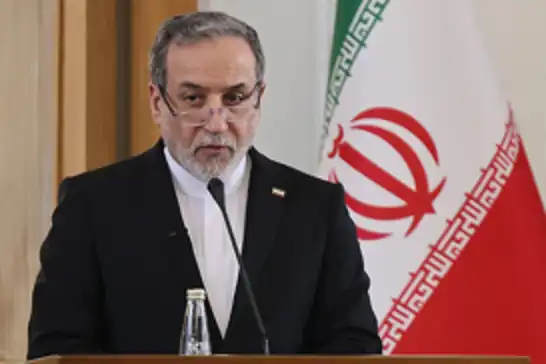
Iranian Foreign Minister Seyyed Abbas Araghchi said Monday that defending the rights and interests of the Iranian people would be the main objective of Tehran’s participation in the 81st session of the United Nations General Assembly in New York.
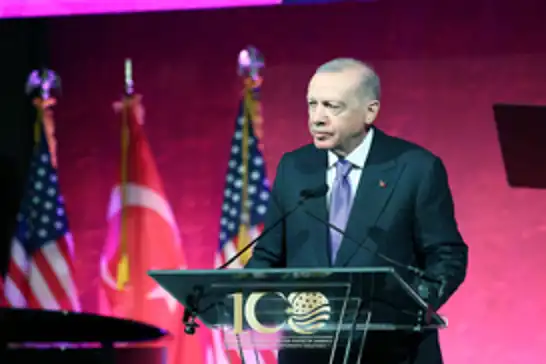
Turkish President Recep Tayyip Erdoğan said Türkiye and the United States need to maintain close dialogue and cooperation in the face of ongoing conflicts and geopolitical crises, while expressing confidence that bilateral trade could reach $40 billion this year.

The Ministry of Foreign Affairs of the Islamic Emirate of Afghanistan has summoned Pakistan’s chargé d’affaires in Kabul and handed him a formal protest following Pakistani airstrikes in the eastern provinces of Kunar and Paktika that Afghan authorities said killed three civilians and wounded four others.

An Immigration and Customs Enforcement (ICE) agent shot and wounded a 28-year-old Venezuelan man in Austin, Texas, on Sunday, prompting local officials to call for an independent investigation into the circumstances surrounding the incident.