NATO and EU vow stronger response to Russia after Leipzig drone incident
 13 oC
13 oC 
Güneşli

NATO and European Union leaders have warned that Russia is becoming increasingly reckless and pledged to strengthen the bloc’s response after Germany accused Moscow of being behind a series of drone incidents at Leipzig/Halle Airport.
European Commission President Ursula von der Leyen said the incidents represented a new escalation of what she described as Russian activity on European Union territory.
“Leipzig marks a new escalation on European Union soil directly attributed to Russia,” von der Leyen said, a day after the German government publicly blamed Moscow for a failed drone attack at the airport last month.
“We have to step up, and that means being ready to respond to Russia’s recklessness faster and better,” she added.
NATO Secretary General Mark Rutte said the alliance, including the United States, stood in “full solidarity with Germany” following the German authorities’ assessment.
The German government said on Tuesday that police investigations and intelligence assessments had established that Russia was responsible for the incidents at Leipzig/Halle Airport.
According to Germany’s interior minister, investigators found similarities between the drone used in the incident and equipment previously associated with Russian hybrid operations. The assessment was based on the drone’s configuration, components, explosives and detonator, the minister said.
The first incident occurred on Aug. 4, when a drone carrying explosives was detected near the airport and was believed to have deliberately targeted a Ukrainian cargo aircraft. German authorities said the device was eventually defused by a bomb-disposal robot.
A second drone was also reported to have collided with another cargo aircraft, while a third drone was reportedly discovered at the airport about 10 days later.
Leipzig/Halle is an important logistics hub and is also used by NATO-related operations. The airport regularly handles Ukrainian Antonov transport aircraft, adding to concerns in Berlin over the potential security implications of the incidents.
Russia has rejected Germany’s accusations and denied that it deliberately targeted the Ukrainian cargo aircraft.
The allegations come amid growing concern among European governments over what they describe as Russian hybrid activities, including suspected sabotage, cyberattacks, disinformation campaigns and interference with critical infrastructure.
German officials have warned that such incidents could pose a growing challenge to European security, while NATO and EU leaders have increasingly called for stronger measures to deter further activity.
The latest accusations are likely to intensify discussions among European allies over how to respond to suspected Russian operations while avoiding further escalation between Moscow and the NATO alliance. (ILKHA)
LEGAL WARNING: All rights of the published news, photos and videos are reserved by İlke Haber Ajansı Basın Yayın San. Trade A.Ş. Under no circumstances can all or part of the news, photos and videos be used without a written contract or subscription.

A passenger bus overturned on a road in Egypt’s South Sinai Peninsula on Wednesday, killing 16 people and injuring 28 others, Egypt’s Health Ministry said.
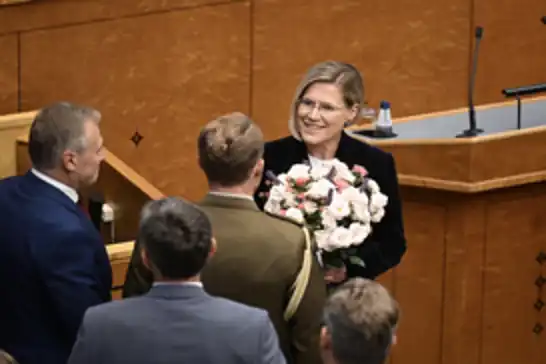
Estonia’s parliament elected Chancellor of Justice Ülle Madise as the country’s next president on Wednesday, securing the required majority in the first round of voting.

Israeli occupation authorities demolished a three-story residential building belonging to the Bedran family in the al-Bustan neighborhood of Silwan, south of Al-Aqsa Mosque in occupied East Jerusalem.