Nepal flood death toll tises to 472 as rescuers race to find missing
 13 oC
13 oC 
Güneşli

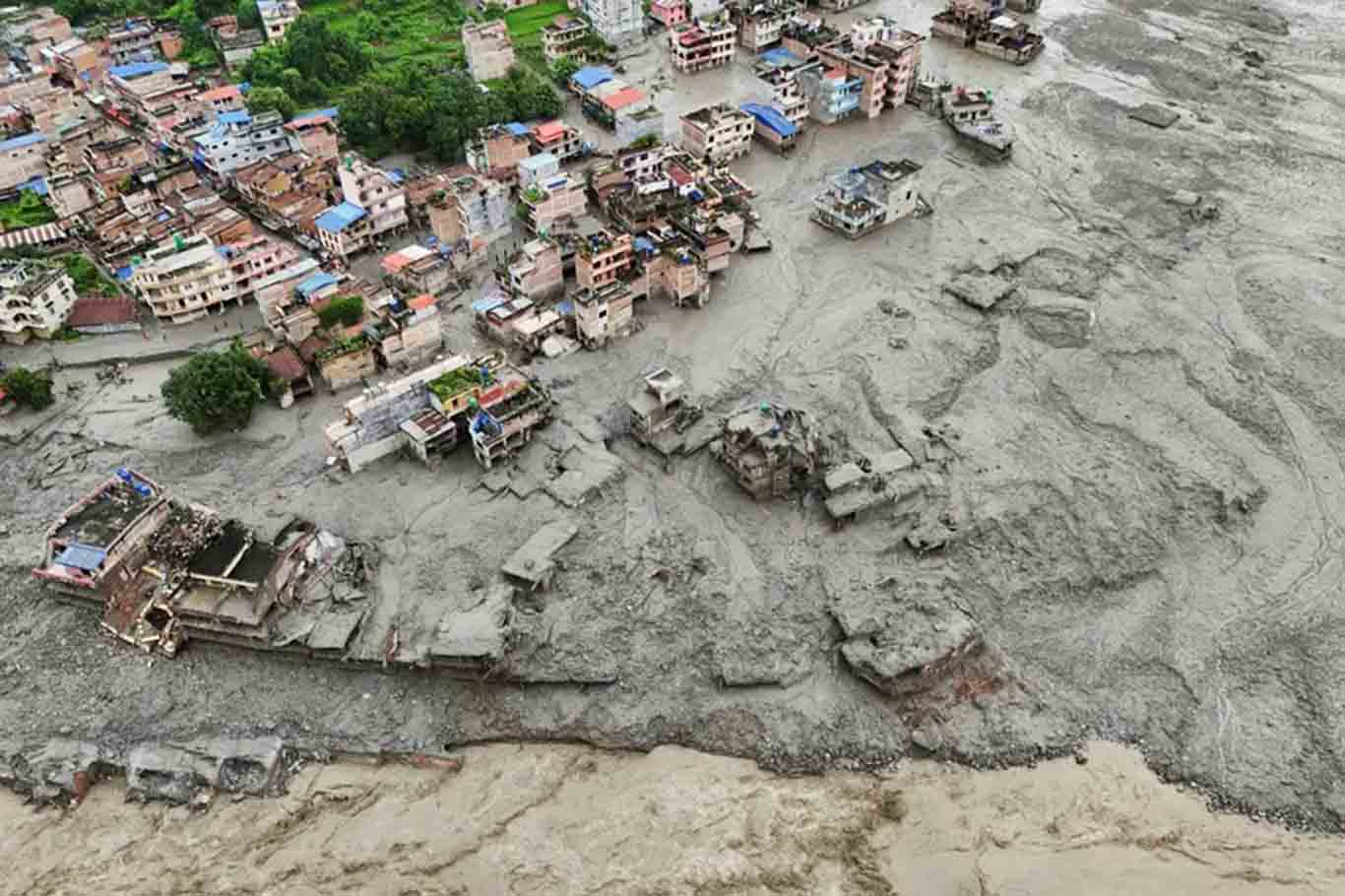
Rescue teams were racing Friday to locate hundreds of people still missing after a catastrophic flash flood and landslide devastated communities along the Nepal-China border, as the death toll in Nepal rose to 472 and authorities warned that a newly formed lake could trigger another wave of flooding.
Nepal Police said Friday morning that the country’s confirmed death toll had increased from 390 a day earlier to 469. China has reported three deaths in Tibet, bringing the confirmed toll on both sides of the border to at least 472. More than 1,400 people are believed to remain missing across Nepal and Tibet, according to the latest reports.
The disaster struck Wednesday after a massive ice and rock avalanche in the high Himalayas sent torrents of water, mud and debris down river valleys toward the border. The resulting floods swept away homes, bridges, roads and other infrastructure, while the strategically important Gyirong Port border crossing was engulfed by mud and floodwater.
New lake raises fears of another disaster
The immediate rescue effort has been complicated by the formation of a large barrier lake upstream.
Chinese authorities said the lake was already overflowing and contained approximately 2 million cubic meters of water, with another 3 million cubic meters potentially flowing into it over the following three days. Officials warned that a breach could send another powerful surge downstream toward already devastated communities.
China issued a Level-IV emergency alert over the potential danger, while authorities on both sides urged residents and rescue workers in vulnerable areas to stay away from riverbanks and move to safer ground.
Chinese state broadcaster CCTV reported Friday that the lake’s natural barrier was located more than 10 kilometers (6 miles) from Gyirong Port, at an elevation of about 2,950 meters (9,680 feet). The lake is roughly 1,000 meters (3,280 feet) higher than the border crossing, raising concerns that any breach could rapidly send water and debris toward lower-lying areas.
Chinese teams have been using drones, satellite equipment and laser-scanning technology to monitor the barrier and assess the consequences of a possible breach.
Nepal deploys army and rescue teams
The Nepal Army sent a team to inspect the Bhotekoshi River and assess the risk of further flooding. Rescue workers have been using helicopters, heavy machinery, search dogs and drones to search through mud and debris for survivors and recover bodies.
The operation has been severely hampered by destroyed roads, unstable terrain and high river levels. In some of the hardest-hit areas, entire sections of roads and bridges have disappeared, leaving rescuers dependent on helicopters and difficult overland routes.
Earlier assessments found that at least 19 bridges and around 40 kilometers (25 miles) of roads had been destroyed by the floods.
Glacier collapse believed to have triggered catastrophe
Preliminary geological assessments indicate that the disaster began when part of a glacier collapsed high in the Himalayas, triggering an enormous ice-and-rock avalanche.
The avalanche struck a river in Tibet and appears to have temporarily blocked the waterway before the natural barrier gave way, unleashing a destructive surge downstream toward Nepal.
Satellite analysis indicated that a substantial section of the glacier broke away at an elevation of around 5,200 meters (17,000 feet) before plunging roughly 1,200 meters (3,900 feet) into the valley below. The falling ice and rock accumulated huge quantities of sediment before entering the river system.
An initial report suggested that an earthquake may have triggered the collapse, but the U.S. Geological Survey later determined that the seismic signal was generated by the landslide itself rather than by an earthquake. The event registered as a magnitude-5.2 seismic signal.
Hundreds of foreigners among the missing
The disaster has also raised concerns for foreign nationals and pilgrims traveling through the region, particularly those heading toward Mount Kailash.
Earlier reports indicated that hundreds of foreign nationals were among those unaccounted for in Nepal and Tibet, including tourists and religious pilgrims from India, the United States, Australia, Britain and other countries. Chinese authorities have separately reported 558 people missing in Tibet’s Gyirong County.
The floods struck with little warning, leaving residents and travelers with extremely limited time to escape. Video footage from the Chinese side showed torrents of mud and debris sweeping through buildings and roads around Gyirong Port.
Rescue operation continues amid worsening conditions
As rescuers continue searching the devastated valleys, officials face a difficult race against time. The likelihood of finding survivors is declining as the hours pass, while the threat of another flood complicates efforts to enter some areas.
Weather conditions are adding to the danger. Forecasts have called for additional rain and thunderstorms in parts of the region, potentially increasing pressure on already unstable slopes and the newly formed barrier lake.
Officials have therefore urged residents downstream of the Bhotekoshi River to remain vigilant and avoid riverbanks, while rescue teams are being warned that a second surge could occur without much notice.
The disaster has become one of the deadliest recent floods in the Himalayan region and has highlighted the growing risks posed by glacier instability, landslides and rapidly changing mountain conditions in an area increasingly vulnerable to climate-related hazards. (ILKHA)
LEGAL WARNING: All rights of the published news, photos and videos are reserved by İlke Haber Ajansı Basın Yayın San. Trade A.Ş. Under no circumstances can all or part of the news, photos and videos be used without a written contract or subscription.

Iranian Foreign Minister Abbas Araghchi stressed the need to halt Israeli attacks on Lebanon and end Israel’s occupation of the country’s southern regions during a telephone call with Lebanese President Joseph Aoun on Wednesday.

More than 1,300 people have been injured and around 8,000 individuals detained during weeks of student protests across France, as demonstrations over education conditions continued despite government measures aimed at easing tensions.

Japan’s Agriculture, Forestry and Fisheries Minister Kazuo Yana has resigned from the Cabinet following a series of controversies over his past remarks and actions, becoming the first minister to step down under Prime Minister Sanae Takaichi’s administration.

The Organization of Islamic Cooperation (OIC) has strongly condemned Colombia’s decision to open an embassy in occupied Jerusalem, describing the move as a violation of international law and relevant United Nations Security Council resolutions.