Netanyahu rejects Turkish, Qatari role in post-war Gaza
 13 oC

Güneşli

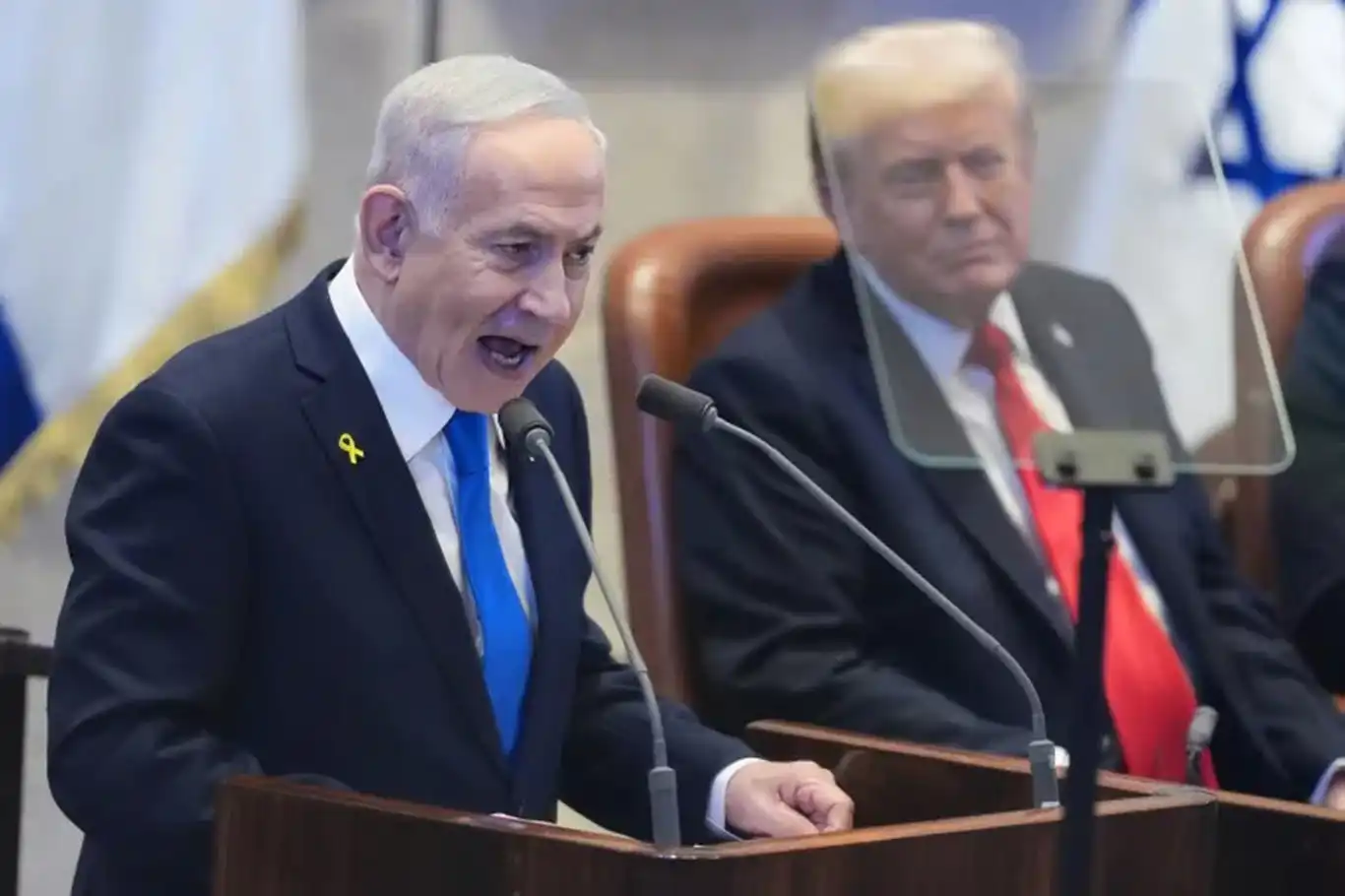
Israeli Prime Minister Benjamin Netanyahu said Monday that Israel will not allow Turkish or Qatari forces to play any role in Gaza after the war, as Washington advances a U.S.-backed plan to reshape the territory’s political and security landscape—an initiative widely criticized by Palestinians and regional actors as externally imposed and lacking local legitimacy.
Speaking before the Knesset, Netanyahu said Israel is approaching what he described as a second phase of a U.S. plan for Gaza promoted by President Donald Trump. He framed the next stage as focused on dismantling armed groups in the enclave following more than a year of Israeli military operations.
“In the Gaza Strip, we are on the eve of phase two of the Trump plan,” Netanyahu said. “Phase two means one simple thing: Hamas will be disarmed, and Gaza will be demilitarised.”
“There will be no Turkish or Qatari soldiers in the Gaza Strip,” he added.
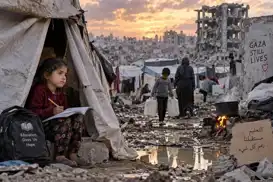
Netanyahu’s remarks come as the Trump administration accelerates implementation of a controversial 20-point proposal for Gaza’s future after the war, which has killed tens of thousands of Palestinians and left much of the territory devastated. U.S. officials describe the plan as centered on reconstruction and “demilitarization,” while critics say it avoids addressing Israel’s occupation, blockade, and responsibility for widespread destruction.
On January 17, Washington announced the formation of a new “Board of Peace,” presented as the main authority overseeing Gaza’s post-war transition. The body is chaired by President Trump and includes Secretary of State Marco Rubio, special envoy Steve Witkoff, and Trump’s senior adviser and son-in-law Jared Kushner. Other members include former British prime minister Tony Blair, World Bank President Ajay Banga, and U.S. businessman Marc Rowan.
The board includes no elected Palestinian representatives, prompting criticism that it prioritizes management of Gaza’s post-war political economy over Palestinian self-determination. Its charter does not limit its mandate to Gaza alone, raising concerns about broader political intervention under the banner of peacebuilding.
Another key component of the plan is an International Stabilisation Force (ISF), a U.S.-led multinational unit intended to conduct security operations and train a new police force to replace Hamas. On Friday, Trump appointed U.S. Major General Jasper Jeffers to command the force. The administration has not disclosed which countries would contribute troops, though Netanyahu has publicly ruled out any Turkish or Qatari involvement.
Israel has also objected to advisory bodies linked to the initiative. Netanyahu said Israel has disagreements with Washington over the composition of an advisory council accompanying the Gaza process. Those objections were formalized over the weekend, when his office announced opposition to the Gaza Executive Board, an advisory body that includes Turkish Foreign Minister Hakan Fidan and Qatari diplomat Ali Al-Thawadi.
“The Prime Minister has instructed the Foreign Affairs Minister to contact the U.S. Secretary of State on this matter,” the statement said. Israel did not specify its reasons, but it has repeatedly opposed any Turkish role in Gaza, as relations between Ankara and Tel Aviv have sharply deteriorated since the war began in October 2023.
Further questions about the plan’s legitimacy emerged on January 18, when Bloomberg reported that countries seeking a permanent seat on the Board of Peace would be required to contribute more than $1 billion in its first year. According to a draft charter cited in the report, Trump would serve as the board’s first chairman, select participating states, and retain final decision-making authority—fueling criticism that the initiative operates on a pay-to-play basis aligned with U.S. strategic and financial interests.
Meanwhile, Egypt, Qatar, and Türkiye announced the creation of a separate Palestinian technocratic committee to manage Gaza’s internal affairs during a transition period. Led by Palestinian technocrat Ali Shaath, the committee held its first meetings last week in Cairo, underscoring growing divisions between regionally backed Palestinian-led efforts and a U.S.-driven framework that many Palestinians view as imposed and disconnected from conditions on the ground. (ILKHA)
LEGAL WARNING: All rights of the published news, photos and videos are reserved by İlke Haber Ajansı Basın Yayın San. Trade A.Ş. Under no circumstances can all or part of the news, photos and videos be used without a written contract or subscription.
Iran has warned that any renewed US military aggression against the Islamic Republic could trigger retaliatory strikes against American military installations far beyond the Middle East, including bases located in Europe and other distant regions.

Hundreds of schools across Germany and Denmark received bomb threats by email on Monday, prompting police investigations and precautionary security measures as authorities sought to reassure the public that there was no evidence of an imminent danger.
At least 24 people have been confirmed dead after a devastating fire tore through a confectionery factory in Indonesia's Banten Province, while search and rescue teams continue efforts to locate around 30 workers still reported missing.

Thousands of Palestinian families in the Gaza Strip continue to endure devastating loss as the death toll from Israel's war of extermination has climbed to 74,746, with 176,234 others wounded since October 7, 2023, while many victims remain trapped beneath destroyed buildings and beyond the reach of rescue teams.