Russia to close Goethe-Institut centers in retaliation against Germany

 13 oC
13 oC 
Güneşli

Russia will close Goethe-Institut cultural centers in Moscow, St. Petersburg and Yekaterinburg, Foreign Minister Sergey Lavrov said Thursday, announcing a reciprocal response to Germany’s decision to shut a Russian cultural center in Berlin.
Lavrov said Berlin’s decision effectively marked the end of Germany’s cultural presence in Russia after years of maintaining cultural institutions despite growing tensions between Russia and Western countries.
“They deliberately took this step. They could not have failed to understand — which means the end of their cultural presence in Russia,” Lavrov said, according to Russia’s state-run TASS news agency.
The Russian response follows Germany’s decision to close a Russian cultural center in Berlin as well as a Russian consulate in Bonn. Berlin took the measures after accusing Moscow of involvement in a drone incident at Leipzig/Halle Airport.
On Wednesday, Lavrov’s deputy, Alexander Grushko, said Moscow would respond to the closure of the Bonn consulate “very soon,” signaling that Russia was preparing reciprocal diplomatic measures.
Lavrov also noted that the Goethe-Institut centers had remained operational despite what he described as serious deterioration in relations between Russia and the West, including tensions linked to the war in Ukraine.
The diplomatic dispute escalated following an incident at Leipzig/Halle Airport on August 4 involving a drone carrying explosives.
German Interior Minister Alexander Dobrindt said Berlin had concluded that Russia was responsible for what Germany described as a hybrid attack. According to Dobrindt, investigators found similarities between the drone’s configuration, components, explosives and detonator and those allegedly associated with previous Russian hybrid operations.
Dobrindt also claimed that intelligence indicated that individuals acting on behalf of Russian state entities may have been involved.
The drone was discovered in a restricted cargo area near a Ukrainian Antonov cargo aircraft. The discovery temporarily forced the closure of airport runways while specialists worked to neutralize the explosives.
Leipzig/Halle is one of Germany’s major cargo airports and plays an important role as a logistics hub, including for military equipment and assistance destined for Ukraine.
Moscow has categorically rejected Germany’s accusations.
Russian Foreign Ministry spokesperson Maria Zakharova described Berlin’s claims as a “far-fetched and contrived pretext” aimed at justifying further escalation of tensions with Russia.
The latest measures mark another deterioration in Russia-Germany relations, with diplomatic and cultural ties increasingly affected by the broader confrontation between Moscow and Western countries over the Ukraine conflict.
The closure of cultural institutions on both sides also underscores how the political dispute is increasingly extending beyond diplomatic relations into cultural and people-to-people exchanges. (ILKHA)
LEGAL WARNING: All rights of the published news, photos and videos are reserved by İlke Haber Ajansı Basın Yayın San. Trade A.Ş. Under no circumstances can all or part of the news, photos and videos be used without a written contract or subscription.

Mawlavi Amir Khan Muttaqi, foreign minister of the Islamic Emirate of Afghanistan, has met with Rabab Fatima, the UN secretary-general’s special representative for Afghanistan and head of the UN Assistance Mission in Afghanistan (UNAMA), to discuss humanitarian assistance, development projects and expanded cooperation.

The European Union has strongly condemned attacks by Israeli settlers on visiting European diplomats in the occupied West Bank, calling for accountability and effective measures to stop escalating settler violence against Palestinians.
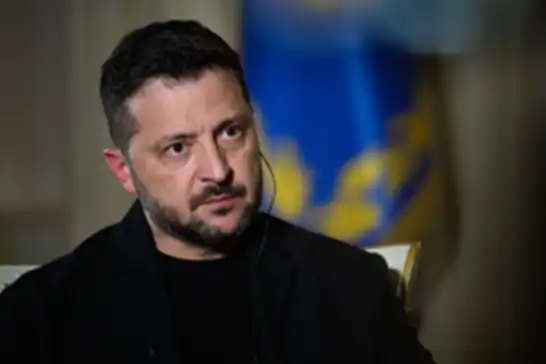
Ukrainian President Volodymyr Zelensky said on Sunday that the United States had resumed sharing intelligence on incoming Russian ballistic missiles after a pause of several days, while restrictions remained in place on Ukraine’s use of SpaceX’s military satellite internet service.
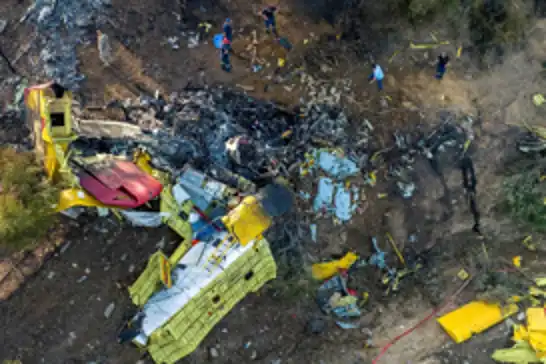
A pilot and a passenger were killed after a single-engine light aircraft crashed into a stream bed in Greece’s Pieria region.