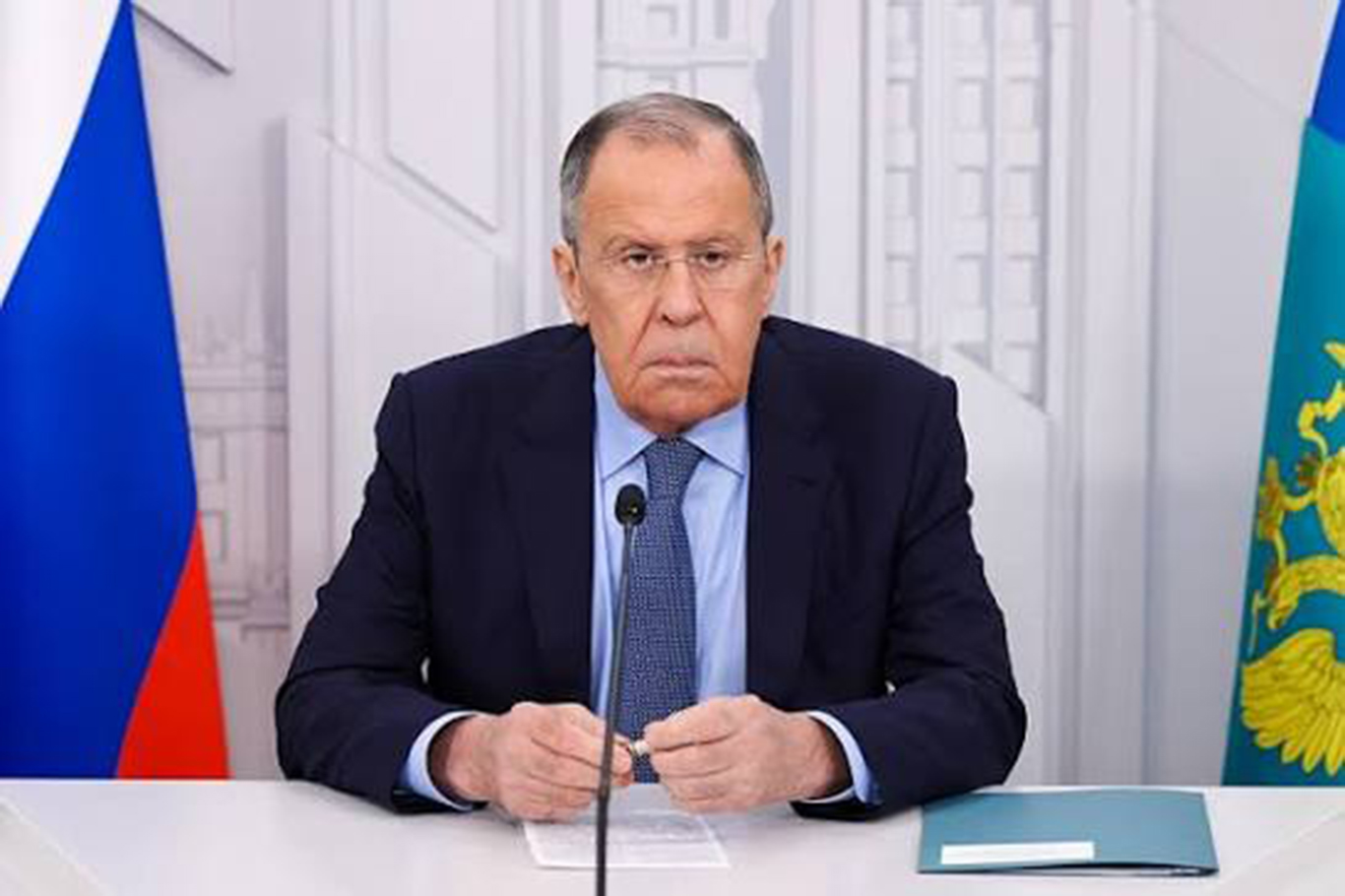
Russian Foreign Minister Lavrov calls German drone claims 'start of real war'
 13 oC
13 oC 
Güneşli

Russian Foreign Minister Sergey Lavrov has accused Germany of moving toward a “real war” with Moscow after Berlin formally blamed Russia for an attempted drone attack at Leipzig/Halle Airport, marking a sharp escalation in already strained relations between the two countries.
Speaking in an interview on Sunday, Lavrov rejected Germany’s allegations and accused Chancellor Friedrich Merz of pursuing a policy of remilitarizing Germany and escalating confrontation with Russia.
“All these statements by Merz about making Germany the leading military power in Europe once again — they are being put into practice,” Lavrov said, according to Russian state media. “He is, in effect, declaring war on us.”
Lavrov also described Berlin’s accusations over the Leipzig incident as “by and large, the start of a real war,” raising the temperature of the diplomatic dispute between Moscow and Berlin.
Berlin Blames Moscow for Leipzig Drone Plot
The dispute centers on an attempted drone attack at Leipzig/Halle Airport on Aug. 4.
German authorities discovered an explosive-equipped drone in the airport’s secure area near Ukrainian cargo aircraft. German investigators subsequently concluded that the incident bore similarities to other alleged Russian hybrid operations in Europe.
On Sept. 1, German Interior Minister Alexander Dobrindt and Foreign Minister Johann Wadephul announced that Berlin had concluded Russia was responsible for the attempted attack.
The German government said police investigations, intelligence assessments and the technical characteristics of the equipment pointed toward Russian involvement. Authorities also said the operation appeared to involve individuals acting as low-level operatives on behalf of Russian state structures.
German officials emphasized, however, that the criminal investigation remains ongoing.
Russia has categorically denied responsibility and accused Berlin of fabricating evidence in an attempt to frame Moscow.
Berlin Responds With Diplomatic Measures
Germany has responded to the incident with a series of diplomatic and security measures.
Berlin announced plans to close Russia’s Consulate General in Bonn and terminate the agreement governing the Russian House cultural center in Berlin. Germany has also announced tighter entry controls for Russian citizens and increased pressure on Russia’s so-called shadow fleet.
German officials have stressed that they do not regard the situation as a conventional war.
“We are not at war. But we are a daily target of hybrid warfare,” Interior Minister Alexander Dobrindt said earlier this month.
Berlin has also discussed strengthening protection for critical infrastructure and expanding its ability to detect and counter suspicious drones.
The government has said it intends to coordinate its response closely with NATO and the European Union while avoiding measures that could unnecessarily escalate the confrontation.
Germany Faces Growing Concerns Over Hybrid Threats
The Leipzig incident has intensified concerns in Germany over what officials describe as a growing campaign of hybrid activity involving sabotage, cyberattacks, disinformation and covert operations.
German authorities are also investigating separate incidents involving power infrastructure. Explosive devices were recently discovered near a substation in Brandenburg, while another incident near Cologne caused several coal-fired power units to temporarily shut down. Investigators are examining whether these incidents could be linked to deliberate sabotage, although no connection to Russia has been established.
European security officials have warned that such operations are particularly difficult to deter because they can remain below the threshold that would trigger NATO’s collective-defense mechanisms.
The Leipzig case has therefore become part of a broader debate over how Germany and its European allies should respond to covert attacks without allowing them to develop into direct confrontation with Moscow.
Lavrov Compares Berlin’s Measures With Pre-World War II Germany
Lavrov also criticized Germany’s decision to close Russian diplomatic and cultural institutions, drawing a controversial comparison with the period before World War II.
He argued that Germany’s current measures against Russian diplomatic facilities were reminiscent of steps taken before the outbreak of the Second World War.
Lavrov’s comments reflect Moscow’s increasingly confrontational rhetoric toward Berlin, particularly as the German government seeks to strengthen its military capabilities and increase support for Ukraine.
German leaders, meanwhile, have rejected accusations that their policies amount to preparations for war with Russia.
NATO Watching the Escalation Closely
The dispute is also drawing attention within NATO.
U.S. Ambassador to NATO Matthew Whitaker said on Saturday that the alliance should not tolerate deliberate hybrid attacks against member states. He described the Leipzig incident as particularly concerning compared with drones that accidentally stray into NATO airspace from the war in Ukraine.
“If we can identify who's doing it — which Germany did — we make sure we express strongly that is unacceptable and we will not tolerate it,” Whitaker said.
Germany has so far opted not to invoke Article 4 of the NATO treaty, which provides for consultations when a member believes its territorial integrity, political independence or security is threatened.
Relations Between Moscow and Berlin Reach New Low
The latest dispute marks another deterioration in relations between Russia and Germany, which have already been severely damaged by the war in Ukraine.
Berlin has increasingly portrayed Russia as a long-term security threat to Germany and Europe, while Moscow accuses German leaders of abandoning decades of cooperation and moving toward confrontation.
The Leipzig drone case has now added a new and potentially dangerous dimension to those tensions.
For Germany, the incident is evidence that Russia is willing to use covert methods to target European infrastructure and interests. For Moscow, Berlin’s accusations and subsequent measures are being presented as part of a broader campaign to militarize Germany and isolate Russia.
While neither side is describing the situation as an open military conflict, Lavrov’s warning that the dispute could mark the “start of a real war” illustrates how sharply the rhetoric between Moscow and Berlin has escalated.
The immediate challenge for Germany and its allies will be to respond to alleged hybrid attacks while preventing the confrontation from crossing into direct conflict between Russia and NATO. (ILKHA)
LEGAL WARNING: All rights of the published news, photos and videos are reserved by İlke Haber Ajansı Basın Yayın San. Trade A.Ş. Under no circumstances can all or part of the news, photos and videos be used without a written contract or subscription.
Yemen’s Armed Forces have carried out four military operations targeting Saudi military, energy and aviation facilities in response to the continued Saudi aggression against Yemen, military spokesperson Brig. Gen. Yahya Saree announced Thursday.
French President Emmanuel Macron said Thursday that demonstrations deemed “illegitimate” would be banned in the coming days, while authorized marches organized by trade unions could be redirected to protect businesses and public buildings amid fears of renewed unrest across the country.

The Hamas Movement has rejected an Israeli media report alleging that its leadership threatened to carry out an attack similar to the Oct. 7, 2023, operation, describing the claim as false and reaffirming its commitment to the ceasefire agreement in the Gaza Strip.

Ukraine repatriated the bodies of 252 people whom Russia says were Ukrainian service members, Ukraine's Coordination Headquarters for the Treatment of Prisoners of War (POWs) announced on Thursday.