Spain orders nationwide poultry lockdown amid rising bird flu threat across Europe
 13 oC
13 oC 
Güneşli

Spanish government has imposed an immediate nationwide lockdown, requiring all poultry to be kept indoors.
The order, announced Thursday by Spain’s Ministry of Agriculture, Fisheries and Food, marks a significant escalation of earlier, more localized measures as a wave of outbreaks sweeps across Europe.
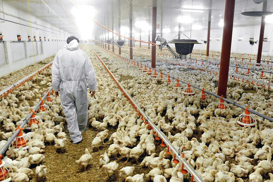
The directive mandates that every poultry farm in the country—from large commercial operations to small-scale, free-range, and organic producers—must move their birds indoors to prevent any contact with wild migratory birds, which are primary carriers of the virus.
"The measure has been taken following an increased risk of the disease entering Spain in the last week," the ministry stated, highlighting a sharp rise in detections.
The ministry pointed to data from the European Food Safety Authority (EFSA) identifying 139 outbreaks of highly pathogenic avian influenza (HPAI) in Europe since July. Spain itself has recorded 14 of these outbreaks, with half concentrated in the Castile and León region.
The new nationwide biosecurity order introduces a series of strict prohibitions aimed at preventing the spread of bird flu. All poultry must now be kept indoors, effectively ending outdoor access for flocks across the country.
The co-housing of ducks and geese with other poultry species is also banned, while the use of untreated surface water for cleaning or feeding is strictly prohibited. In addition, all bird markets, fairs, and exhibitions have been suspended to reduce the risk of transmission among domestic and wild bird populations.
Authorities are urging veterinarians and farmers to rigorously enforce biosecurity protocols, including disinfecting vehicles, restricting access to poultry areas, and immediately reporting any unusual bird deaths.
Spain’s action reflects a broader crisis unfolding across the continent. France, the Netherlands, and the United Kingdom have all implemented similar containment strategies. France has confirmed over 60 outbreaks since September alone.
The H5N1 strain is reported to be the most dominant and lethal variant circulating, causing significant mortality in both wild bird populations and domestic flocks. While health authorities maintain that the risk to human health is low, they warn of severe economic repercussions for Europe's poultry industry, which is already grappling with soaring feed and energy costs.
The lockdown poses a substantial challenge to Spain's poultry sector, which contributes more than €3.5 billion annually to the national economy. Farmers' associations have voiced deep concern over potential production losses and the financial burden on small producers, especially those who may lose their valuable free-range certifications by keeping birds indoors.
“This is a necessary measure to protect the national flock, but we need urgent support to offset the economic impact on small farmers,” said Spain’s Minister of Agriculture, Luis Planas.
In response to the threat, Spain’s Animal Health and Food Safety Agency has intensified surveillance in key wetland areas and migratory bird pathways, including the Ebro Delta, Doñana National Park, and the coastal zones of Galicia.
Health officials have moved to reassure consumers, stating that properly cooked poultry and eggs remain perfectly safe to eat. They emphasized that the current lockdown is a preventive measure, designed to stop potential outbreaks before they can escalate into a larger crisis.
As Europe faces what experts are calling one of its most severe bird flu seasons in recent years, Spain's full-scale lockdown represents a critical effort to safeguard animal health and national food security, amid fears that the virus could further destabilize supply chains already strained by global volatility. (ILKHA)
LEGAL WARNING: All rights of the published news, photos and videos are reserved by İlke Haber Ajansı Basın Yayın San. Trade A.Ş. Under no circumstances can all or part of the news, photos and videos be used without a written contract or subscription.

Iranian President Masoud Pezeshkian on Saturday inaugurated a major infrastructure project designed to transport desalinated seawater from the Gulf of Oman to Isfahan province, a move aimed at easing chronic water shortages affecting key industrial centers in central Iran.

Thousands of protesters took to the streets of central Melbourne on Saturday in a large-scale demonstration in solidarity with Palestine and Gaza, condemning Israel’s ongoing military operations and calling for the country’s exclusion from the 2025 Eurovision Song Contest.

At least 116 people, including 46 children, were killed after Sudan’s Rapid Support Forces (RSF) carried out deadly strikes on a pre-school and other civilian sites in Kalogi, local officials and medical sources said.

A powerful earthquake of magnitude 7.0 struck a remote region near Yakutat, Alaska, the United States Geological Survey (USGS) reported Saturday.