Trump, Erdoğan and Arab leaders discuss Iran de-escalation at UN
 13 oC
13 oC 
Güneşli

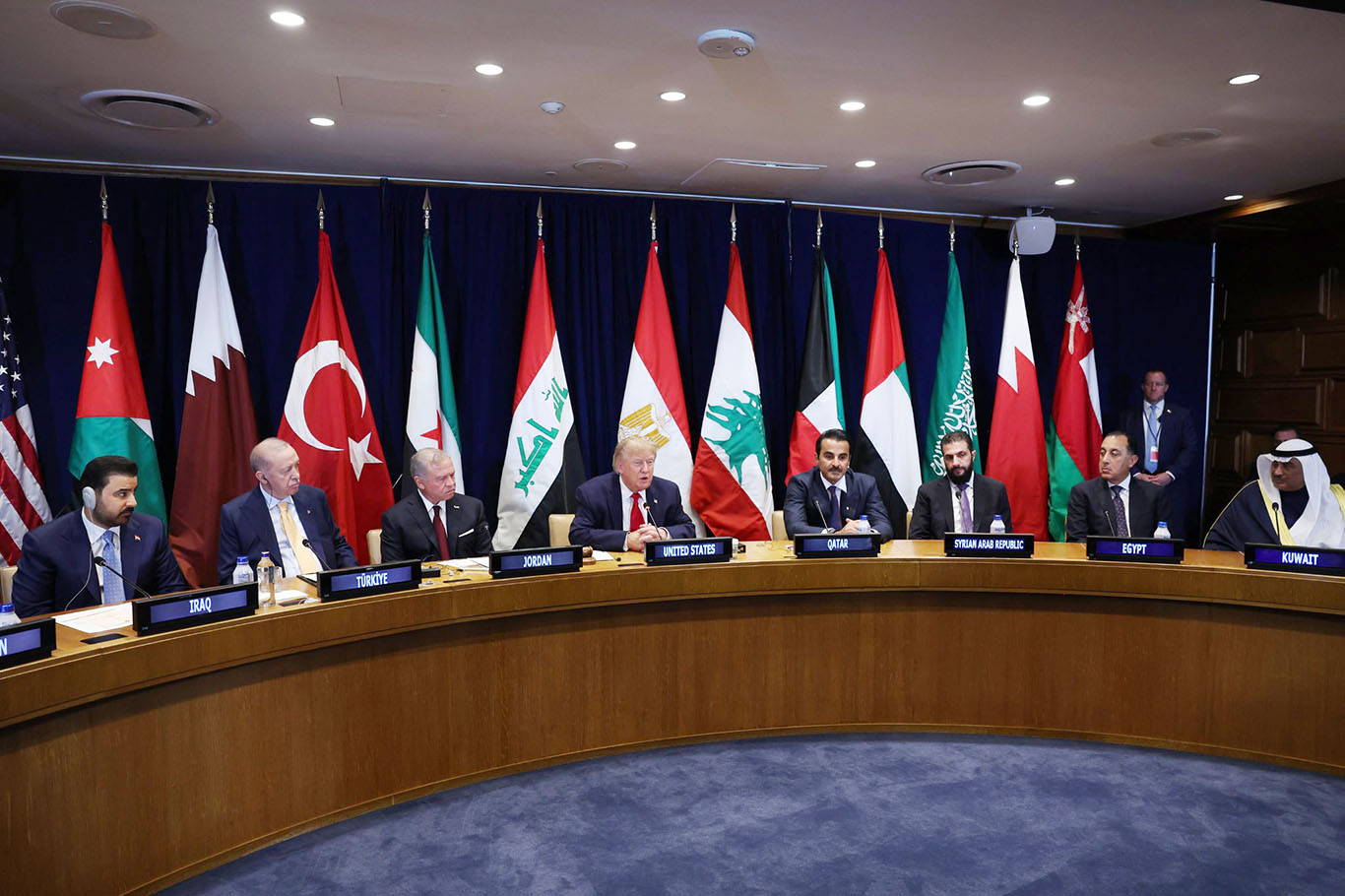
US President Donald Trump met with Turkish President Recep Tayyip Erdoğan and leaders and senior officials from the Gulf Cooperation Council (GCC) and other Middle Eastern countries in New York, with the ongoing crisis involving Iran and efforts to reach a diplomatic settlement high on the agenda.
The meeting was held on the sidelines of the 81st session of the United Nations General Assembly and brought together representatives from all six GCC member states — Saudi Arabia, the United Arab Emirates, Qatar, Bahrain, Kuwait and Oman — as well as Türkiye, Egypt, Syria, Iraq, Lebanon and Jordan.
The gathering came as Washington and Tehran intensified diplomatic contacts through mediators in New York, with the future of the conflict, the Strait of Hormuz and regional security among the key issues under discussion.
Trump Says Iran Talks Have Momentum
Speaking after the meeting, Trump said the United States had held what he described as a “very productive” meeting with Iran and suggested that diplomatic efforts were gaining momentum.
“Mediation has been going on for a while, but I think there is a lot of momentum for them to make a deal,” Trump said, adding that an agreement would be beneficial to all sides.
US special envoy Steve Witkoff said separately that American and Iranian delegations had engaged in lengthy discussions through mediators during the day. According to Witkoff, mediators moved between the two sides and another round of discussions was completed, with further diplomatic efforts expected to continue.
Iranian officials have linked progress in the talks to issues including the easing of US military pressure, the reopening of the Strait of Hormuz and the release of frozen Iranian assets, according to reports from the negotiations.
Trump said he believed the Iran crisis could potentially end after the US midterm elections on November 3, while leaving open the possibility of an earlier agreement.
At the same time, he reiterated his threat of military escalation if Washington and Tehran fail to reach an agreement.
Strait of Hormuz and Energy Routes
The Strait of Hormuz was another major issue surrounding the discussions, given its importance to global energy supplies and the ongoing disruption to shipping in the region.
Trump said more than one billion barrels of oil had passed through the waterway since the crisis began with the support of US forces and asserted that Washington had control over the strait.
He also promoted the India-Middle East-Europe Economic Corridor, or IMEC, as well as alternative oil pipelines, arguing that new infrastructure could provide additional routes for energy transportation and reduce the region's dependence on vulnerable maritime routes.
The United States is also discussing a broader investment initiative with Arab partners aimed at developing energy infrastructure and alternative routes around the Strait of Hormuz, according to the Financial Times.
Trump Praises Erdoğan
During the meeting, Trump also singled out Erdoğan for praise, recalling regional diplomatic efforts held around the UN General Assembly a year earlier that focused heavily on the Gaza war.
“Exactly one year ago, many of us met here on the sidelines of the United Nations to discuss how we could end the bloody war in Gaza,” Trump said, pointing toward Erdoğan and describing the Turkish president as “a tough cookie” and “a fantastic guy.”
Trump said the leaders gathered around the table had worked to stop the bloodshed in Gaza and were now prepared to contribute significantly to the reconstruction of the territory.
Erdoğan, meanwhile, used his address to the UN General Assembly to focus heavily on Palestine and the wider humanitarian and security crisis in the Middle East. The Turkish president called for stronger international action and criticized what he described as the failure of the international system to prevent conflicts and protect civilians.
Regional Diplomacy Intensifies
The Trump-GCC meeting came amid a broader diplomatic push involving Washington, Tehran and regional governments.
Qatar and Pakistan have been involved in efforts aimed at reducing tensions between the United States and Iran and addressing concerns over freedom of navigation through the Strait of Hormuz. Qatar's prime minister and foreign minister also met Iranian Foreign Minister Abbas Araghchi in New York to discuss regional developments and efforts to create conditions for dialogue.
The New York discussions therefore brought together several of the region's key actors at a critical moment, as diplomatic efforts continue alongside the threat of further military escalation.
For Türkiye and the Gulf states, the talks provide an opportunity to coordinate positions on Iran, regional security, energy routes and the future of Gaza, while Washington seeks to translate ongoing mediation efforts into a broader agreement with Tehran. (ILKHA)
LEGAL WARNING: All rights of the published news, photos and videos are reserved by İlke Haber Ajansı Basın Yayın San. Trade A.Ş. Under no circumstances can all or part of the news, photos and videos be used without a written contract or subscription.
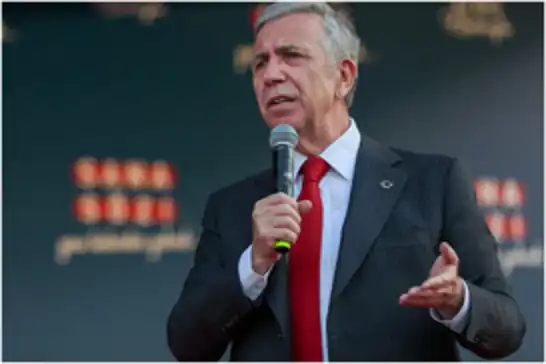
Ankara Metropolitan Municipality Mayor Mansur Yavaş announced Wednesday that he had resigned from the Republican People’s Party (CHP), saying he would continue his political career as an independent.
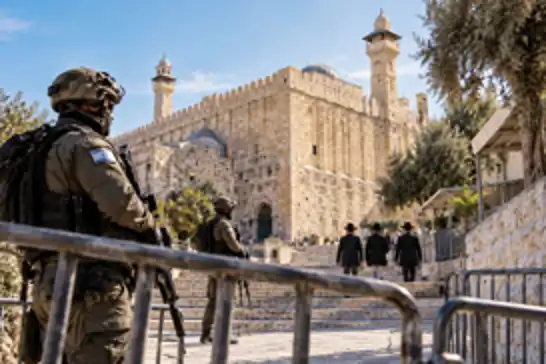
Restrictions imposed by the Israeli occupation regime on the Ibrahimi Mosque in Hebron and attacks by Jewish groups in the occupied West Bank continue, with political researcher Numan Amr describing the developments as a “real and silent annexation.”
Russia’s Defense Ministry claimed that Russian forces had taken control of the Krasny Yar and Potikhonovo settlements in Ukraine’s Kharkiv region, while also claiming that 1,380 Ukrainian soldiers were killed or neutralized over the past 24 hours.
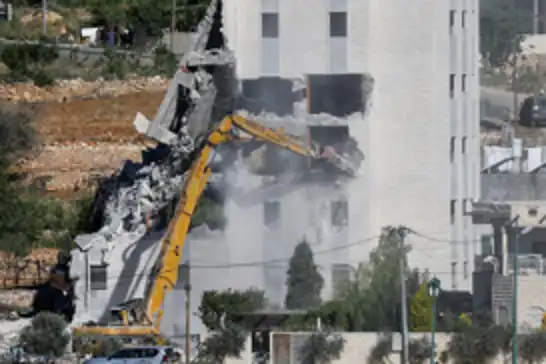
Israeli authorities demolished several tin-built industrial structures in the town of Jabaa, northeast of occupied Jerusalem, on Wednesday morning, according to the Jerusalem Governorate.