UK police arrests 25 protesters opposing Palestine Action ban
 13 oC

Güneşli

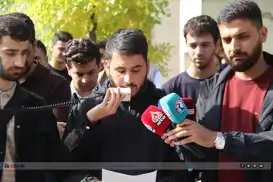
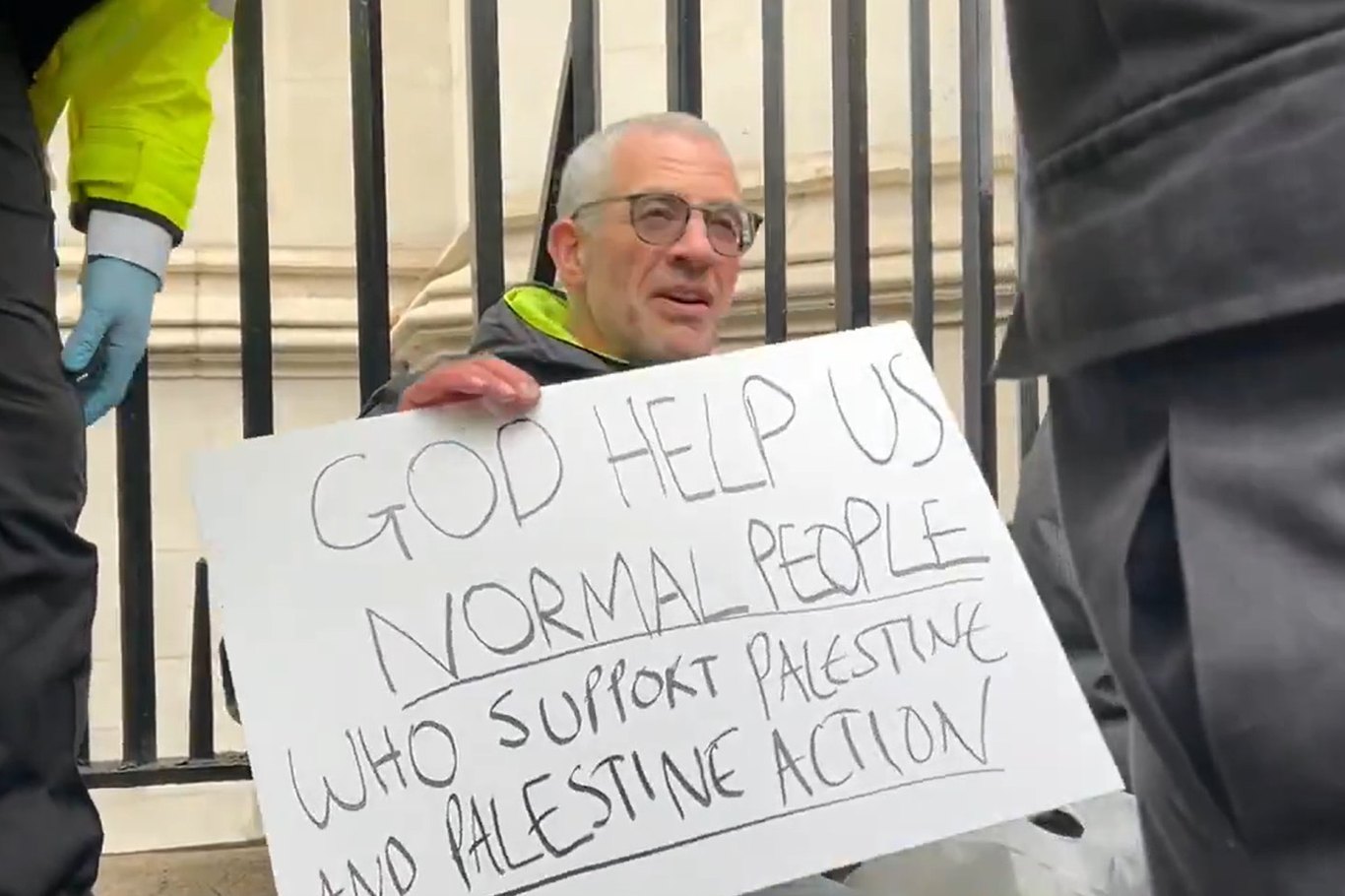
British police arrested 25 pro-Palestinian protesters outside the UK Supreme Court in London on Wednesday as judges began hearing a legal challenge to the government's decision to ban Palestine Action under anti-terrorism legislation.
The demonstrators, who gathered outside the court holding placards declaring that attempts to "stop genocide" were not terrorism, were arrested on suspicion of expressing support for a proscribed organisation, according to the Metropolitan Police.
The arrests coincided with a two-day hearing of an appeal brought by Palestine Action co-founder Huda Ammori, who is seeking to overturn the group's designation as a terrorist organisation.
Representing Ammori, barrister Raza Husain KC argued that the ban was disproportionate and violated the rights to freedom of expression and peaceful assembly. He told the court that only three of the 385 actions attributed to Palestine Action over a five-year period had been assessed as meeting the legal definition of terrorism, and that these involved serious damage to property rather than violence against people.
Husain also warned that the ban had created a chilling effect on wider pro-Palestinian activism, discouraging people from expressing solidarity with Palestinians for fear of prosecution.
The government, however, defended the prohibition, arguing that serious damage to property can constitute terrorism even when an action does not involve violence against individuals or an intention to endanger life. Its lawyers also rejected the portrayal of Palestine Action as simply a non-violent protest organisation.
The legal battle follows the government's decision in June 2025, under then-Home Secretary Yvette Cooper, to proscribe Palestine Action under the Terrorism Act 2000. The ban came into force on July 5, 2025, making membership of or support for the group a criminal offence punishable by up to 14 years in prison.
In February 2026, the High Court ruled that the ban was unlawful. However, the Court of Appeal overturned that decision in June, finding that the government's decision to proscribe the group was lawful and proportionate. Ammori subsequently took the case to the Supreme Court.
The controversy has triggered repeated demonstrations and widespread arrests across the UK. On October 31, police arrested 139 people during a protest outside the US Embassy in London, where demonstrators held placards opposing genocide and expressing support for Palestine Action. Organisers say more than 4,000 people have been detained since the ban took effect.
Palestine Action, founded in 2020, has targeted companies it accuses of supplying weapons or providing other support to Israel's military industry. The government cited the group's direct-action campaign, including incidents involving facilities linked to Israeli arms manufacturer Elbit Systems, as justification for the ban.
The Supreme Court hearing is scheduled to continue on Thursday, with a ruling expected at a later date. The outcome could have far-reaching implications for freedom of expression, the right to protest and the use of counterterrorism legislation against direct-action groups in the UK. (ILKHA)
LEGAL WARNING: All rights of the published news, photos and videos are reserved by İlke Haber Ajansı Basın Yayın San. Trade A.Ş. Under no circumstances can all or part of the news, photos and videos be used without a written contract or subscription.

Iran's Leader Ayatollah Seyed Mojtaba Hosseini Khamenei has said the United States is experiencing an irreversible decline in both its military strength and international influence, declaring that Washington's decades-long efforts to dominate Iran have failed in the face of the Iranian nation's resistance.
Iran's Islamic Revolution Guard Corps (IRGC) has announced that four oil tankers were destroyed after striking naval mines in the southern Strait of Hormuz, while claiming that its air defence forces shot down a US MQ-9 drone over the strategic waterway.
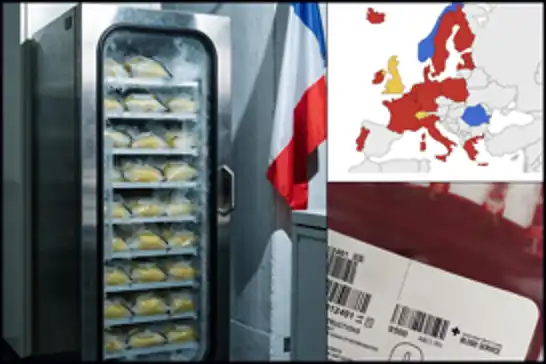
A cyberattack targeting the cooling systems of three plasma storage facilities belonging to France's national blood service was prevented before any blood products were damaged.