UK police arrests 325 activists for opposing ban on pro-Palestinian group
 13 oC

Güneşli

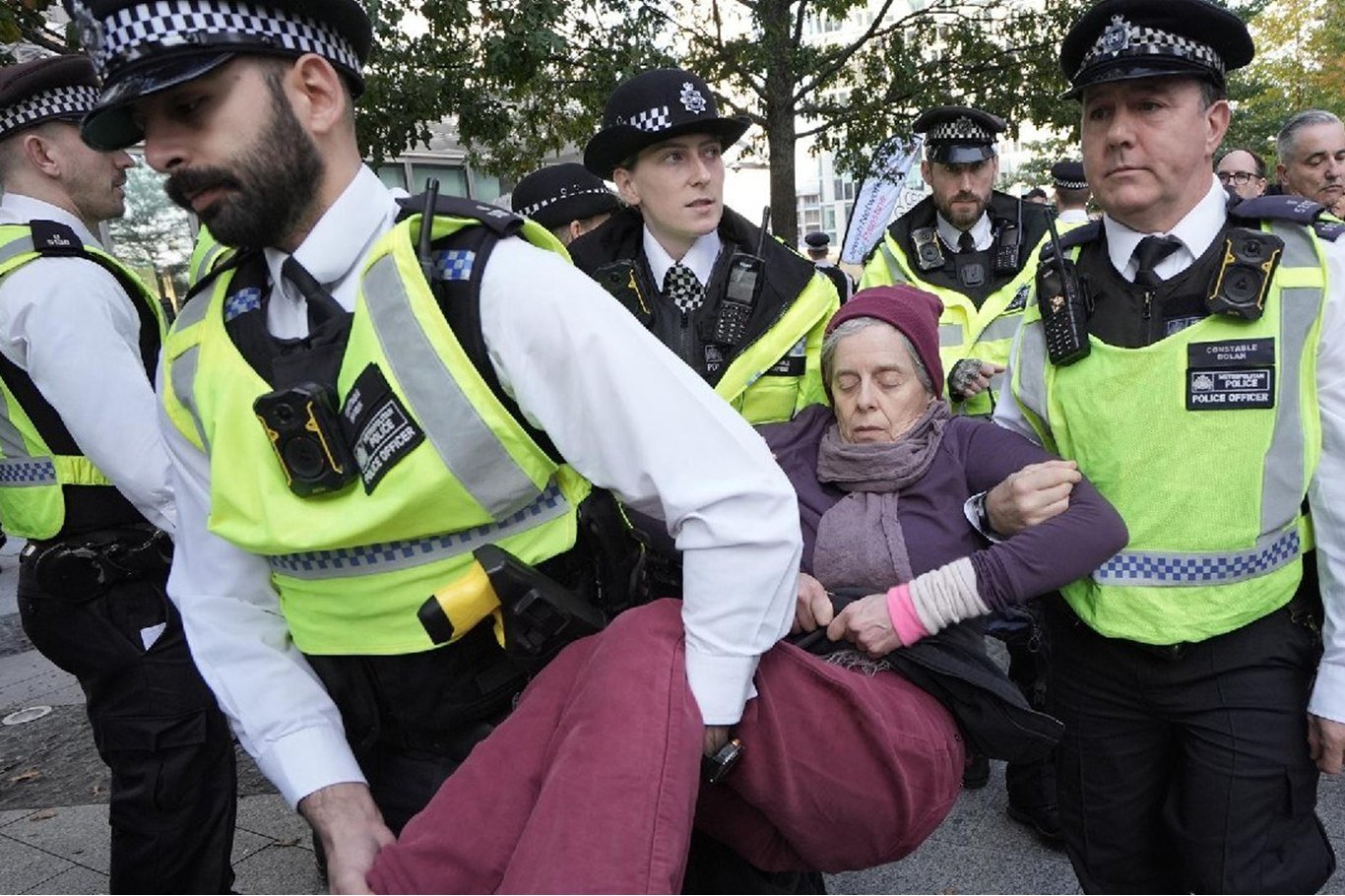
British police arrested 325 pro-Palestinian activists during a demonstration outside the US Embassy in London against the government's ban on Palestine Action, according to an updated police statement on Sunday, as growing opposition to the proscription intensified ahead of a crucial Supreme Court hearing this week.
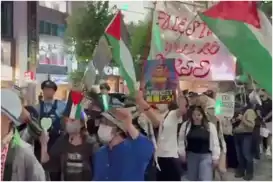
The arrests took place on Saturday, October 31, when demonstrators gathered in Battersea, south London, carrying placards reading, "I oppose genocide, I support Palestine Action."
The Metropolitan Police initially reported 139 arrests but revised the figure to 325 on Sunday, saying that 320 people had been detained for allegedly expressing support for a proscribed organisation under Britain's Terrorism Act.
The demonstration, organised by Defend Our Juries, was intended to challenge the criminalisation of support for Palestine Action, a direct-action group that campaigns against British companies it accuses of supplying weapons and military equipment to Israel.
A separate vigil supporting the organisation took place outside the US Consulate in Edinburgh. Police Scotland said it was reviewing evidence relating to people who displayed signs or wore clothing expressing support for the group.
The scale of Saturday's arrests has intensified concerns among Palestine solidarity campaigners and civil liberties advocates over the use of counterterrorism legislation against people expressing political opposition to Israel's military campaign in Gaza.
The Metropolitan Police warned demonstrators before the gathering that expressing support for Palestine Action could constitute a criminal offence because the organisation remains proscribed under British law.
Commander Adam Slonecki, who led the operation, defended the police response, arguing that participants had been warned in advance about the legal consequences of their actions.
However, Defend Our Juries condemned the operation, accusing the authorities of suppressing peaceful protest and prioritising political interests over civil liberties.
The organisation estimated that around 400 people participated in the London demonstration and accused police of being "terrified of facilitating US embarrassment."
Many protesters, including older people, deliberately displayed messages opposing genocide and supporting Palestine Action to challenge the ban and test the limits of the law.
Some participants said they were prepared to risk arrest because they believed the restrictions threatened fundamental democratic freedoms.
The controversy has placed renewed scrutiny on the Labour government's approach to Palestine solidarity activism, particularly as public debate continues over Britain's political, diplomatic and military relationship with Israel.
Palestine Action was proscribed as a terrorist organisation in July 2025, making membership of the group and certain forms of support for it criminal offences under British law.
According to Defend Our Juries, the latest arrests bring the total number of people detained for supporting the organisation since the ban to approximately 4,200.
The campaign group says the arrests represent an unprecedented crackdown on expressions of solidarity with the organisation.
Official figures cited by British media show that 3,867 people were arrested on suspicion of terrorism-related offences in the year to June 2026, with approximately 94% of those arrests linked to suspected support for Palestine Action. The figures illustrate how extensively the proscription has shaped counterterrorism policing in Britain.
Critics argue that the law risks blurring the distinction between direct participation in criminal activity and peaceful expressions of political support.
The government maintains that the ban is justified by the organisation's activities and that lawful demonstrations in support of Palestinians remain permitted.
Palestine Action has targeted facilities associated with Israel-linked defence companies, including Elbit Systems, which campaigners accuse of contributing to Israel's military operations against Palestinians.
The group has also carried out direct actions involving damage to property. British authorities cite these activities as grounds for its proscription, while supporters argue that the ban goes too far by criminalising expressions of support beyond the acts themselves.
Saturday's demonstration came just days before the Supreme Court is scheduled to hear an appeal challenging the government's decision to proscribe Palestine Action.
The hearing in the case brought by co-founder Huda Ammori is scheduled for November 4–5. The court will examine whether the government's decision to ban the organisation under the Terrorism Act 2000 was lawful.
The legal battle has already produced conflicting rulings.
In February 2026, the High Court ruled that the ban was unlawful, finding that the government's decision was disproportionate. The order quashing the proscription was stayed pending appeal, meaning the ban remained in force.
In June, the Court of Appeal overturned that ruling and concluded that the government's decision was lawful. Ammori subsequently secured permission to appeal to the Supreme Court on a limited ground.
The forthcoming hearing will therefore determine whether the government's proscription decision survives the latest legal challenge. A final judgment is expected at a later date, rather than necessarily during the November hearing.
For opponents of the ban, the case raises fundamental questions about freedom of expression, the right to peaceful assembly and the extent to which the government can use counterterrorism legislation against a group whose primary campaign has focused on direct action against defence-related facilities.
Campaigners also warn that the ban could discourage people from supporting the broader Palestinian cause for fear that their actions or statements might expose them to criminal prosecution.
The controversy has extended beyond Britain. The United States also designated Palestine Action as a terrorist organisation in August 2026, broadening the international dimension of the dispute.
Supporters of the group argue that the decisions reflect an increasingly restrictive approach to direct-action campaigns opposing Israel's military operations and the international arms industry.
The British government, meanwhile, maintains that the proscription followed an evidence-based assessment of the organisation's activities and was approved by Parliament.
The dispute has also drawn prominent cultural figures into the debate. Irish novelist Sally Rooney previously said her books could no longer be supplied to British retailers because her publisher could not legally transfer royalties that might be used to support Palestine Action.
The case has become emblematic of a wider debate over whether governments can effectively separate opposition to Israel's military campaign from actions they consider a threat to national security.
The mass arrests have placed further pressure on Prime Minister Andy Burnham's government to address mounting criticism of the ban, which was introduced under his predecessor, Keir Starmer.
Home Secretary Shabana Mahmood has continued to defend the proscription, while campaigners have demanded that the government reverse the decision and end what they describe as the criminalisation of Palestine solidarity.
The arrests also highlight a growing confrontation between British authorities and demonstrators who argue that opposing alleged war crimes and challenging arms supplies to Israel should not expose peaceful protesters to terrorism-related charges.
With the Supreme Court hearing approaching, the future of Palestine Action's proscription has become a major test of the balance between national security powers and fundamental civil liberties in Britain.
For pro-Palestinian activists, the central issue extends beyond the fate of one organisation: it concerns whether people can publicly oppose Israel's war on Gaza, challenge the arms industry and express solidarity with Palestinians without facing the threat of arrest under counterterrorism legislation. (ILKHA)
LEGAL WARNING: All rights of the published news, photos and videos are reserved by İlke Haber Ajansı Basın Yayın San. Trade A.Ş. Under no circumstances can all or part of the news, photos and videos be used without a written contract or subscription.
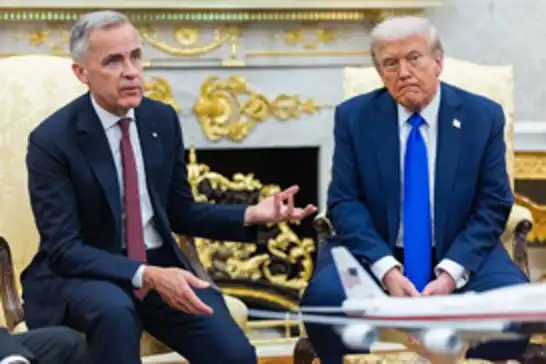
Canadian Prime Minister Mark Carney and US President Donald Trump have held a constructive conversation on the future of bilateral trade, raising hopes of progress towards a new trade agreement after months of escalating tariff disputes between the two neighbouring countries.
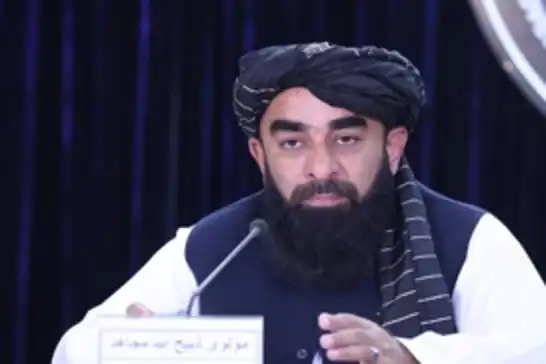
The Islamic Emirate of Afghanistan has accused Pakistan of initiating the latest escalation between the two neighbouring countries, urging the United States to acknowledge that the source of instability lies on the Pakistani side.
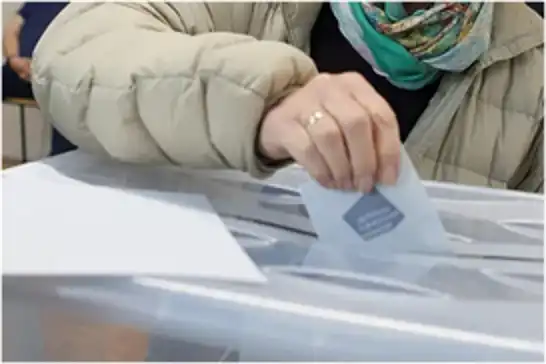
Bulgarians headed to the polls on Sunday for a decisive presidential runoff between incumbent President Iliana Iotova and former caretaker Prime Minister Andrey Gyurov after neither candidate secured an outright victory in the first round of voting last week.