UN Rapporteur: Israel’s ‘most immoral army’ keeps killing Palestinians despite ceasefire
 13 oC
13 oC 
Güneşli

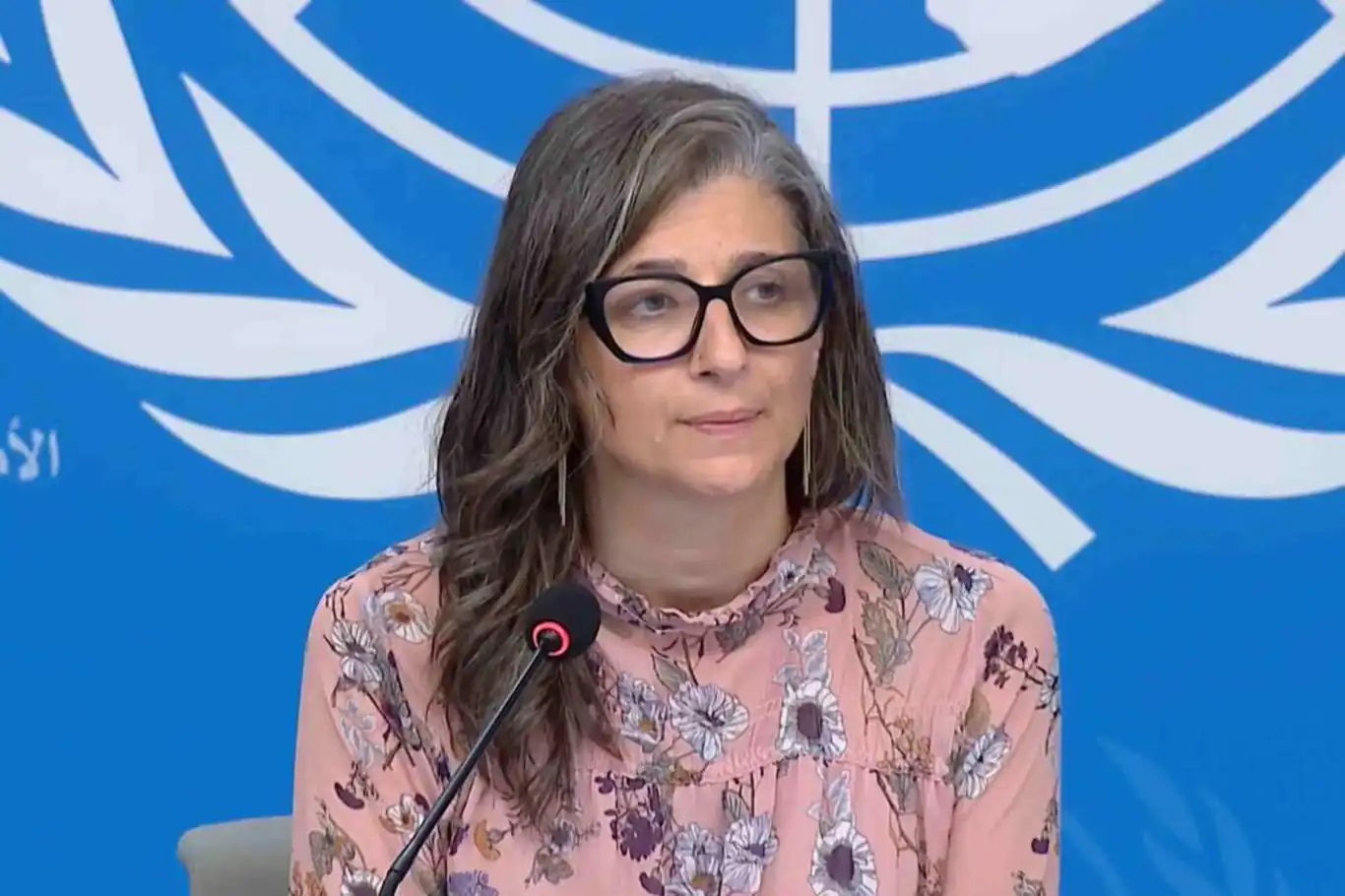
United Nations Special Rapporteur Francesca Albanese has sharply condemned Israel’s ongoing military actions in Gaza and the occupied West Bank, describing the Israeli army as the “MOST IMMORAL ARMY” and accusing it of continuing to inflict death, destruction and deprivation on Palestinians.
“The MOST IMMORAL ARMY strikes again. And again. And again,” Albanese wrote on X. “In the West Bank, soldiers and settlers cut water pipes, while Qusra’s siege continues. In Gaza the pulverization continues and so the massacres. Since the ceasefire Israel has killed 1,200+ people, including 300 children.”
Albanese’s remarks came as international concern mounted over the worsening situation in Qusra, a Palestinian village south of Nablus in the occupied West Bank, where Palestinian families have been subjected to a prolonged siege by Israeli settlers and forces.
The siege in Qusra has left Palestinian families trapped inside their homes, with access to water, electricity, food and other basic necessities severely restricted.
Reports indicate that around 15 Palestinians, including children, have been trapped in three homes in the Ras al-Ain area. Armed Israeli settlers have surrounded the properties, while Israeli forces have maintained a military presence and declared the area a closed military zone.
The families have repeatedly refused to abandon their homes despite the pressure, saying that the attacks are aimed at forcing them from their land.
The crisis has continued for nearly two weeks. Qusra Mayor Abdel Azim Wadi said Israeli forces and settlers were preventing families from entering or leaving their homes, while one Palestinian house had reportedly been seized and turned into a military position.
The siege has also drawn condemnation from human rights organizations. Amnesty International described the developments as part of an escalating pattern of settler violence and dispossession, while international concern has focused on the use of deprivation and intimidation to push Palestinians from their homes.
The cutting of water supplies has become one of the most alarming aspects of the Qusra crisis.
Palestinian residents have reported that water and electricity connections were severed, leaving families struggling to meet basic needs. Earlier reports from the village said residents were relying on limited water reserves after supply lines were cut.
For Palestinians living under occupation, the destruction or interruption of essential infrastructure adds another layer to an already severe system of movement restrictions, land seizures and settlement expansion.
Albanese's decision to highlight water infrastructure in the same statement as the Qusra siege underscores what she portrays as a broader pattern in which Palestinians are deprived not only of physical security but also of the basic conditions necessary to remain on their land.
Qusra is not an isolated case.
Palestinian residents have reported months of violent attacks by Israeli settlers, including assaults on homes, stone throwing and shootings. Reuters reported that more than 2,200 Palestinians had been displaced in 2026 as a result of settler violence in the West Bank.
The escalation has prompted growing criticism that settler attacks are contributing to a wider campaign of forced displacement.
Even former Israeli Prime Minister Ehud Olmert has condemned the events in Qusra, describing the siege as an alleged attempt at ethnic cleansing and accusing Israeli authorities of failing to adequately protect Palestinian residents.
The United Nations and most of the international community regard Israeli settlements in the occupied West Bank as illegal under international law, while Israel disputes that characterization.
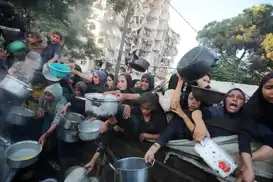
At the same time, Gaza continues to face a catastrophic humanitarian situation.
Albanese said more than 1,200 Palestinians, including around 300 children, had been killed since the ceasefire, arguing that the continuation of deadly Israeli attacks demonstrates that the truce has failed to provide Palestinians with meaningful protection.
Her reference to the “pulverization” of Gaza reflects the enormous scale of destruction inflicted on the territory after years of conflict. Entire residential neighborhoods have been reduced to rubble, while Palestinians continue to face displacement, shortages and severe restrictions on humanitarian assistance.
The continued deaths despite a ceasefire have intensified questions over whether international mechanisms are capable of enforcing protection for Palestinian civilians.
Albanese has repeatedly argued that the crisis cannot be separated from Israel’s broader occupation of Palestinian territory.
From Gaza to the West Bank, Palestinians face what rights advocates describe as interconnected policies of military force, displacement, settlement expansion and restrictions on access to essential resources.
In the West Bank, settler attacks have increasingly been accompanied by military operations and restrictions on Palestinian movement. In Gaza, meanwhile, the devastation of civilian infrastructure has created conditions in which millions of Palestinians remain dependent on humanitarian assistance.
The situation in Qusra has therefore become another stark symbol of the Palestinian struggle to remain on their land.
As Palestinian families continue to resist displacement and humanitarian organizations call for unrestricted access to those in need, Albanese is urging the international community to move beyond expressions of concern and confront what she describes as an entrenched system of occupation and violations of Palestinian rights.
Her latest statement places Gaza’s continuing bloodshed and the Qusra siege within the same framework: a Palestinian population facing violence, deprivation and displacement while the international community struggles to impose meaningful accountability on those responsible. (ILKHA)
LEGAL WARNING: All rights of the published news, photos and videos are reserved by İlke Haber Ajansı Basın Yayın San. Trade A.Ş. Under no circumstances can all or part of the news, photos and videos be used without a written contract or subscription.
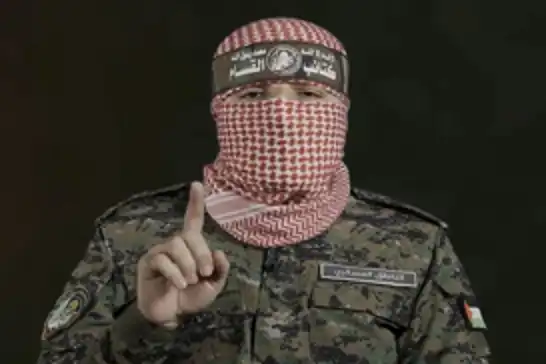
Abu Obeida, spokesperson for the Al-Qassam Brigades, the armed wing of the Hamas movement, has called on Palestinians in the occupied West Bank and Jerusalem to stand against the escalating Israeli attacks on Al-Aqsa Mosque, Palestinian land and their rights.

US President Donald Trump has escalated tensions with Iran by declaring that he now views the strategically vital Strait of Hormuz as “American territory.”

Germany's failure to refill its natural gas storage facilities at the expected pace is raising concerns over energy security ahead of the winter season. Storage levels remain at around 50 percent, making it increasingly difficult to meet legally required targets, while opposition parties and industry representatives have criticized the government's energy policy.