UN refugee chief urges Security Council to tackle conflicts driving record displacement
 13 oC
13 oC 
Güneşli

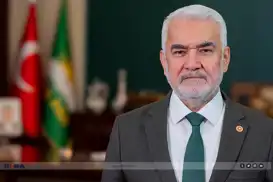
UN High Commissioner for Refugees Barham Salih has called on the international community to focus on ending the conflicts and political crises that are forcing millions of people from their homes, warning that humanitarian agencies cannot solve displacement without addressing the wars that cause it.
Addressing the UN Security Council on Friday for the first time since being elected as UN High Commissioner for Refugees last December, Salih urged the 15-member body to use its authority to help create the conditions necessary for peace and the safe return of displaced people.
“For the millions of people forced from their homes – and the millions more who should never have to flee – I urge you to use that responsibility,” Salih told council members during the meeting, held on the sidelines of the annual UN gathering of world leaders.
More than 117 million people worldwide have been forced to flee their homes, according to UNHCR, the UN refugee agency. They include refugees who have crossed international borders, internally displaced people who remain within their own countries and others seeking protection because of conflict, persecution and violence.
Salih, a former president of Iraq who served from 2018 to 2022 and has himself experienced displacement, stressed that humanitarian organizations can provide assistance and protection but cannot bring wars to an end.
Humanitarian workers, he said, deal every day with the consequences of conflict, while the responsibility for maintaining international peace and security ultimately rests with the Security Council under the UN Charter.
Salih highlighted Sudan as one of the clearest examples of the link between armed conflict and mass displacement.
The war that erupted in April 2023 between the Sudanese Armed Forces and the paramilitary Rapid Support Forces has created what UN officials describe as the world's largest displacement crisis, with about 12 million people displaced inside Sudan or forced to flee across its borders.
“As long as this war continues, people will continue to flee,” Salih said.
The conflict has devastated civilian infrastructure, disrupted food supplies and severely limited access to health care and other essential services. Millions of displaced Sudanese have sought refuge in neighboring countries, placing additional pressure on communities and humanitarian systems across the region.
Salih also pointed to the Democratic Republic of Congo, where decades of armed conflict have repeatedly displaced civilian populations.
“Generations have now lived through cycles of conflict and violence,” he said, while warning that the humanitarian situation has been further complicated by an escalating Ebola crisis.
In Ukraine, the continuing war has similarly forced millions of people from their homes, with large numbers displaced internally and millions more seeking protection in other countries.
Salih also highlighted Western Sahara, where generations of Sahrawi refugees have lived in camps near Tindouf in Algeria while awaiting a political resolution to the long-running dispute.
He warned that prolonged displacement can become a multigenerational problem when political solutions remain out of reach.
The UN refugee chief also drew attention to the humanitarian consequences of the latest escalation in the Middle East.
UNHCR has mobilized resources and personnel to assist more than 130,000 Yemenis who have been displaced within the country by recent hostilities, while more than 3,700 people have sought safety in neighboring Djibouti, according to Salih.
The figures highlight how renewed fighting can rapidly generate new displacement even in countries already affected by years of conflict and humanitarian hardship.
Salih acknowledged that his goal of reducing by half the number of refugees living in long-term displacement and dependent on humanitarian assistance by 2035 is ambitious.
But he argued that the scale of the challenge requires equally ambitious action.
“It must be, because keeping people alive year after year while they remain unable to rebuild their lives cannot be our end goal,” he said.
For UNHCR, addressing displacement involves more than providing food, shelter and emergency protection. The agency also works toward three traditional long-term solutions: voluntary return to a person's country or area of origin when conditions permit, integration into the host community, and resettlement in another country.
However, the continuing expansion of armed conflicts has made these solutions increasingly difficult to achieve.
Salih said success should not be measured simply by whether humanitarian agencies can keep displaced populations alive for another year or establish another refugee camp in response to a crisis that has already lasted decades.
“Success must ultimately mean creating the conditions in which people no longer need us,” he said.
He called for UNHCR's mission to focus on preventing displacement where possible, resolving displacement once it occurs and helping displaced people rebuild their lives in safety and dignity.
Salih's appeal comes as the Security Council continues to face divisions over major conflicts, limiting its ability to reach consensus and take effective action in some of the world's most serious crises.
The council has primary responsibility under the UN Charter for maintaining international peace and security. Its five permanent members — China, France, Russia, the United Kingdom and the United States — hold veto power, while 10 additional members serve two-year terms.
For humanitarian organizations, the consequences of diplomatic deadlock can be severe. Without ceasefires, political settlements or effective protection for civilians, humanitarian agencies are often left responding to displacement after it has already occurred.
Salih therefore urged governments to look beyond emergency relief and concentrate on the political causes of displacement.
The message from the UN refugee chief was ultimately that humanitarian assistance can alleviate suffering, but only political solutions can end the cycle that forces people to flee in the first place. (ILKHA)
LEGAL WARNING: All rights of the published news, photos and videos are reserved by İlke Haber Ajansı Basın Yayın San. Trade A.Ş. Under no circumstances can all or part of the news, photos and videos be used without a written contract or subscription.

US President Donald Trump has reportedly rejected an Iranian proposal aimed at ending the conflict between Washington and Tehran and reopening the strategically vital Strait of Hormuz within seven days.
At least seven people, including a 14-year-old boy, were killed and 59 others injured in a series of Russian drone attacks on Kyiv on Friday, Ukrainian authorities said, as repeated waves of strikes hit residential, commercial and administrative buildings across the capital.
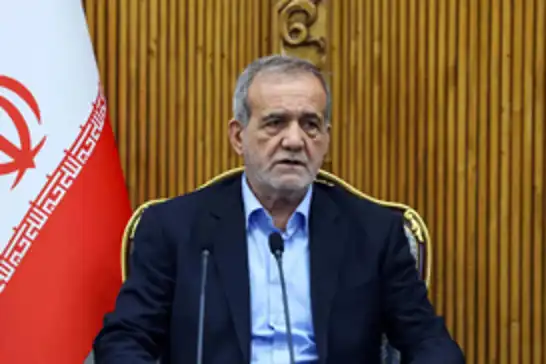
Iranian President Masoud Pezeshkian has welcomed Chinese President Xi Jinping’s support for reviving the Islamabad Memorandum of Understanding between Iran and the United States, stressing that Tehran remains committed to resolving outstanding differences through dialogue.