U.S. MQ-9 Reaper drone crashes in Afghanistan's Maidan Wardak province
 13 oC
13 oC 
Güneşli

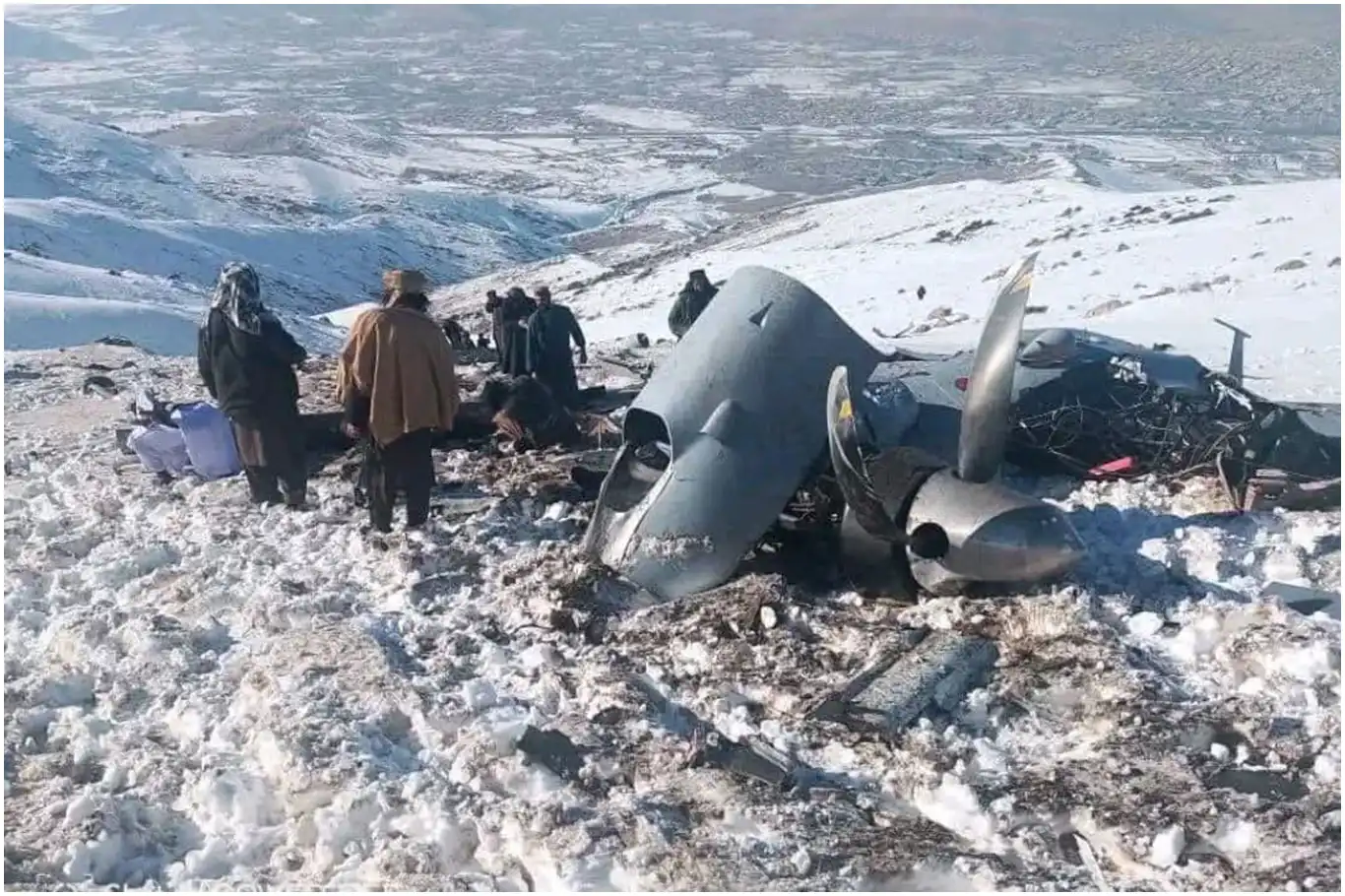
A United States Air Force MQ-9 Reaper unmanned aerial vehicle has reportedly crashed near Maidan Shahr, the provincial capital of Maidan Wardak, west of Kabul, according to initial regional and security reports.
The incident occurred during what was described as a routine surveillance mission and did not result in any reported civilian casualties on the ground.
The MQ-9 Reaper, a long-endurance surveillance and strike drone operated remotely via satellite links, was reportedly controlled from Al Udeid Air Base in Qatar, a key hub for US air operations in the region. While the exact cause of the crash has not been officially confirmed, early indications point to a technical malfunction or loss of communication link, rather than hostile fire.
As of the latest available information, the Pentagon has not issued a formal statement, consistent with standard procedure while investigations are ongoing. US defense officials typically refrain from public comment until flight data and system diagnostics are reviewed by an internal accident investigation board.
Manufactured by General Atomics, the MQ-9 Reaper is one of the most advanced unmanned platforms in the US arsenal. With a wingspan of around 20 meters, an endurance of more than 27 hours, and an operational ceiling of 50,000 feet, the drone is equipped with high-resolution sensors and can carry Hellfire missiles and other precision-guided munitions. The total cost of each system, including ground control infrastructure, exceeds $30 million.
Maidan Wardak province lies along a strategically sensitive corridor close to Kabul. Taliban authorities have not officially commented on the incident, though local sources indicate that Afghan officials may seek access to the crash site. This could complicate US efforts to secure or destroy sensitive components of the drone, particularly given the absence of a permanent US military presence on the ground.
In previous conflicts, the US has employed self-destruction protocols or follow-up airstrikes to prevent advanced technology from falling into hostile hands. Whether such measures are feasible in this case remains unclear.
The incident adds to a growing list of MQ-9 losses globally. In 2024–2025, several Reapers were lost due to engine failures, propeller malfunctions, and crashes over maritime zones, including incidents near South Korea and in the Mediterranean Sea. While US officials often cite mechanical or environmental factors, some recent downings in other regions were attributed to hostile air defense systems.
The US Air Force currently operates more than 200 MQ-9 Reapers, and while losses are offset by ongoing production and upgrades, analysts note that the rate of incidents has increased amid more demanding operational environments and advancing adversary capabilities.
Defense analysts say the crash underscores the limitations of unmanned systems in contested or remote airspace. Reliance on satellite communications makes drones vulnerable to signal disruptions, environmental interference, and technical faults, even in the absence of enemy action.
The incident is also likely to renew debate over the sustainability of US drone operations in Afghanistan under Islamic Emirate rule, particularly as Washington faces political and legal scrutiny over air operations conducted without a local military footprint.
An official investigation is expected to examine flight telemetry, control inputs, and system performance. Findings will likely feed into broader assessments of fleet reliability and future operational planning, as the MQ-9 Reaper remains a central—though increasingly challenged—tool in US intelligence and counterterrorism strategy. (ILKHA)
LEGAL WARNING: All rights of the published news, photos and videos are reserved by İlke Haber Ajansı Basın Yayın San. Trade A.Ş. Under no circumstances can all or part of the news, photos and videos be used without a written contract or subscription.

At least 12 people were killed and more than 20 others injured when a passenger coach collided head-on with a minibus in Pakistan’s southwestern Balochistan province on Friday, police said.
Israeli occupation forces began evacuating Palestinians from the al-Jalda area of Al-Khalil early Saturday as the military launched a multi-day operation involving mass deployments, movement restrictions, arrests and demolitions across the occupied West Bank.

A powerful earthquake struck waters off Vanuatu in the South Pacific on Saturday, prompting a tsunami warning for nearby coastal areas before the alert was lifted, according to seismic monitoring agencies.

UN High Commissioner for Human Rights Volker Türk on Friday condemned a sharp escalation in drone attacks across Sudan, saying at least 306 people had been killed and hundreds more injured in the first three weeks of October.