Who is Gadi Eisenkot? Netanyahu rival who continues to back Israel’s genocidal war on Gaza
 13 oC

Güneşli

Israel’s parliamentary election has ended without a clear winner, leaving Prime Minister Benjamin Netanyahu and his principal rival, former army chief Gadi Eisenkot, competing to assemble a governing coalition as the devastation caused by Israel’s genocidal war on Gaza continues to shape the country’s political landscape.
Preliminary results released on Wednesday showed Netanyahu’s bloc with 54 projected seats, compared with 49 for the opposition bloc led by Eisenkot, while Arab-led parties were projected to hold 17 seats. Neither main bloc had secured the 61 seats required for a parliamentary majority, setting the stage for difficult coalition negotiations. The count remained incomplete.
Eisenkot has presented himself as an alternative to Netanyahu, arguing that the prime minister has failed to provide effective leadership and a coherent strategy for the war and its aftermath. However, his political record and stated positions indicate that replacing Netanyahu would not necessarily mean abandoning Israel’s military objectives in Gaza or recognising Palestinian statehood.
The election has exposed divisions within Israel’s political establishment over the conduct of the war, but the competing leadership camps continue to place Israeli security priorities at the centre of their platforms, leaving the future of Palestinian rights and self-determination unresolved.
Former army chief seeks power after election deadlock
Born in 1960, Eisenkot spent more than four decades in the Israeli military, serving in senior command positions before becoming chief of staff from 2015 to 2019.
After retiring from military service, he entered politics and joined Benny Gantz’s National Unity Party. Following the October 7, 2023 attacks and Israel’s subsequent military offensive on Gaza, Eisenkot joined Netanyahu’s emergency war cabinet.
He and Gantz left the government in June 2024, criticising Netanyahu’s handling of the war and the absence of a clear strategy for its conclusion and Gaza’s future.
Eisenkot later established the Yashar party and emerged as one of Netanyahu’s principal political challengers.
In the aftermath of the election, Eisenkot has argued that Israeli voters want a change in leadership. Yet the preliminary results have left him without an assured route to power, with coalition negotiations expected to determine whether Netanyahu can remain in office or an alternative government can be formed.
Eisenkot has supported the stated objective of dismantling Hamas and opposed Palestinian statehood. His differences with Netanyahu have largely concerned the conduct of the war, political accountability and the government's failure to establish a clear post-war plan.
For Palestinians, the distinction is significant: a change in Israeli leadership does not automatically mean an end to the occupation, settlement expansion, restrictions on Palestinian movement or opposition to Palestinian sovereignty.
Son and two nephews killed during Gaza war
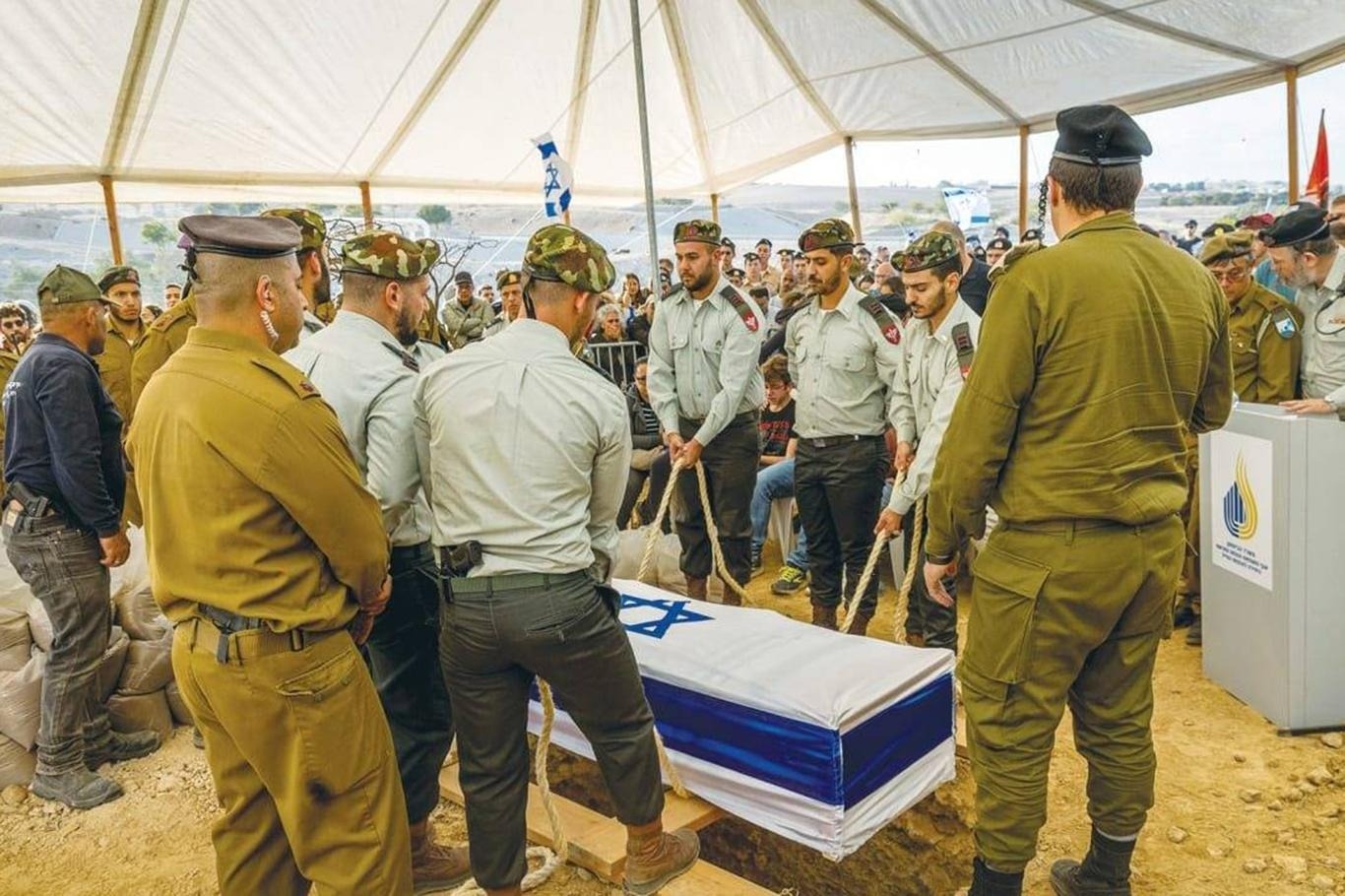
Eisenkot’s family has suffered three losses during Israel’s genocidal operations in Gaza.
His 25-year-old son, Gal Eisenkot, was killed in northern Gaza on December 7, 2023, while serving in the Israeli military. His 19-year-old nephew, Maor Cohen Eisenkot, was killed the following day. Another nephew, Yogev Pazzi, 22, was killed in northern Gaza on November 17, 2024.
The deaths brought the human cost of the war into the family of one of Israel’s most prominent military and political figures.
Eisenkot has continued to argue that the government’s handling of the conflict has failed to meet its responsibilities toward soldiers and their families. In August 2025, he said Netanyahu’s government was unworthy of his son and other soldiers who had lost their lives, criticising what he described as political indecision and ideological considerations affecting wartime decisions.
The losses have also highlighted the wider consequences of a genocidal war that has devastated Palestinian communities across Gaza.
Palestinians have endured mass displacement, extensive destruction of homes and civilian infrastructure, and severe disruption to healthcare, water supplies and access to food. International organisations have documented grave violations of international humanitarian law during the conflict.
The International Court of Justice has issued provisional measures in South Africa’s case alleging genocide against Israel. These measures are legally binding, but they do not constitute a final judgment on whether genocide has occurred.
The deaths of Eisenkot’s relatives and the suffering of Palestinian civilians reflect different dimensions of the human cost of the conflict, although the scale of Palestinian death and destruction across Gaza has been catastrophic.
Political rivalry does not resolve the question of Palestinian rights
Eisenkot’s challenge to Netanyahu centres on leadership, security policy and the management of the war. His public positions, however, do not indicate a fundamental departure from the Israeli political establishment’s opposition to Palestinian statehood.
His support for dismantling Hamas remains a central element of his security platform, while his criticism of Netanyahu has focused on how the war has been conducted and what should follow it.
For Palestinians, the central questions extend beyond the identity of Israel’s prime minister. They include whether Israel will end its occupation, halt settlement expansion, respect Palestinian rights and allow Palestinians to determine their political future.
A government led by Eisenkot would face pressure to address the same unresolved questions surrounding Gaza’s governance, reconstruction, displaced residents and the prospects for a lasting political settlement.
The election’s inconclusive outcome offers no immediate answers. With Netanyahu and Eisenkot competing to form a government, the political debate remains focused primarily on Israel’s leadership and security priorities rather than a clear commitment to Palestinian sovereignty.
Gaza’s future remains unresolved
Israel’s war on Gaza has drawn international condemnation over the scale of civilian suffering and the destruction of essential infrastructure. Humanitarian organisations have repeatedly called for civilian protection, sustained humanitarian access and accountability for violations of international law.
The future governance of Gaza, the return and rights of displaced Palestinians, reconstruction and the possibility of a political settlement remain major unresolved issues.
Eisenkot’s rise as a challenger to Netanyahu has intensified debate within Israel over the war’s objectives and political consequences. Yet his military background and stated policies suggest that a change in leadership would not, by itself, guarantee a change in Israel’s approach toward Palestinians.
As coalition negotiations proceed, the central issue for Palestinians remains whether Israel’s political transition will bring substantive changes to policies affecting their freedom, security and national rights — or simply produce a new leadership to pursue broadly similar objectives. (ILKHA)
LEGAL WARNING: All rights of the published news, photos and videos are reserved by İlke Haber Ajansı Basın Yayın San. Trade A.Ş. Under no circumstances can all or part of the news, photos and videos be used without a written contract or subscription.
Türkiye is seeking to use its presidency of the 31st United Nations Climate Change Conference (COP31) to strengthen international climate cooperation and expand the global reach of its Zero Waste initiative, officials said at a panel organised by the Turkish Presidency’s Directorate of Communications.
More than 100 people were reportedly killed in a drone strike on a crowded market in Sudan’s Darfur region, according to a local rights group, as the country’s escalating civil war continues to devastate civilian communities and deepen one of the world’s worst humanitarian crises.

The World Health Organization (WHO) has cancelled events scheduled for Wednesday at the Global Obesity Summit in Madrid following a deadly train crash in Spain.