Yemeni army declares total ban on Israeli navigation in Red Sea

 13 oC
13 oC 
Güneşli

Yemen's Armed Forces announced a comprehensive ban on Israeli maritime navigation in the Red Sea on Monday, warning that any vessel linked to the Israeli regime would be considered a legitimate military target as regional tensions continue to rise following Israeli attacks in Lebanon and Iran.
In a statement delivered by Armed Forces spokesman Brigadier General Yahya Saree, Yemen declared that all Israeli maritime activity in the Red Sea is now prohibited and that Yemeni forces stand ready to target any movement associated with the Zionist regime.
The announcement underscores Yemen's growing role in the regional confrontation against Israel and reflects Sana'a's determination to support the Palestinian people and allied resistance movements confronting Israeli military actions across the region.
Brigadier General Saree also revealed that Yemeni forces had successfully carried out an operation against what he described as a sensitive Israeli target in occupied Jaffa, emphasizing that Yemen's military capabilities continue to expand despite years of blockade and external pressure.
The spokesman warned that any further escalation by Israel or its allies would be met with a stronger response, stressing that Yemeni military operations would continue to intensify in coordination with the forces of the Resistance Axis.
"Our operations will develop in accordance with battlefield realities and the requirements of confronting aggression," the statement indicated.
Yemen's Armed Forces reaffirmed what they described as the legitimate right of the Yemeni people and the broader Islamic Ummah to resist American-Israeli aggression throughout the region.
The statement stressed that Yemen would not remain silent while Gaza continues to suffer and while resistance movements across the region face military attacks and economic blockades.
According to Yemeni officials, attempts to weaken the country's resolve through pressure, siege, and military threats have failed to alter Sana'a's position.
"The enemy's efforts will fail," the statement said, adding that military operations would continue for as long as aggression and blockade policies persist.
The announcement came amid a rapidly deteriorating security situation across the region following Israeli attacks on Beirut's southern suburbs and what resistance movements have described as repeated violations of the April 8 ceasefire agreement.
In response to those developments, Iran launched a series of retaliatory missile operations against Israeli military targets.
Late Sunday, the Islamic Revolution Guards Corps (IRGC) announced that it had struck the Ramat David Airbase with ballistic missiles, describing the facility as a key launch point for Israeli attacks against Lebanon.
Iranian officials said the operation was carried out in response to Israeli military actions that resulted in civilian casualties and displacement in southern Lebanon and Beirut's Dahiyeh district.
On Monday morning, the IRGC announced the launch of "Operation Nasr" (Victory), targeting the Israeli regime's Tel Nof and Nevatim airbases in occupied Palestine.
Iran stated that the operation was a direct response to Israeli missile attacks against radar installations inside Iranian territory and warned that additional responses remain possible should Israeli attacks continue.
Meanwhile, Iran's Foreign Ministry described the missile operations as a lawful act of self-defense under Article 51 of the United Nations Charter, arguing that Tehran's actions came after repeated Israeli violations of ceasefire agreements and continued attacks against Lebanon.
Iranian officials also warned that any further aggression against Lebanon, Iran, or regional resistance movements would trigger a broader and more forceful response.
The latest developments highlight increasing coordination among members of the Resistance Axis, with Yemen, Iran, and allied movements signaling a unified stance against Israeli military actions in the region.
Observers note that Yemen's decision to impose a complete maritime ban on Israeli navigation marks one of the strongest measures announced by Sana'a since the outbreak of the regional crisis and reflects its commitment to maintaining pressure on Israel until hostilities and blockades against the peoples of the region come to an end.
As tensions continue to mount, regional actors remain on high alert amid growing expectations that the confrontation could enter a new and more consequential phase in the days ahead. (ILKHA)
LEGAL WARNING: All rights of the published news, photos and videos are reserved by İlke Haber Ajansı Basın Yayın San. Trade A.Ş. Under no circumstances can all or part of the news, photos and videos be used without a written contract or subscription.
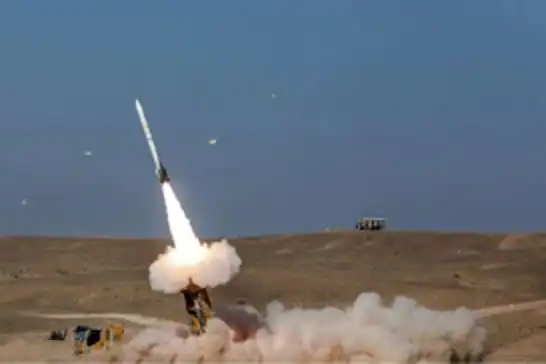
Iran's Islamic Revolutionary Guard Corps (IRGC) Aerospace Force successfully struck military-linked industrial facilities in the occupied city of Haifa with precision missiles on Monday.

A hundred days into the ongoing US-Israel war involving Iran, American households are increasingly feeling economic strain as rising fuel, food, and housing costs fuel inflation and weaken consumer confidence across the country.

The Islamic Emirate of Afghanistan has rejected recent concerns raised by regional countries regarding alleged security threats originating from Afghan territory, calling the claims “baseless” and politically motivated.

Palestinian doctor Hussam Abu Safiya, the director of Kamal Adwan Hospital in northern Gaza, is being held in Israeli solitary confinement under "harsh conditions" and stripped of regular medical care, a Palestinian lawyer revealed on Sunday.