44 years after Sabra and Shatila, Palestinian suffering remains unresolved
 13 oC
13 oC 
Güneşli

Forty-four years have passed since Sabra and Shatila became synonymous with one of the darkest chapters in the history of Palestinian refugees in Lebanon.
Yet for the families who survived the massacre, and for generations born long after it, September 16 is not simply a date in history.
It is a day of remembrance, mourning and unresolved questions.
The narrow alleys of the two refugee camps in Beirut still carry memories of relatives who never returned, families that were shattered and survivors whose lives were permanently marked by what they witnessed.
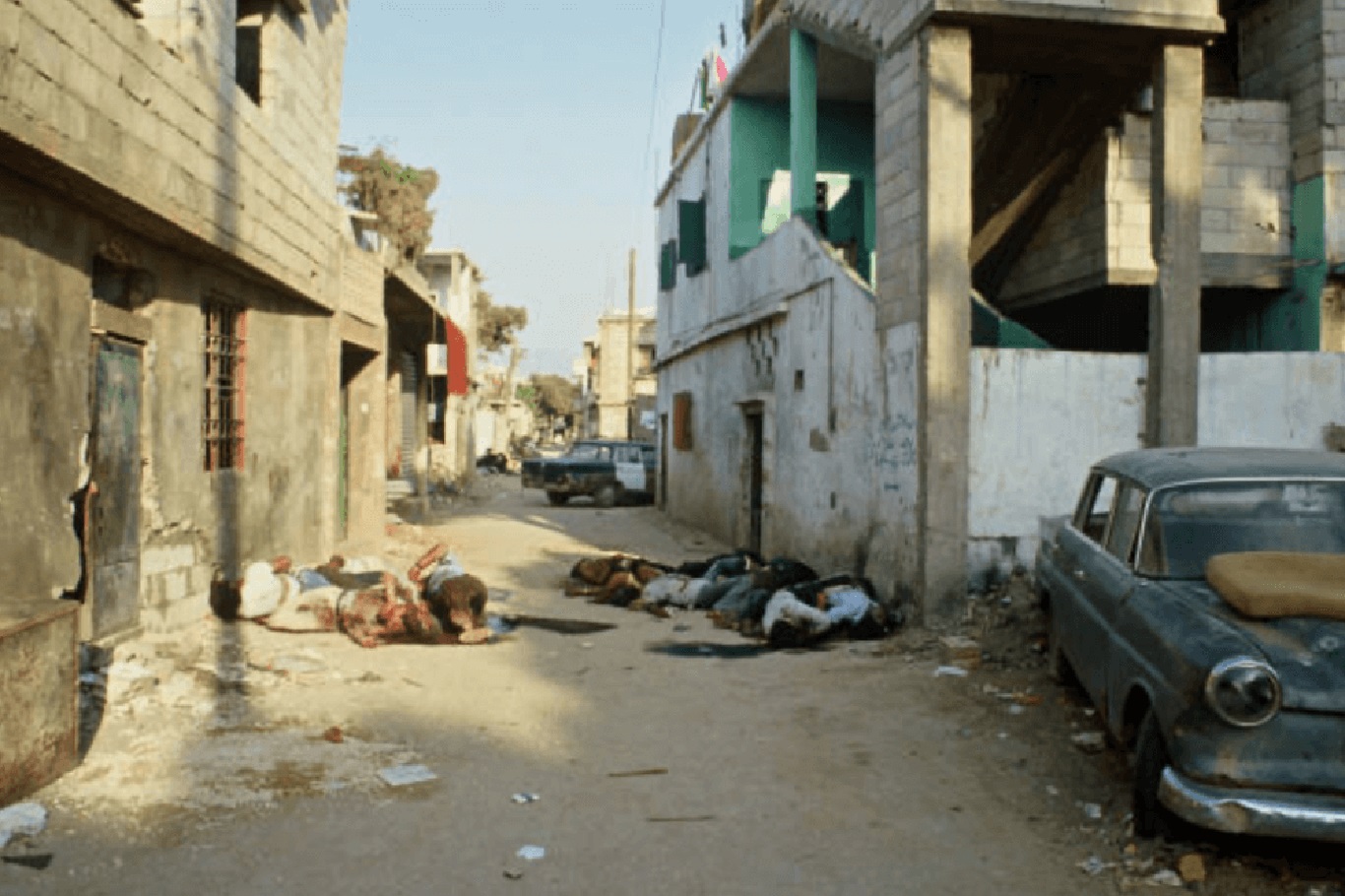
The massacre began on September 16, 1982, shortly after Israel invaded Lebanon and the Palestine Liberation Organization (PLO) withdrew from Beirut. Over the following three days, Palestinian and Lebanese civilians were killed inside the camps.
The precise number of victims remains disputed among historical sources. But the uncertainty surrounding the final death toll has never diminished the trauma carried by survivors or the place Sabra and Shatila occupies in Palestinian collective memory.
Three days of terror
The residents of Sabra and Shatila were largely refugees and descendants of Palestinians who had already experienced displacement during the Nakba.
In September 1982, they found themselves trapped once again.
According to survivor testimonies and historical investigations, armed Lebanese Phalangist militiamen entered the camps and carried out killings and other acts of violence against civilians, including women, children and elderly people.
Israeli forces had surrounded the area and maintained positions in its vicinity during the massacre.
An Israeli commission of inquiry, known as the Kahan Commission, concluded that the Phalangist forces bore direct responsibility for the killings while finding Israeli officials indirectly responsible for failing to prevent the massacre. The commission specifically held then-Defense Minister Ariel Sharon personally responsible for what it described as his failure to prevent the bloodshed.
The findings became an enduring part of the history of Sabra and Shatila and of the international debate over responsibility for the massacre.
For Palestinians, however, the significance of those three days cannot be reduced to the conclusions of an inquiry.
It lives in the empty places left behind.
It lives in family photographs of people who never came home.
It lives in names repeated by parents and grandparents so that those who were killed are not forgotten.
A massacre carried across generations
The passage of 44 years has not erased Sabra and Shatila.
For survivors, memories of the massacre remain painfully vivid: the fear inside the camps, the violence in the streets and homes, the disappearance of relatives and the desperate search for loved ones.
For younger Palestinians who were born decades later, the massacre has become inherited memory.
They did not hear the gunfire themselves. They did not walk through the alleys in September 1982. But they grew up hearing the names of those who were killed and listening to the stories of those who survived.
That is how historical trauma survives.
A generation remembers what happened. The next generation learns why it happened. And the generation after that inherits the grief.
For Palestinians in Lebanon, Sabra and Shatila is therefore not simply a tragedy that happened 44 years ago. It remains part of the lived history of a people whose experience has been shaped by dispossession, exile and repeated displacement.
From Sabra and Shatila to Gaza
The anniversary arrives at a time when Palestinians in Gaza and the occupied West Bank continue to face devastating humanitarian conditions.
The circumstances of Gaza in 2026 are not identical to those of Lebanon in 1982, and the two situations should not be treated as the same event. Yet the images of destroyed homes, displaced families, dead children and civilians searching for safety inevitably resonate with a population whose collective memory has been shaped by decades of displacement and conflict.
Since the war that began in October 2023, Gaza has endured enormous destruction and repeated mass displacement.
The United Nations Office for the Coordination of Humanitarian Affairs (OCHA) reported in September 2026 that attacks were continuing in populated areas of the Gaza Strip, with civilians still being killed and injured and homes and civilian infrastructure damaged.
According to Gaza's Health Ministry figures cited by OCHA, 35 Palestinians were reported killed and 104 injured between September 2 and 9. The UN also reported continuing shortages of medical supplies and serious deterioration in water and sanitation conditions.
For Palestinians living through the crisis, the humanitarian emergency is not an abstract statistic.
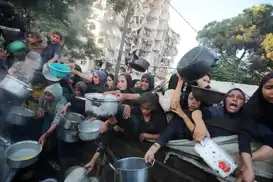
It means families searching for shelter.
It means children growing up surrounded by destruction.
It means parents struggling to find clean water and medical care.
And it means another generation learning what it means to be displaced.
Gaza's water crisis adds another layer of suffering
The humanitarian crisis has extended far beyond the immediate threat of violence.
UN assessments in September indicated that around 91 percent of assessed households in Gaza were experiencing moderate to high levels of water insecurity.
As the rainy season approached, humanitarian agencies also warned about worsening shelter and sanitation conditions, particularly in areas where displaced Palestinians were living in overcrowded and vulnerable conditions.
For a population already devastated by years of conflict and massive destruction, the absence of safe housing, reliable water and adequate medical services compounds the suffering.
The result is a humanitarian crisis in which survival itself has become a daily struggle.
The West Bank: displacement without an end
In the occupied West Bank, Palestinians are facing a different but increasingly severe pattern of violence and displacement.
OCHA reported that more than 1,600 settler attacks resulting in Palestinian casualties or property damage were documented between January and August 2026 across 275 Palestinian communities.
That amounted to an average of 6.7 attacks a day, according to the UN, compared with five attacks per day in 2025.
The UN also reported that approximately 1,500 Palestinians had been displaced by demolitions in the West Bank during 2026, while more than 4,000 Palestinians had been displaced through a combination of demolitions, evictions, settler attacks and related access restrictions.
For Palestinian families, displacement is therefore not confined to history.
It remains a present reality.
One memory, different wars
There is a danger in reducing the Palestinian experience to a series of disconnected tragedies.
The Nakba. The refugee camps. Lebanon. Sabra and Shatila. The occupation. Gaza. The West Bank. Repeated displacement.
Each episode has its own political, military and legal circumstances. But for Palestinians, these events are connected by a persistent experience of insecurity and uprooting.
The people of Sabra and Shatila were refugees carrying memories of Palestine.
Many Palestinians in Gaza today are also living through repeated displacement, often forced from one area to another in search of safety.
The historical circumstances are different. The suffering of individual families is not.
A destroyed home is still a destroyed home.
A missing relative is still a missing relative.
A child who grows up without a parent still carries that absence.
And a family forced from its home still knows what it means to lose the place it once called home.
Forty-four years later, the question remains
The anniversary of Sabra and Shatila forces a painful question back into the foreground:
What has changed for Palestinians after 44 years?
In 1982, Palestinian refugees in Lebanon were living with the legacy of the Nakba and the consequences of repeated displacement.
Today, the Palestinian refugee question remains unresolved, while Palestinians in Gaza and the West Bank continue to face occupation, conflict, displacement and severe humanitarian pressures.
The locations have changed.
The political circumstances have changed.
The generations have changed.
But Palestinian families continue to bury their dead, rebuild destroyed homes, search for missing relatives and carry memories of displacement from one generation to the next.
That continuity is at the heart of why Sabra and Shatila remains so powerful in Palestinian memory.
The dead are remembered because the story did not end
For the survivors of Sabra and Shatila, remembrance is not an exercise in reopening an old wound.
The wound never fully closed.
The massacre took the lives of hundreds of people, but its consequences extended far beyond those three days. It changed families, reshaped communities and left psychological scars that were carried into the lives of children and grandchildren.
Today, when Palestinians in Gaza seek shelter after their homes have been destroyed, when families in the West Bank are displaced from their communities, and when refugees in Lebanon continue to preserve the stories of their ancestors, Sabra and Shatila remains present.
Not because Palestinians refuse to leave the past behind.
But because the past continues to shape their present.
Sabra and Shatila: A memory that demands accountability
Remembering Sabra and Shatila in 2026 is therefore about more than marking the anniversary of a massacre.
It is about remembering the civilians whose lives were taken, the survivors who carried the trauma and the families who refused to allow their loved ones to disappear from history.
It is also a reminder that Palestinian civilian suffering cannot be understood through isolated dates and separate tragedies.
From the refugee camps of Lebanon to the displacement sites of Gaza, generations of Palestinians have carried the burden of losing homes, relatives and security.
Their demand for safety is not confined to one generation.
Their demand for dignity is not tied to one place.
And the principle that civilians must be protected and grave violations investigated and held accountable cannot depend on geography or political circumstance.
Forty-four years after the bloodshed in Sabra and Shatila, the names of the victims remain.
The memories remain.
And for Palestinians, so does the unanswered question:
When will Palestinian children be allowed to grow up without inheriting the fear, displacement and grief that have followed their families for generations? (ILKHA)
LEGAL WARNING: All rights of the published news, photos and videos are reserved by İlke Haber Ajansı Basın Yayın San. Trade A.Ş. Under no circumstances can all or part of the news, photos and videos be used without a written contract or subscription.
Twelve years after the October 6-8, 2014 violence in southeastern Türkiye, questions over accountability and the course of the judicial process continue to be raised by victims' families and their lawyers.
For more than a decade, Najmuddin Gotsinskii stood at the center of the North Caucasus’ turbulent struggle against Bolshevik rule, combining religious authority with political and military leadership in an effort to preserve Islamic institutions and establish a society governed by sharia.
More than three decades have passed since the Srebrenica genocide, yet the tragedy remains one of the darkest chapters in modern European history. The massacre of more than 8,000 Bosniak Muslim men and boys in July 1995 was not simply another wartime atrocity—it was a genocide that unfolded in the heart of Europe despite the presence of the international community.