Alija Izetbegović remembered 23 years after his death as a symbol of faith, resistance and justice
 13 oC

Güneşli

Bosnia-Herzegovina’s first president remains an enduring inspiration for Muslims worldwide through his steadfast faith, intellectual legacy and struggle for his people’s freedom and dignity.
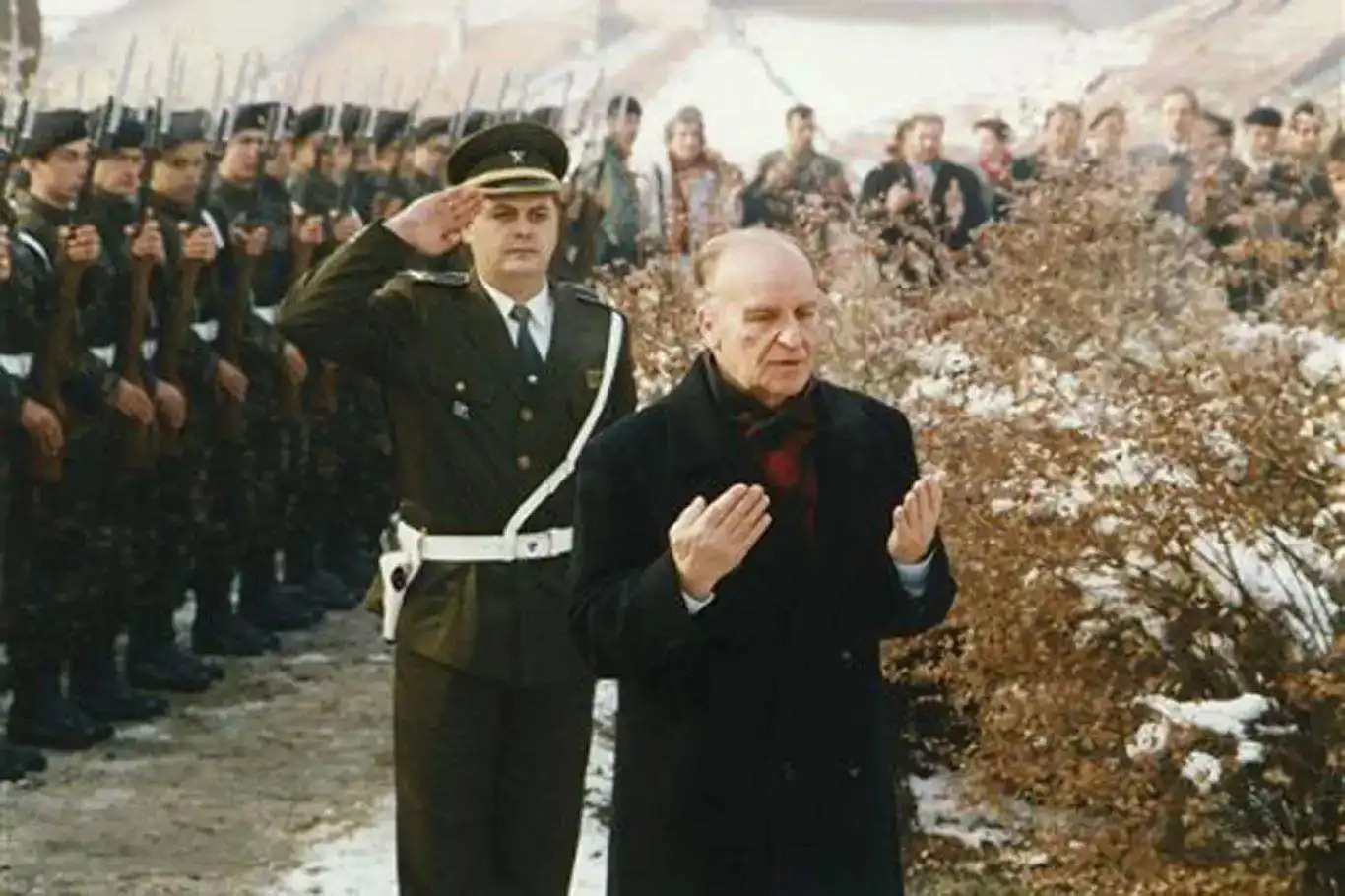
The Muslim world is commemorating the 23rd anniversary of the death of Alija Izetbegović, Bosnia-Herzegovina’s first president, whose life was marked by an unwavering commitment to Islam, the rights of his people and the pursuit of justice.
Widely respected as a statesman, Muslim thinker and defender of Bosnian independence, Izetbegović remains a powerful symbol of faith and resilience. His life encompassed imprisonment under communist rule, the struggle for Bosnia-Herzegovina’s sovereignty and the devastating war of the 1990s, during which Bosnian Muslims faced mass atrocities, including the Srebrenica genocide.
Born on Aug. 8, 1925, in Bosanski Šamac, Izetbegović grew up in a Muslim family and developed a deep attachment to Islam from an early age. His religious upbringing helped shape the principles that would guide his intellectual work and political life.
As a young man, he became involved in the Young Muslims movement, known as Mladi Muslimani, which sought to strengthen Islamic awareness and promote religious and social engagement among young Muslims in Yugoslavia.
His commitment to Islamic thought brought him into conflict with the communist authorities. In 1946, he was imprisoned for his involvement in Muslim religious activities and served a five-year sentence. The experience marked the beginning of a long period of political persecution that would test his convictions without extinguishing his determination to defend his beliefs.
In 1970, Izetbegović published The Islamic Declaration, a work examining the role of Islam in society and the relationship between religious principles and political life. The text later became a major point of controversy in Yugoslavia and contributed to the authorities’ scrutiny of his activities.
In 1983, he was arrested alongside other Muslim intellectuals and sentenced to 14 years in prison following a politically charged trial. He rejected the repression of religious and intellectual freedom, and his imprisonment turned him into a prominent symbol of resistance among many Bosnian Muslims.
Released in 1988, Izetbegović returned to public life as Yugoslavia entered a period of profound political upheaval. In 1990, he helped establish the Party of Democratic Action (Stranka demokratske akcije, SDA), which emerged as a leading political force representing Bosnia’s Muslim population, and became a central figure in the country’s movement towards independence.
Leading Bosnia through war and genocide
Izetbegović assumed leadership at one of the most difficult moments in Bosnia-Herzegovina’s modern history. As Yugoslavia disintegrated, Bosnia declared independence in 1992, triggering a devastating war that lasted until 1995.
During the conflict, Bosnian Muslims endured widespread killings, forced displacement, detention and other atrocities. The Srebrenica genocide in July 1995, in which Bosnian Serb forces murdered more than 8,000 Bosniak men and boys, became one of the gravest crimes committed on European soil since World War II.
As president, Izetbegović sought to preserve Bosnia-Herzegovina as an independent state and defend its population amid military aggression and an increasingly desperate humanitarian crisis. His leadership involved navigating a difficult international diplomatic landscape while confronting the immense human cost of the war.
The conflict ended with the signing of the Dayton Peace Agreement in December 1995, which preserved Bosnia-Herzegovina as a sovereign state while establishing a complex political structure. Although the agreement brought an end to the fighting, the country continued to face deep divisions and the consequences of war.
For many Bosnians and Muslims around the world, Izetbegović’s role during these years remains inseparable from the struggle for survival, self-determination and the protection of Muslim identity in the Balkans.
A Muslim intellectual whose ideas crossed borders
Beyond politics, Izetbegović was a prolific writer whose works explored Islam, morality, civilisation and the challenges facing modern societies.
His book Islam Between East and West, published in English in 1984, examined the place of Islam among competing philosophical and ideological traditions. He argued for an understanding of human life that recognises both its material and spiritual dimensions, challenging approaches that separate social progress from moral and religious values.
His writings reflected his conviction that Islam could offer guidance for contemporary life without requiring Muslims to abandon intellectual inquiry or engagement with the wider world.
For his supporters, Izetbegović embodied the possibility of combining Islamic faith with political responsibility, intellectual independence and a commitment to coexistence. His vision of Bosnia-Herzegovina was rooted in the country's historical and religious diversity, while insisting that Muslims should not have to surrender their identity to secure their place in society.
His life also demonstrated the personal cost of standing by one's convictions. Years of imprisonment, political hostility and the burden of leading a country through war shaped a legacy defined by perseverance and sacrifice.
A legacy that continues to inspire
Izetbegović withdrew from active political leadership in 2000 as his health deteriorated. He died in Sarajevo on Oct. 19, 2003, at the age of 78.
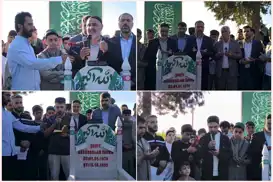
More than two decades later, his memory remains deeply rooted in Bosnia-Herzegovina. Commemorations and prayers at his grave reflect the respect he continues to command among many Bosnians, while his writings remain a point of reference for readers interested in Islamic thought, political ethics and the history of the Balkans.
For Muslims beyond Bosnia, Izetbegović’s life carries a broader message: faith can sustain people through persecution, intellectual conviction can withstand political repression, and the struggle for justice demands courage even in the face of overwhelming adversity.
His legacy also recalls the suffering of Bosnian Muslims during the 1990s and the importance of preserving the memory of atrocities committed against them.
As the anniversary of his death is marked, Alija Izetbegović is remembered not only as the leader who guided Bosnia-Herzegovina through the struggle for independence, but also as a Muslim intellectual who sought to uphold faith, dignity and justice in a world marked by ideological conflict and human suffering. (ILKHA)
LEGAL WARNING: All rights of the published news, photos and videos are reserved by İlke Haber Ajansı Basın Yayın San. Trade A.Ş. Under no circumstances can all or part of the news, photos and videos be used without a written contract or subscription.

US President Donald Trump has drawn criticism after making remarks about the name “Muhammad” at an election rally in Georgia, prompting renewed concerns over the stereotyping of Muslims and the growing normalisation of anti-Islamic rhetoric in American political discourse.
Twelve years after the October 6-8, 2014 violence in southeastern Türkiye, questions over accountability and the course of the judicial process continue to be raised by victims' families and their lawyers.
For more than a decade, Najmuddin Gotsinskii stood at the center of the North Caucasus’ turbulent struggle against Bolshevik rule, combining religious authority with political and military leadership in an effort to preserve Islamic institutions and establish a society governed by sharia.