BYD and Türkiye ink $1 billion deal for electric vehicle plant

 13 oC

Güneşli

Chinese electric vehicle (EV) giant BYD and Türkiye's Industry and Technology Ministry signed a landmark investment agreement on Monday to establish an EV production plant in Türkiye, marking a historic milestone for the Turkish automotive sector.
The $1 billion deal was signed at the Presidential Dolmabahçe Working Office in Istanbul, under the auspices of President Recep Tayyip Erdoğan. Industry and Technology Minister Mehmet Fatih Kacır and BYD Chairperson and CEO Wang Chuanfu represented their respective parties at the signing.
The new facility will produce electric and rechargeable hybrid cars with an annual capacity of 150,000 vehicles. It will also house a research and development center focused on sustainable mobility technologies. Production is slated to begin by the end of 2026, with the plant expected to create up to 5,000 direct jobs.
"Thanks to Türkiye's unique advantages such as its developing technology ecosystem, strong supplier base, extraordinary location, and qualified workforce, BYD's investment in this new production facility will further improve the brand's local production capabilities and improve logistics efficiency," BYD stated. The company aims to meet the increasing demand for new energy vehicles in Europe through this investment.
Minister Kacır, in a post on X (formerly Twitter), celebrated the agreement as a significant step for Türkiye's automotive industry. He highlighted the country's role as a center of attraction for global investments and emphasized the government's commitment to fostering investor-friendly policies.
"Türkiye is a gateway for investors to access the European market through the Customs Union and many export markets thanks to free trade agreements. Those who trust and invest in Türkiye will continue to win," Kacır noted.
The location of the new facility has not been officially disclosed, though previous media reports suggested it might be in the western Manisa province.
This substantial investment follows the European Union's recent decision to impose additional provisional tariffs of up to 38% on Chinese EVs, citing state subsidies that were deemed to unfairly undermine European competitors. Turkish-made cars benefit from favorable access to the EU under a customs union agreement dating back to 1995.
The Marmara region, around Istanbul, has become a global automotive hub, with major carmakers such as Fiat, Renault, Ford, Toyota, and Hyundai operating plants there since the 1970s. Türkiye is the third-largest automobile manufacturer in Europe and a leader in exports, with an annual export value exceeding $35 billion.
Minister Kacır underscored the country's goal of transitioning towards new generation, environmentally friendly electric vehicles in the automotive sector, viewing BYD's investment as a crucial step in this direction. (ILKHA)
LEGAL WARNING: All rights of the published news, photos and videos are reserved by İlke Haber Ajansı Basın Yayın San. Trade A.Ş. Under no circumstances can all or part of the news, photos and videos be used without a written contract or subscription.

Türkiye's HÜDA PAR has submitted a draft law to parliament proposing to exempt citizens who do not own a registered home from title deed fees when purchasing their first residence, in a move aimed at easing housing costs for low- and middle-income households.

Global oil prices fell more than 3% on Monday as renewed diplomatic efforts to end the conflict involving the United States and Iran eased concerns over potential disruptions to Middle Eastern energy supplies.
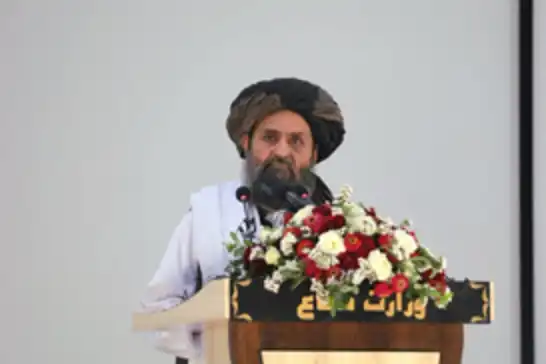
Afghanistan’s Islamic Emirate has inaugurated the first phase of the Shoranda cement factory in Kandahar, with Deputy Prime Minister for Economic Affairs Mullah Abdul Ghani Baradar Akhund describing the project as part of the country's efforts to strengthen domestic production and reduce reliance on imports.

Türkiye's gross domestic expenditure on research and development (R&D) increased by 328.6 billion Turkish liras year-on-year to reach 980.4 billion liras in 2025, while the share of R&D spending in the country's gross domestic product (GDP) rose to 1.55 per cent, according to the 2025 Research and Development Activities Survey released by the Turkish Statistical Institute (TurkStat).