Carney says Canada will emerge stronger and more Independent from US trade war
 13 oC
13 oC 
Güneşli

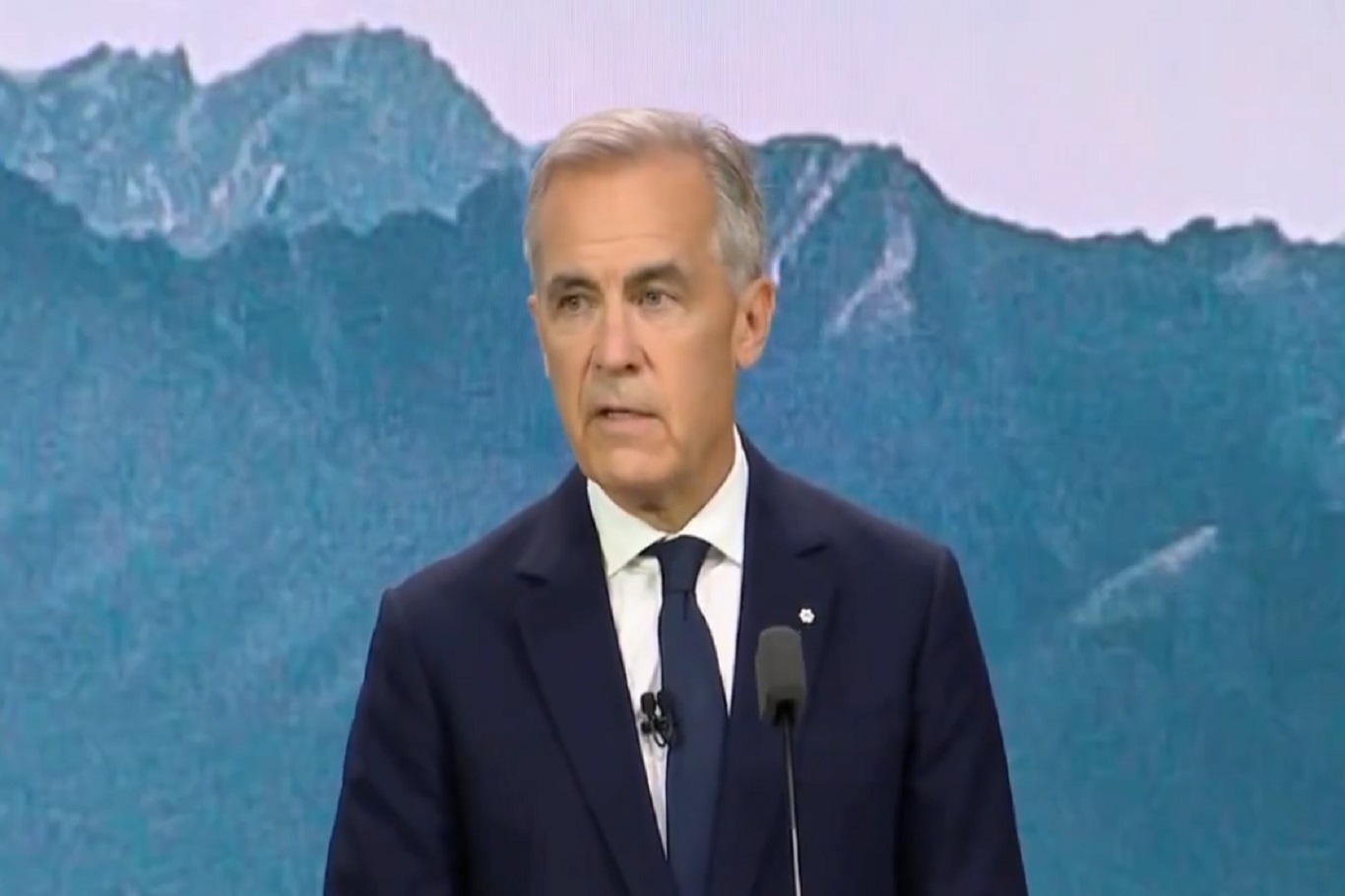
Canadian Prime Minister Mark Carney said Tuesday that Canada intends to emerge from its escalating trade dispute with the United States as a stronger, more resilient and more independent economy, signaling that Ottawa is prepared to wait for the right conditions rather than rush into a new agreement with Washington.
Speaking to hundreds of international investors at the Canada Investment Summit in Toronto, Carney stressed that Canada would remain a close neighbor and trading partner of the United States, while insisting that the relationship must be based on mutual respect and sovereignty.
“And to our American friends, let me say this. We will always be neighbors,” Carney said. “But we work best when we work as true partners that respect each other's traditions and sovereignty.”
“When those opportunities return, Canada will be an even better partner — stronger, more resilient, more independent,” he added.
Carney's remarks came as the trade dispute between the two countries entered a more confrontational phase following the collapse of recent negotiations.
Canada began imposing new retaliatory tariffs on U.S. imports on Sept. 8 after Washington imposed a 50% tariff on $27.6 billion worth of Canadian goods.
Ottawa's countermeasures include tariffs of 15%, 25% and 50% on selected U.S. products, covering sectors including steel and aluminum, dairy, appliances, agricultural equipment, pulp and paper, plastics and electronics.
The measures followed the breakdown of negotiations between the two governments, with Canada saying the terms sought by Washington were unacceptable.
Reuters reported that the United States has also announced restrictions affecting Canadian alcohol, motorcycles and dairy products, further escalating tensions between the two longtime trading partners.
Despite the dispute, Carney said a mutually beneficial trade arrangement with Washington remained possible.
“There is a mutually beneficial arrangement that can be had,” he said during a fireside discussion after his speech. “When it is the right time to strike that deal, we'll be ready to do that.”
Carney has increasingly emphasized the need for Canada to diversify its economy and reduce its dependence on the U.S. market.
The Canadian government is seeking to attract more investment from Europe, Asia and the Middle East while expanding trade relationships beyond its southern neighbor.
At the Toronto summit, Carney said Canada wants to catalyze C$1 trillion in investment over the next five years. His government also announced a permanent tax incentive allowing Canadian businesses to immediately write off most new capital investments, while seeking private investment in the operation of Canada's four largest airports through long-term concessions. Public ownership of the airport land and assets would remain with the government.
Carney said the airport initiative could generate tens of billions of dollars for reinvestment in transportation and other infrastructure.
The investment drive reflects Ottawa's broader effort to strengthen domestic economic capacity as uncertainty over access to the U.S. market grows.
Without directly naming U.S. President Donald Trump, Carney criticized what he described as a growing tendency to treat international economic relations as purely transactional.
“Our reputation — as a reliable, predictable partner — has rarely been more valuable in a world where transactions are replacing relationships, and zero-sum is favored over win-win,” he said.
Carney argued that countries seeking to protect their economic sovereignty increasingly need stronger relationships with multiple partners rather than relying heavily on a single market.
His government has consequently intensified efforts to deepen Canada's economic relationship with Europe.
Carney traveled to Europe on Tuesday and was scheduled to address the European Parliament as part of an effort to strengthen ties with the European Union.
Reuters reported that Canada is seeking what Carney has described as a “unique alliance” with the EU, with Ottawa aiming to double non-U.S. trade over the next decade. The proposed cooperation would extend beyond commerce to areas including defense, digital security, critical minerals and supply chains.
The European Commission has also signaled an interest in closer ties. Commission President Ursula von der Leyen proposed Wednesday that Canada become the EU's first “associate member,” a concept that would stop short of full EU membership but could deepen cooperation in areas such as trade, defense, artificial intelligence and climate policy. The proposal would require approval by EU member states.
The development underscores how the deterioration in Canada-U.S. relations is prompting Ottawa to seek stronger economic and strategic links elsewhere.
Trump has repeatedly used tariffs as a negotiating tool with trading partners and has pressured companies to move production and investment to the United States.
He has also repeatedly suggested that Canada could become the 51st U.S. state, remarks that have further strained relations between Washington and Ottawa.
Carney has responded by emphasizing Canada's sovereignty while maintaining that the two countries have strong economic ties that cannot easily be replaced.
The dispute is particularly significant because the United States remains Canada's dominant trading partner. At the same time, the recent escalation has encouraged Ottawa to accelerate efforts to diversify its export markets and attract investment from other regions.
The latest developments leave Canada and the United States with competing pressures.
For Ottawa, maintaining access to the U.S. market remains economically important, but the government is simultaneously trying to reduce Canada's vulnerability to changes in American trade policy.
For Washington, the tariff dispute has become part of a broader effort under Trump to use trade policy to encourage investment and production inside the United States.
Carney's message in Toronto was that Canada remains willing to negotiate — but not at the expense of its economic interests or sovereignty.
“We will always be neighbors,” he told his American audience.
But as Ottawa deepens ties with Europe and other international partners, Canada's strategy is increasingly centered on ensuring that being America's neighbor does not mean being economically dependent on America. (ILKHA)
LEGAL WARNING: All rights of the published news, photos and videos are reserved by İlke Haber Ajansı Basın Yayın San. Trade A.Ş. Under no circumstances can all or part of the news, photos and videos be used without a written contract or subscription.
A total of 171,887 road motor vehicles were registered in Turkey in August, the Turkish Statistical Institute (TurkStat) confirmed on Wednesday.

Türkiye’s construction production fell 4.7% year-on-year in July, the Turkish Statistical Institute (TÜİK) said Tuesday, with activity in building construction and specialized construction declining despite continued growth in civil engineering.
Türkiye’s overall export unit value index rose 8.2% year-on-year in July, while the import unit value index increased by 12.8%, the Turkish Statistical Institute (TÜİK) said.