Global debt hits record $365.5 trillion in first half of 2026

 13 oC

Güneşli

Global debt increased by $10 trillion during the first half of 2026, reaching a record $365.5 trillion, driven mainly by higher public-sector and non-financial corporate borrowing, according to the latest Global Debt Monitor published by the Institute of International Finance (IIF).
The report showed that global public debt rose to $110.5 trillion, while debt held by non-financial companies reached $105.1 trillion. Financial sector debt stood at $84.3 trillion, and household debt totaled $65.7 trillion.
Emerging markets, led by China, accounted for the largest increase in borrowing, with total debt reaching $110.6 trillion. Total debt in advanced economies climbed to $255 trillion.
The IIF said the global debt-to-GDP ratio stabilized at around 310 per cent during the reporting period.
The report also highlighted the growing burden of debt servicing in advanced economies. Annual interest payments among G7 countries increased by 85 per cent, while governments paid around $3.5 trillion in interest on sovereign debt—an amount exceeding combined global spending in areas such as artificial intelligence, defense and energy.
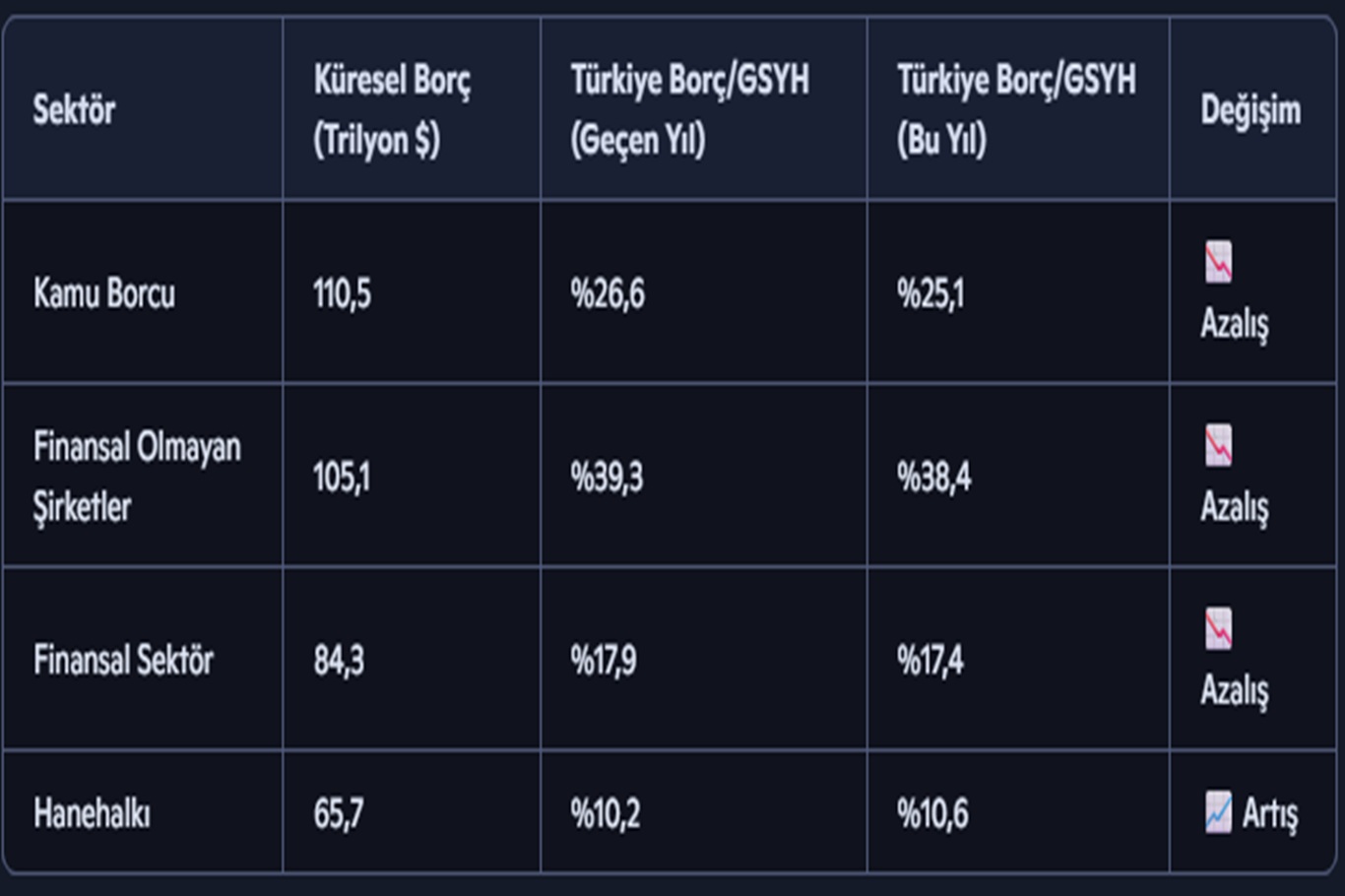
The IIF noted that Türkiye reduced its debt ratios across all sectors except households, describing the trend as a positive sign of macroeconomic rebalancing compared with many other economies.(ILKHA)
LEGAL WARNING: All rights of the published news, photos and videos are reserved by İlke Haber Ajansı Basın Yayın San. Trade A.Ş. Under no circumstances can all or part of the news, photos and videos be used without a written contract or subscription.

Türkiye and China have signed a memorandum of understanding on renewable energy cooperation expected to pave the way for approximately $15 billion in investments, Energy and Natural Resources Minister Alparslan Bayraktar announced.

Türkiye's Central Bank has raised its year-end inflation forecast for 2026 to 29.5%, citing geopolitical tensions, rising energy costs and persistent supply-side pressures, while reiterating its commitment to maintaining a tight monetary policy until price stability is achieved.

Türkiye's overall export unit value index increased by 7.0% year-on-year in September 2026, while the import unit value index rose by 12.7%, according to data released by the Turkish Statistical Institute (TurkStat) on Thursday.

Russia's federal budget deficit reached 5.23 trillion rubles (approximately $63 billion) in the first 10 months of 2026, significantly exceeding the government's initial full-year target as spending continued to outpace revenue growth, according to preliminary Finance Ministry data.