Türkiye Central Bank raises 2026 inflation forecast to 28% amid geopolitical risks
 13 oC
13 oC 
Güneşli

Türkiye’s Central Bank has raised its year-end 2026 inflation forecast to 28%, citing higher energy, food and import costs as well as continued uncertainty stemming from geopolitical developments.
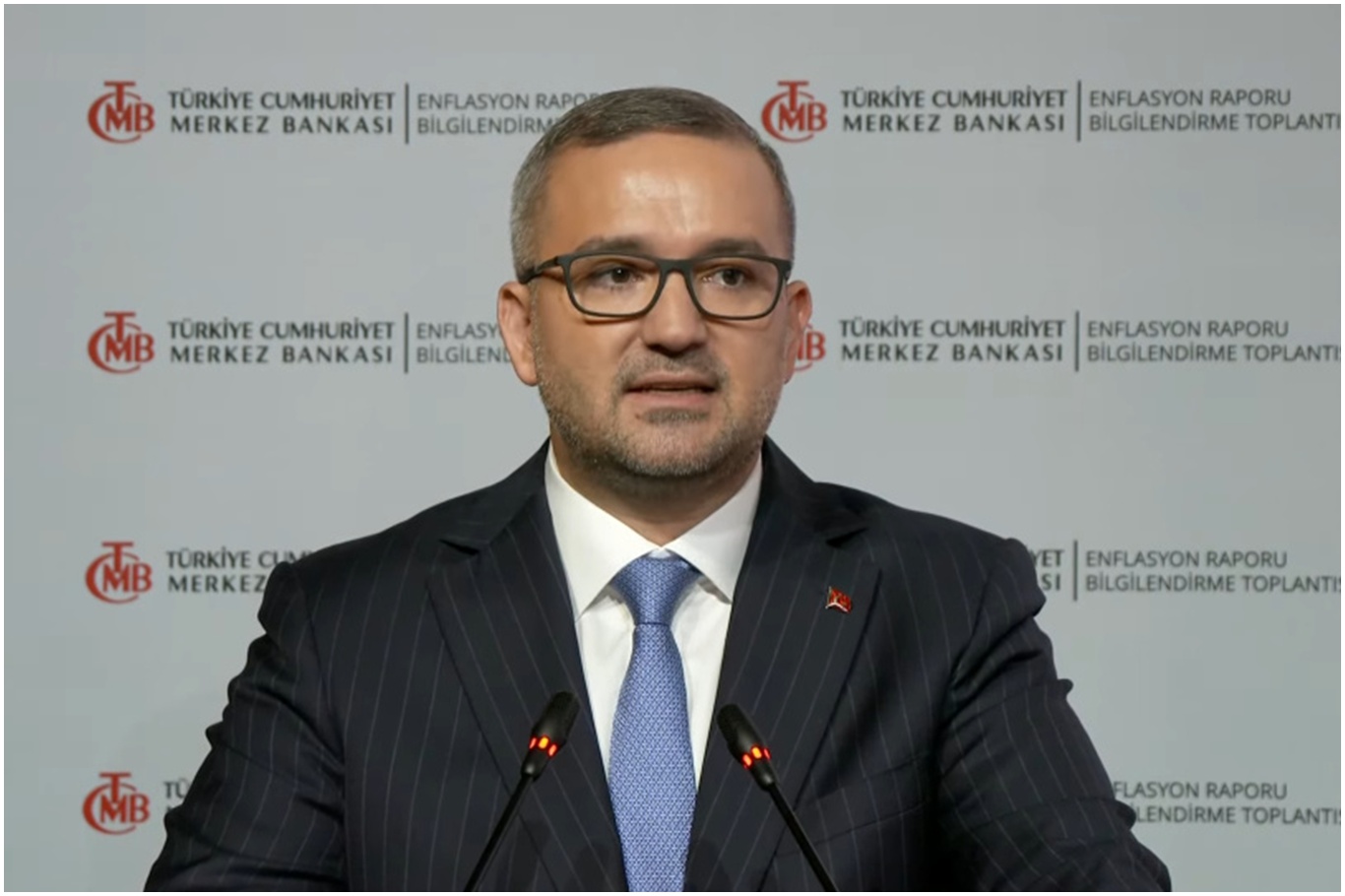
Speaking at the briefing on the 2026-III Inflation Report, Central Bank Governor Fatih Karahan said the disinflation process was continuing but had lost momentum in recent months due partly to supply-side shocks. He stressed that the bank would maintain its tight monetary policy stance until price stability is achieved.
Annual consumer inflation stood at 31.8% in July, while core inflation remained slightly below the headline rate. Karahan said core goods inflation remained relatively low despite increased costs, while weakening demand continued to contribute to the slowdown in services inflation.
Inflation forecast revised upward
The Central Bank now projects inflation to fall to 15% by the end of 2027 and 9% by the end of 2028, before stabilizing around its medium-term target of 5%.
Karahan said the upward revision for 2026 reflected developments in diesel, natural gas and non-energy commodity prices, as well as higher food inflation assumptions and adjustments related to administered prices.
The bank expects the downward trend in underlying inflation to continue as monetary policy remains tight and inflation expectations and pricing behavior improve.
Central Bank maintains tight monetary stance
Karahan recalled that the Central Bank reduced its policy rate by 100 basis points to 37% in January 2026 but subsequently kept the rate unchanged as geopolitical developments created additional risks to the inflation outlook.
The bank has also continued to manage liquidity through overnight funding, deposit-buying and swap auctions, while implementing macroprudential measures targeting Turkish lira deposits, credit growth and liquidity conditions.
According to Karahan, total loan growth slowed from 34.6% at the end of February to around 25%, while Turkish lira deposit growth strengthened. The share of Turkish lira deposits increased to 62% during the second quarter.
Reserves rise by $30 billion
Karahan also highlighted an improvement in Türkiye’s reserve position.
Gross international reserves increased from $155 billion on March 27, 2026, to $185 billion on August 12, representing a $30 billion increase. Net reserves excluding swaps rose by $35 billion to $56 billion over the same period.
He said Türkiye’s risk premium and exchange-rate volatility had also improved compared with the previous reporting period, approaching levels seen before the latest geopolitical turbulence.
Geopolitical risks remain key concern
Karahan warned that geopolitical developments remain a major source of uncertainty for the inflation outlook.
He noted that oil and natural gas prices had risen again amid renewed tensions after initially declining following a ceasefire. Higher energy prices, diesel refinery margins, food costs and potential supply-side disruptions remain among the main upside risks to inflation.
Global growth is also expected to lose momentum in 2026, while fluctuating energy prices continue to influence global inflation expectations and monetary policy conditions.
Demand remains disinflationary
The governor said domestic demand remained at disinflationary levels during the second quarter, with retail sales and card spending showing signs of slowing.
At the same time, exports increased in the second quarter despite challenging global trade conditions, while imports recorded a comparatively smaller increase. As a result, Türkiye’s trade deficit narrowed compared with the first quarter.
Karahan said the current account deficit-to-GDP ratio was expected to remain below its long-term average in 2026, although rising energy prices, geopolitical developments and increased protectionism in international trade represented risks.
‘We will decisively maintain our tight policy stance’
Concluding his remarks, Karahan said the disinflation process remained intact despite losing momentum because of recent supply-side shocks.
He emphasized that weaker domestic demand and declining inflation in categories most directly affected by monetary policy demonstrated the impact of the Central Bank’s approach.
“As the impact of these shocks subsides, we anticipate that the disinflation process will regain momentum,” Karahan said, adding that the Central Bank would “decisively maintain” its tight monetary policy stance until price stability is achieved in line with its interim targets. (ILKHA)
LEGAL WARNING: All rights of the published news, photos and videos are reserved by İlke Haber Ajansı Basın Yayın San. Trade A.Ş. Under no circumstances can all or part of the news, photos and videos be used without a written contract or subscription.

Türkiye’s construction production declined by 6.0% year-on-year in June 2026, according to data released by the Turkish Statistical Institute (TurkStat) on Friday.

Türkiye’s agricultural producer prices rose 18.81% year-on-year in July and 2.31% from the previous month, according to data from the Turkish Statistical Institute (TurkStat).

Global sales of electric vehicles (EVs) increased for the fifth consecutive month in July, with strong growth in Europe offsetting declines in China and North America, according to data from consultancy Benchmark Mineral Intelligence (BMI).