Türkiye unveils plan for small modular reactors in nuclear expansion push
 13 oC
13 oC 
Güneşli

Türkiye is set to introduce a new law to bolster the development of Small Modular Reactors (SMRs) as part of its ambitious goal to achieve 20,000 megawatts of nuclear power capacity by 2050, Energy and Natural Resources Minister Alparslan Bayraktar announced Wednesday.
In an interview with Anadolu Agency, Bayraktar revealed that the forthcoming legislation will establish a regulatory and investment framework to attract both domestic and international companies to manufacture and operate SMRs. These compact nuclear units, known for their faster construction and lower costs compared to traditional plants, are intended to power industrial zones and remote areas.
The government projects that SMRs could contribute up to 5,000 megawatts to Türkiye’s energy grid. The initiative includes plans to develop local manufacturing capabilities, aiming to enhance industrial capacity and position Türkiye as a potential exporter of SMR technology.
“We are crafting an incentive model to encourage private sector leadership in SMR deployment, similar to our successful expansion of wind and solar energy,” Bayraktar said. Unlike the intergovernmental framework used for the Akkuyu Nuclear Power Plant, the new law will offer a flexible structure to facilitate both private and public sector involvement.
Akkuyu Project Nears Completion, Faces Delay
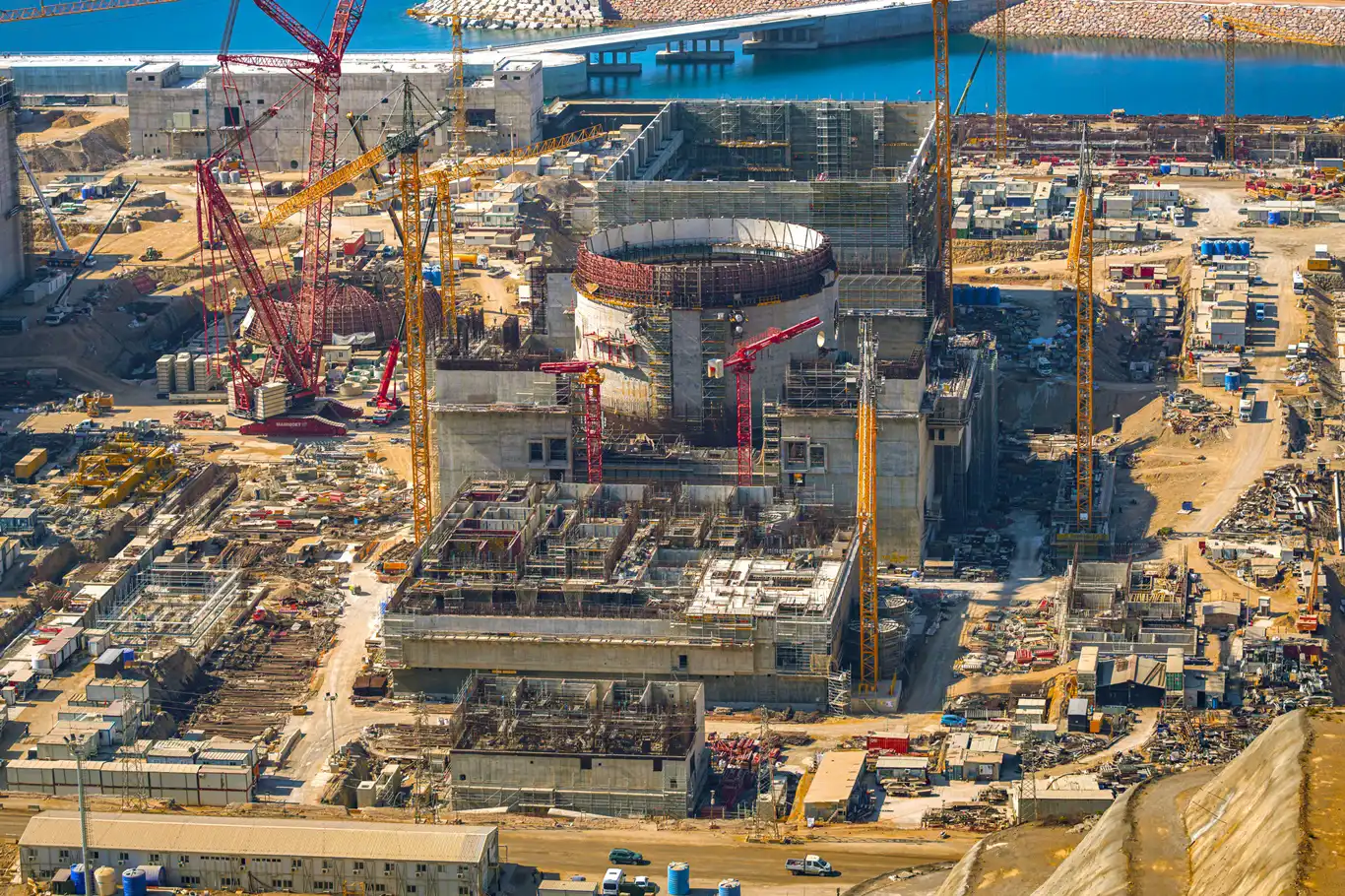
Bayraktar provided an update on the Akkuyu Nuclear Power Plant, Türkiye’s first major nuclear facility, constructed in collaboration with Russia’s Rosatom. The first of its four reactors is 95% complete but has faced delays due to pandemic-related disruptions, supply chain challenges, and geopolitical issues. Originally slated for commissioning in April 2025, the reactor’s launch is now scheduled for 2026. Once fully operational, the plant is expected to supply approximately 10% of Türkiye’s electricity.
Addressing rumors of ownership changes, Bayraktar clarified that up to 49% of the Akkuyu project can be sold to investors with Türkiye’s approval, per the existing agreement.
Future Nuclear Plans in Sinop and Thrace
Türkiye is also exploring additional nuclear projects in Sinop and Thrace, engaging in talks with Russia, China, South Korea, and Canada. Each proposed site is planned to host four reactors. While no agreements have been finalized, Bayraktar hinted that future projects might involve greater participation from Türkiye’s state-owned electricity company, EUAS, and could adopt different partnership models compared to Akkuyu.
The proposed SMR legislation and ongoing nuclear projects underscore Türkiye’s commitment to diversifying its energy mix and strengthening its position in the global nuclear energy landscape. (ILKHA)
LEGAL WARNING: All rights of the published news, photos and videos are reserved by İlke Haber Ajansı Basın Yayın San. Trade A.Ş. Under no circumstances can all or part of the news, photos and videos be used without a written contract or subscription.
Türkiye’s total installed electricity generation capacity reached 127,355 megawatts (MW) as of October 2026, with renewable energy sources accounting for approximately 62% to 62.7% of the country’s total capacity, according to official data from the Ministry of Energy and Natural Resources.
The Central Bank of the Republic of Türkiye (CBRT) has cut its benchmark one-week repo rate by 100 basis points to 36% from 37%, citing signs of easing underlying inflationary pressures and weak domestic demand.

Türkiye’s consumer confidence index fell by 7.7% in October, dropping to 84.8 from 91.9 in September, according to data released by the Turkish Statistical Institute (TurkStat) on Thursday.
Türkiye has called on the European Union to ensure that its proposed "Made in EU" policy takes into account the Customs Union and integrated production networks between the two sides, following a high-level meeting with representatives of the country's automotive industry.