Greece steps up mosquito control as West Nile virus cases rise sharply
 13 oC
13 oC 
Güneşli

Greek health authorities are intensifying mosquito-control operations as West Nile virus infections continue to rise across the country, with the Attica region around Athens among the areas of greatest concern.
The National Public Health Organization (EODY) has urged residents to maintain personal protection measures throughout the mosquito season, warning that new areas of infection cannot be predicted because the virus is already circulating among mosquito populations.
Greece had recorded 355 locally acquired West Nile virus infections as of Sept. 17, according to the latest European Centre for Disease Prevention and Control (ECDC) surveillance data. Greece accounted for the second-highest number of locally acquired cases in Europe at that point, behind Italy, which had reported 652 cases.
The latest figure represents a sharp increase from the 42 cases recorded nationwide by July 29, when EODY warned that infections could rise substantially during the peak period of transmission. At that stage, 35 cases had been reported in Attica alone.
EODY first confirmed Greece’s 2026 transmission season in early July, when it reported a case of West Nile virus meningoencephalitis in a person over 60 who was believed to have been exposed in the northern Athens area.
Authorities expand mosquito-control operations
In response to the increased circulation of the virus, Greece’s Health Ministry has authorized additional mosquito-control operations in Attica, Eastern Macedonia and Thrace, and Central Macedonia.
The measures include ultra-low-volume (ULV) spraying using specialized biocides to target adult mosquitoes. In Attica, additional spraying has been approved in Spata, Artemis, Pallini and surrounding areas of Eastern Attica, subject to restrictions designed to keep applications away from densely populated areas.
Additional ULV operations have also been approved in wider rice-growing areas of Central Macedonia, where mosquito breeding conditions can be particularly favorable.
Authorities have stressed that adult-mosquito spraying is an exceptional measure rather than a routine control method. Systematic mosquito control during the larval stage remains the main preventive strategy and is normally carried out earlier in the season.
The emergency measures were authorized because of the documented circulation of West Nile virus and the associated public health risk, according to the authorities.
Greece among Europe's most affected countries
The increase in Greece forms part of a wider rise in West Nile virus activity across Europe during the 2026 transmission season.
As of Sept. 17, 16 European countries had reported a combined 1,482 locally acquired human cases, according to the ECDC. Greece accounted for 355 cases, while Italy reported 652, Spain 114, Romania 91 and France 81. A total of 180 affected areas had been identified across Europe.
The ECDC said the 2026 season was showing an intense level of West Nile virus circulation in several European countries. Earlier in September, it reported that Greece had recorded a record number of human cases for that point in the season.
The agency has not identified evidence of increased disease severity in humans in Europe this season, although surveillance remains ongoing and additional cases may be reported as data are updated.
Monitoring continues
Greek authorities have instructed local authorities to closely monitor mosquito populations and document the effectiveness of control operations.
The monitoring program includes tracking vehicles involved in spraying operations, collecting mosquito samples and comparing population levels before and after applications.
Authorities have also requested updated entomological data and virus-surveillance information. In Central Macedonia, officials have called for mosquito samples to be identified at the species level rather than simply by genus, saying this is necessary to properly assess changes in mosquito populations and the potential risk of disease transmission.
Health authorities have emphasized that spraying operations must comply with safety requirements designed to protect residents, workers, wildlife and the environment.
Public urged to take precautions
EODY continues to recommend mosquito-protection measures across Greece throughout the transmission season because new infection areas cannot be reliably predicted.
Residents are advised to use insect repellent, wear clothing that covers the arms and legs, use screens on windows and doors where possible, and eliminate standing water around homes and other areas where mosquitoes can breed.
Particular caution is advised for older adults and people with certain chronic conditions or weakened immune systems, who face a higher risk of developing severe forms of West Nile virus infection.
West Nile virus is primarily transmitted to humans through the bites of infected mosquitoes. Most infected people develop no symptoms, while some develop a febrile illness. A small proportion can develop serious neurological disease, including encephalitis or meningitis.
With virus circulation continuing into September, Greek and European health authorities are maintaining enhanced surveillance and mosquito-control measures as the 2026 transmission season progresses. (ILKHA)
LEGAL WARNING: All rights of the published news, photos and videos are reserved by İlke Haber Ajansı Basın Yayın San. Trade A.Ş. Under no circumstances can all or part of the news, photos and videos be used without a written contract or subscription.
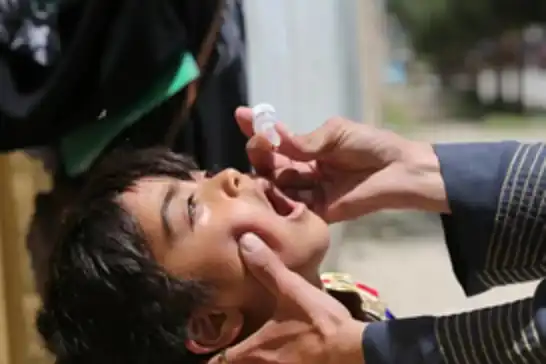
Afghanistan’s Ministry of Public Health on Monday launched a nationwide polio vaccination campaign targeting more than 12.7 million children under the age of five, as health authorities continue efforts to prevent the spread of the highly infectious disease.

Japan's population aged 65 and older has reached a record 29.6 percent of the country's total population, underscoring the scale of the demographic transformation confronting the world's third-largest economy.
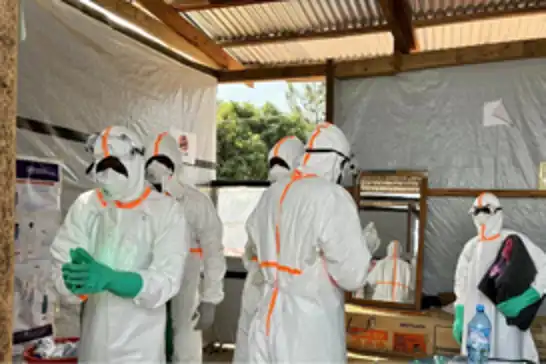
The Democratic Republic of Congo is confronting one of its most severe Ebola outbreaks on record, with more than 7,500 confirmed cases and 3,600 deaths reported as health authorities intensify efforts to contain the rapidly spreading disease.