Türkiye’s communications chief says national will must prevail over military coups
 13 oC
13 oC 
Güneşli

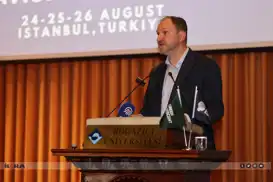
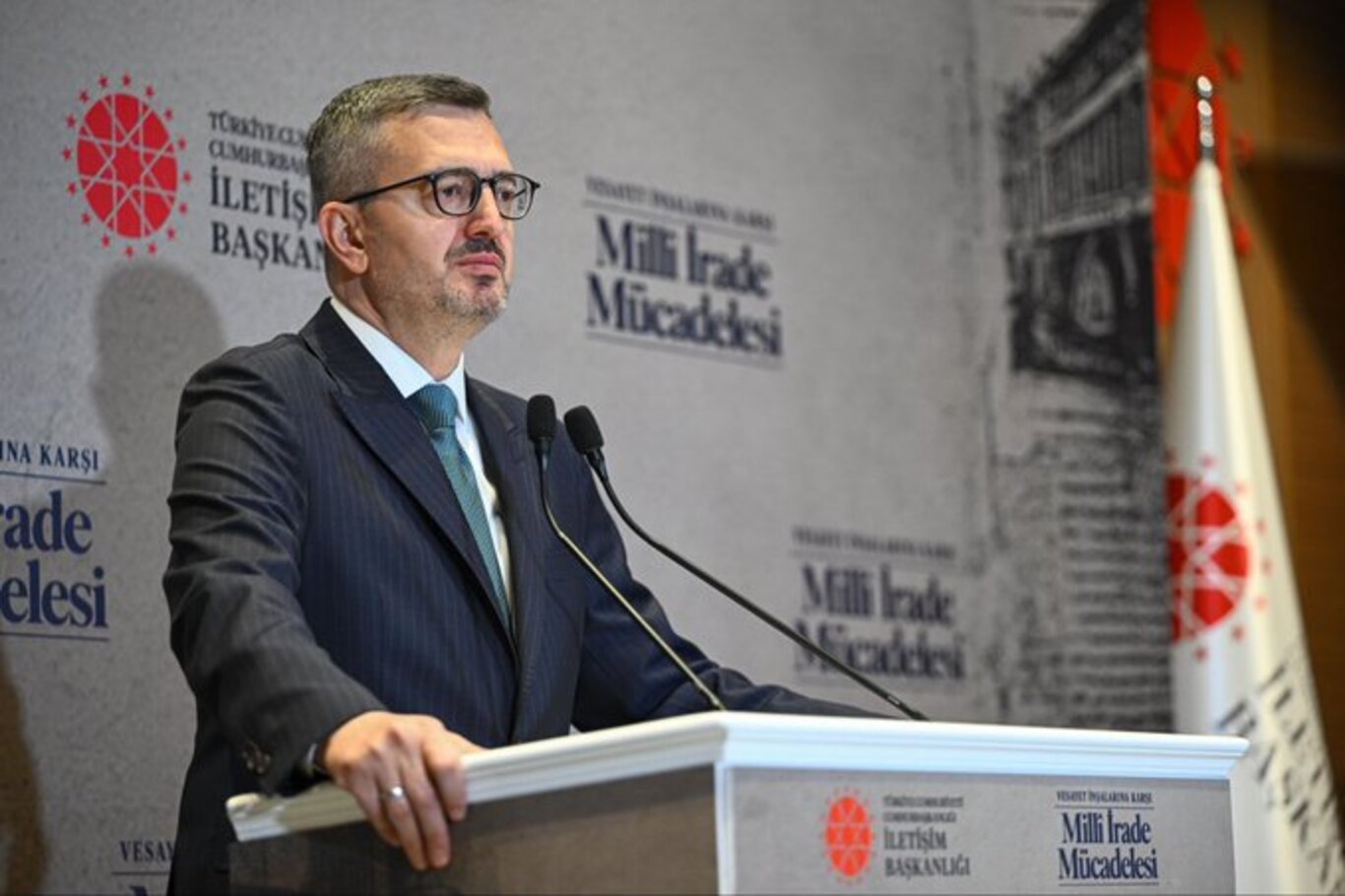
Türkiye’s Communications Director Burhanettin Duran said the country’s political history demonstrated the importance of defending democracy and the national will against military coups and other forms of political intervention.
Speaking at the opening of a panel titled “The Struggle of the National Will against the Construction of Tutelage,” organized by the Presidency’s Directorate of Communications in Istanbul, Duran described September 17 as one of the darkest periods in Türkiye’s history.
September 17 marks the anniversary of the execution of former Prime Minister Adnan Menderes, while September 16 marked the 65th anniversary of the executions of former Foreign Minister Fatin Rüştü Zorlu and Finance Minister Hasan Polatkan following the 1960 military coup.
Duran commemorated Menderes, his political colleagues and others he described as having contributed to Türkiye’s democratic struggle. He said the country had reached its current position through the efforts of people who opposed what he called various forms of political tutelage.
“The mentality that deemed politicians deserving of the gallows was, in essence, a mentality that targeted the future of the Turkish nation and its national will,” Duran said.
He argued that political leaders and movements supported by the public ultimately remain part of the country’s political history, while those responsible for coups are remembered negatively. According to Duran, Türkiye’s experience showed that the national will ultimately prevails when citizens stand behind their elected political representatives.
Yassıada transformed into Democracy and Liberties Island
Duran also referred to Yassıada, the island where the trials of Menderes and other members of his government were held following the 1960 coup.
He noted that the island had long been associated with mourning and said its transformation into Democracy and Liberties Island represented an effort to preserve the memory of those who lost their lives.
The island was redeveloped with museums, monuments and public spaces and has been presented by the government as a symbol of Türkiye’s democratic history and its opposition to military intervention in politics.
“Our duty is to stand resolutely by our democracy and the national will, without forgetting or allowing others to forget what happened in the past, so that the same suffering is never experienced again,” Duran said.
Referring to the failed coup attempt of July 15, 2016, he said Türkiye would not allow coups, coup plotters or attempts to place the national will under what he called tutelage to prevail again. He said citizens who took to the streets during the attempted coup had helped bring an end to that period.
Duran links political interventions to broader history
Duran said Türkiye had experienced a recurring cycle of military coups and political interventions since the 1960 coup. He argued that such interventions frequently emerged when democratic politics and the national will began to strengthen.
He described these interventions as forms of political engineering and said they should not be treated as ordinary political power struggles because, in his view, they involved attempts to interfere with elected governments.
Duran also argued that international actors and media organizations had, at various times, sought to legitimize military interventions in Türkiye. He said some domestic actors had likewise called for military intervention and supported military involvement in politics.
He further argued that such policies had sought to make Türkiye economically, culturally and politically dependent on outside powers, while citing historical figures including aviation pioneer Vecihi Hürkuş, industrialist Nuri Demirağ and arms manufacturer Şakir Zümre as examples of people he said had faced pressure from pro-tutelage circles.
Duran cites post-2000 political confrontations
Duran said what he described as pro-tutelage groups had made repeated attempts to obstruct President Recep Tayyip Erdoğan’s political movement.
He cited several major political events, including the 2007 military “e-memorandum,” the February 2012 National Intelligence Organization crisis, the December 2013 corruption investigations, the 2013 Gezi Park protests and the July 15, 2016 coup attempt.
Duran characterized these events as successive efforts to weaken or remove the government. Regarding the July 15 coup attempt, he accused the FETÖ network of attempting to seize state institutions and use military forces against the public.
These descriptions reflect the Turkish government's interpretation of the events and the role of various actors involved.
Duran said that the defeat of what he called tutelage had enabled Türkiye to become a more active international actor and strengthened its position both on the ground and at the negotiating table.
Türkiye’s role in international crises
Duran also linked the issue of national sovereignty to Türkiye’s foreign policy, particularly its position on conflicts and humanitarian crises in the Middle East.
He said Türkiye had become a prominent voice on the international stage through its diplomacy and its response to humanitarian developments in the region.
Referring to the war in Gaza, Duran said Türkiye and President Erdoğan had taken a leading position in raising international awareness of the humanitarian situation. He argued that standing with oppressed populations was part of Türkiye’s historical and civilizational responsibilities and said overcoming political tutelage was necessary to pursue such a foreign policy.
Panel examines 1960 coup and Yassıada trials
The event also featured a photography exhibition titled “The Coup Against Democracy: 27 May through Photographs from the Presidential Archive.”
The panel was moderated by Dr. Hüseyin Arslan of Kırşehir Ahi Evran University. Its speakers included Turkologist and linguist Prof. Emine Gürsoy Naskali, Ankara Hacı Bayram Veli University academic Prof. Tevfik Erdem, Police Academy academic Assoc. Prof. Ülkü Nur Zengin and Media Association Chairman Ekrem Kızıltaş.
According to the organizers, the panel examined the legal proceedings at Yassıada, the pressure placed on civilian politics and efforts to institutionalize democratic governance following the 1960 coup.
A book titled “The Coup Against Democracy: 27 May through Photographs from the Presidential Archive” was also presented at the event. The publication contains photographs and historical documents from the Presidential Archive, including material made publicly available to shed light on the period surrounding the May 27, 1960 coup.
In a separate message, Duran said the exhibition, panel and book were intended to strengthen collective memory and preserve historical records for future generations.
He said Türkiye’s experience with coups and political interventions demonstrated the importance of defending democratic institutions and the national will, citing July 15, 2016, as another example of public resistance to an attempted military takeover. (ILKHA)
LEGAL WARNING: All rights of the published news, photos and videos are reserved by İlke Haber Ajansı Basın Yayın San. Trade A.Ş. Under no circumstances can all or part of the news, photos and videos be used without a written contract or subscription.
President Recep Tayyip Erdoğan said Türkiye has become stronger domestically, more influential in its region and more respected internationally, highlighting the government’s investments and public services across the country.
Türkiye has condemned a terrorist attack that took place during Friday prayers near a mosque in Pakistan’s northwestern Khyber Pakhtunkhwa province.
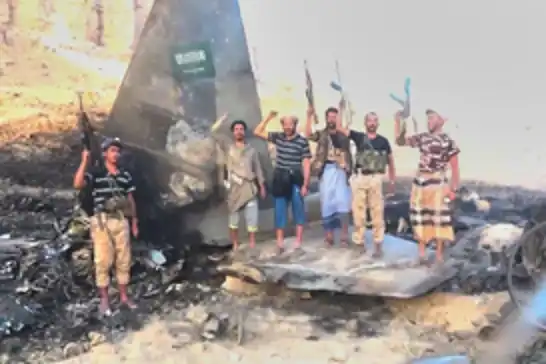
The Yemeni Armed Forces have released video footage and images they say show the moment a Saudi F-15 fighter jet was shot down over Yemen’s Marib province, as well as the wreckage of the aircraft after it crashed.