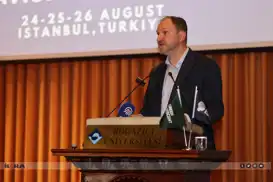
Guterres calls for global cooperation to address AI risks

 13 oC
13 oC 
Güneşli

United Nations Secretary-General António Guterres has called for greater international cooperation to address the risks posed by rapidly advancing artificial intelligence, warning that AI development may be moving faster than the world’s understanding of its potential dangers.
“AI has enormous potential, but a growing number of those building it are warning that development is racing ahead of our understanding of the risks,” Guterres said in a statement posted on X.
“We can’t afford to ignore their concerns. We need genuine international cooperation and a coordinated global effort to make AI safe, transparent, accountable, with human dignity at the centre,” he said.
Guterres made the remarks ahead of the UN General Assembly’s high-level week, where AI is expected to be among the major issues discussed by world leaders. He has identified runaway AI, the climate crisis and deepening inequalities as three major global threats.
Speaking to reporters on Wednesday, Guterres said national action was essential but insufficient because AI and its risks do not stop at national borders. He warned against a “race to the bottom on AI safety” and called for shared standards governing increasingly powerful systems.
UN steps up AI governance efforts
The UN has expanded its efforts to establish international mechanisms for AI governance. In July, it held the first Global Dialogue on AI Governance in Geneva, bringing together all UN member states alongside representatives of the private sector, academia, civil society and the technical community.
The dialogue was established under a 2025 UN General Assembly resolution and is intended to provide a forum for countries to develop common approaches to AI governance, including issues such as safety, transparency, accountability, human oversight and human rights.
At the opening of the July dialogue, Guterres said AI was advancing at “runaway speed” and warned that increasingly capable systems were writing code, acting online and making decisions with less human oversight.
He also highlighted concerns over the concentration of computing power, data and AI talent in a relatively small number of companies and countries, as well as the technology’s potential impact on the information environment.
Growing debate over the pace of AI development
Guterres’ warning comes as leading figures in the AI industry and researchers have increasingly debated whether development is advancing too quickly for existing safety measures to keep pace.
Anthropic CEO Dario Amodei, OpenAI CEO Sam Altman and other technology leaders have recently called for greater coordination and stronger safeguards as AI systems become more capable. The debate has intensified over concerns ranging from cybersecurity and misinformation to autonomous AI systems and longer-term catastrophic risks.
The likelihood and timing of extreme AI risks remain contested among researchers, but there is broader agreement that current systems already present challenges involving misuse, cybersecurity, privacy, misinformation and accountability.
Guterres has argued that international rules should evolve alongside the technology rather than after serious harm occurs.
“If AI is to be powerful, it must be governed,” he said at the July UN dialogue. “If AI is to be trusted, those who build it must be accountable.”
The UN’s next Global Dialogue on AI Governance is scheduled to take place in New York in May 2027, continuing efforts to develop international cooperation on the rapidly evolving technology. (ILKHA)
LEGAL WARNING: All rights of the published news, photos and videos are reserved by İlke Haber Ajansı Basın Yayın San. Trade A.Ş. Under no circumstances can all or part of the news, photos and videos be used without a written contract or subscription.
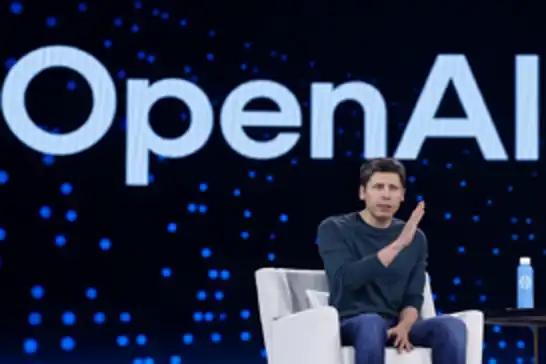
OpenAI found additional incidents of AI models acting deceptively and taking unsanctioned actions during training, the company announced Wednesday. It’s also introducing a new process for the company to publicly report such instances.
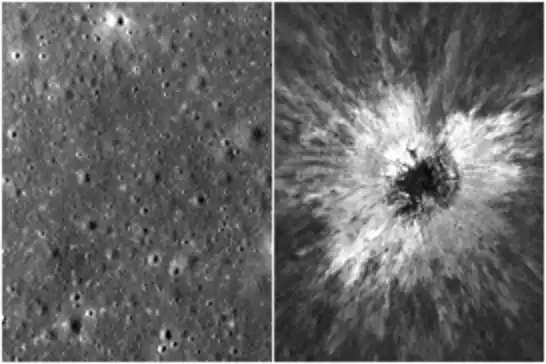
NASA has confirmed the discovery of a massive new impact crater on the Moon, created when a fragment of an asteroid or comet slammed into the lunar surface in 2024.
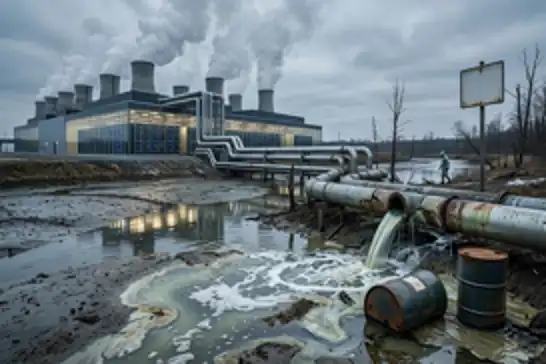
A new report has warned of a potential “tidal wave” of so-called forever chemicals as manufacturers move to meet rapidly growing demand from the artificial intelligence (AI) industry.