Ansar Allah forces expand control near Bab al-Mandab as Saudi-backed troops withdraw toward Aden
 13 oC

Güneşli

Ansar Allah says its recent military advances have strengthened security around the strategic Bab al-Mandab Strait, while Saudi-backed forces have announced a withdrawal from key positions along Yemen's western coast amid mounting battlefield pressure.
A senior member of Yemen's Ansar Allah Political Bureau, Dhaifallah al-Shami, has described the movement's recent military gains in the southern provinces of Lahij and Taiz as a strategic victory, saying they have strengthened its position around the strategically important Bab al-Mandab Strait.
Al-Shami said the forces being mobilized against Ansar Allah consisted largely of fighters recruited by Saudi Arabia with financial incentives after years of war, economic hardship and starvation among the Yemeni population.
He added that Saudi military officers had left Lahij province for Aden two days earlier, amid growing confusion and fragmentation within the Saudi-backed forces.
Emphasizing that residents of Yemen's southern provinces were not targets, al-Shami said Ansar Allah's primary objective was to secure the Bab al-Mandab Strait and defend the country against foreign interference.
He reassured residents of the southern provinces that they were safer following the latest developments, stressing that the Yemeni people would continue resisting until Saudi Arabia ended its intervention, military presence and blockade of Yemen.
Ansar Allah warns against foreign intervention
Al-Shami also warned that any external alliance joining Saudi Arabia's military campaign would face resistance, saying foreign involvement would not change the balance of power on the ground.
He stressed that Ansar Allah was prepared to confront any coalition formed against Yemen and warned that countries participating in the war would face what he described as unfavorable responses.
He further said the Yemeni people would not overlook the loss of lives or the destruction caused by years of military operations, insisting that those responsible must be held accountable and that the reconstruction of destroyed buildings and infrastructure must be ensured.
Addressing concerns about a possible advance toward Aden, al-Shami said the movement had no plans to enter the city or target its civilian population.
However, he warned that any military camps or gathering points used by forces preparing to fight Ansar Allah would remain potential targets, regardless of their location.
He added that direct negotiations with Saudi Arabia could take place if Riyadh lifted its blockade and ended its interference in Yemen's internal affairs.
Yemeni forces claim control of more than 3,000 square kilometers
The statements followed reports by Yemeni military sources that Ansar Allah forces had taken control of more than 3,000 square kilometers across Lahij and Taiz provinces after weeks of intense fighting with Saudi-backed formations.
A senior military source said that tens of thousands of fighters from the Giants Brigades and the Nation's Shield Forces had been driven from coastal areas overlooking the Bab al-Mandab Strait, as well as extensive parts of the al-Mudharaba and Ras al-Ara districts in Lahij.
The reported advances included mountainous areas, strategic military positions, coastal territories and an airport.
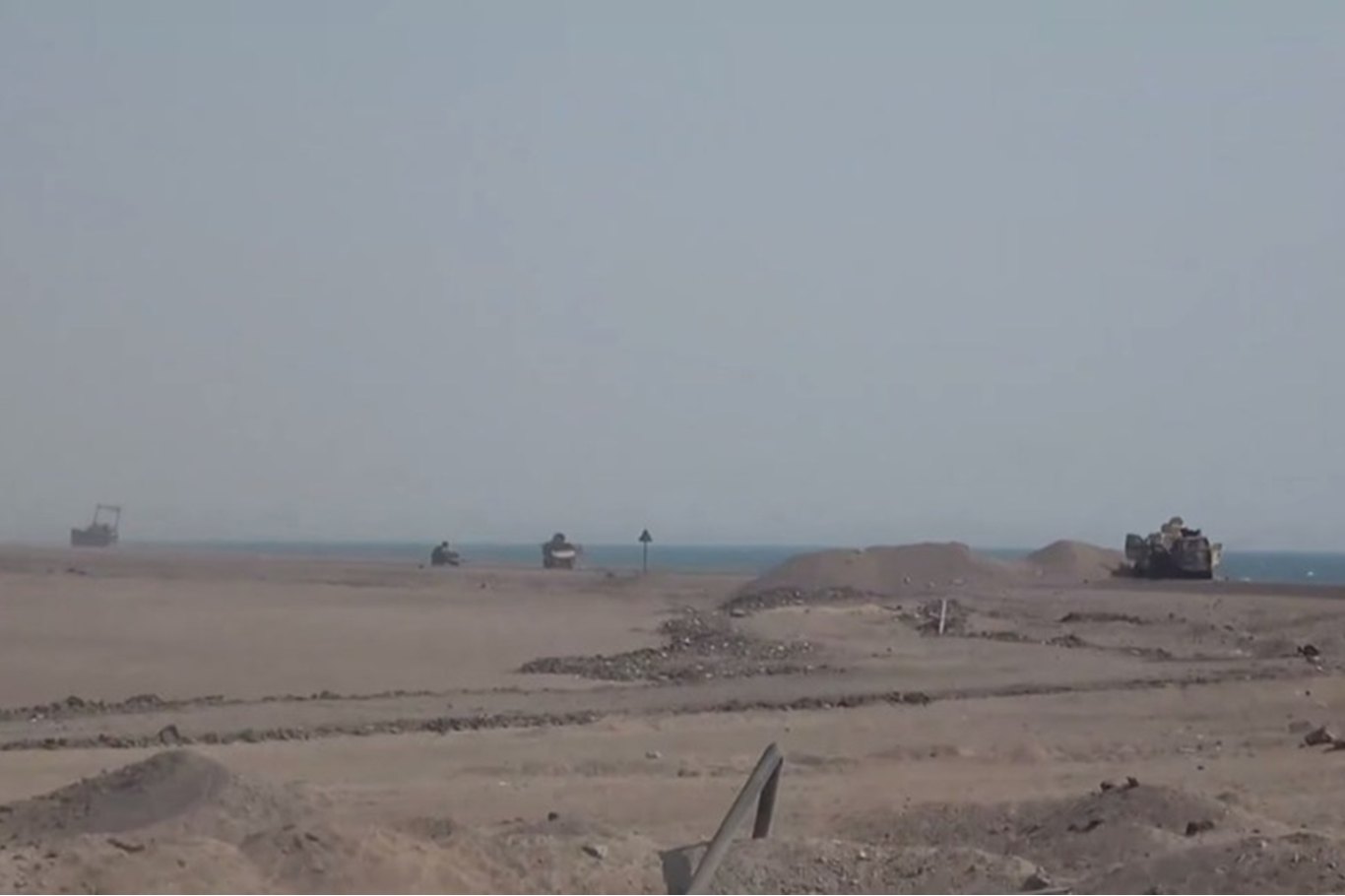
According to the source, missile, drone and air defence units played a significant role in the operations, which were aimed at securing the strategic waterway and preventing Saudi-backed forces from using positions in the region to launch further attacks.
The source also said thousands of Saudi airstrikes had failed to prevent the withdrawal of forces deployed in the area.
Saudi-backed formations reportedly retreated toward Aden, while hundreds of fighters, including field commanders, were captured.
The territorial gains, if maintained, could significantly strengthen Ansar Allah's military position along Yemen's southwestern coastline and increase pressure on forces defending the approaches to Aden.
Saudi-backed forces withdraw from Bab al-Mandab amid Ansar Allah advances
In a significant development on Sunday, November 15, Saudi-backed southern forces announced that they were withdrawing from positions around the Bab al-Mandab Strait and Dhubab in western Taiz province.
The Southern Armed Forces described the move as a redeployment intended to reinforce defensive positions around Aden and neighboring provinces.
However, Ansar Allah sources presented the withdrawal as a battlefield defeat, saying their forces had taken over positions abandoned by their opponents.
The developments mark a major setback for the Saudi-backed counteroffensive launched in October to reverse Ansar Allah's territorial gains along the Red Sea coast.
According to reporting by Reuters on Sunday, Ansar Allah fighters had also advanced through parts of Lahij and were positioned approximately 60 kilometers from Aden, the temporary seat of Yemen's internationally recognized government.
Military sources said the movement had seized two districts in Lahij and taken positions near the al-Kharaz camp in the al-Madariba area.
The latest advances have heightened concerns among Saudi-backed forces about the security of Aden, prompting the construction of additional defensive positions around the city.
Fighting intensifies as humanitarian situation deteriorates
The latest military developments come amid escalating clashes across several Yemeni provinces, including Taiz, Lahij and Marib.
The fighting has also intensified pressure on Taiz, where Ansar Allah forces have maintained a siege that has severely restricted the movement of civilians and the delivery of humanitarian assistance.
According to recent reporting, the conflict has displaced approximately 300,000 people, with around half of them sheltering in Taiz. Humanitarian conditions have continued to deteriorate as access to essential supplies remains restricted.
Meanwhile, the International Committee of the Red Cross (ICRC) announced that Ansar Allah had released 600 detainees held in connection with the conflict.
The organization described the release as a significant humanitarian development, while Ansar Allah characterized it as its largest unilateral prisoner-release operation since the beginning of the war.
The latest territorial changes have further complicated the military situation in Yemen, particularly around Bab al-Mandab, a strategic maritime passage connecting the Red Sea with the Gulf of Aden.
The strait is a critical route for international trade and shipping between Europe and Asia through the Suez Canal. Continued fighting in its vicinity has raised concerns about the security of commercial maritime traffic and the potential for further regional escalation. (ILKHA)
LEGAL WARNING: All rights of the published news, photos and videos are reserved by İlke Haber Ajansı Basın Yayın San. Trade A.Ş. Under no circumstances can all or part of the news, photos and videos be used without a written contract or subscription.

A landmark ruling by the International Court of Justice (ICJ) is expected this week in the case concerning the decades-long persecution of Rohingya Muslims in Myanmar, a decision widely regarded as a historic moment for international law and accountability. The judgment will determine whether Myanmar violated its obligations under the 1948 Genocide Convention in its treatment of the Rohingya Muslim community.

Air travel across the United States remained severely disrupted for a third consecutive day on Sunday, with more than 11,500 flights cancelled or delayed following a nationwide Federal Aviation Administration (FAA) ground stop triggered by a technical failure in the country's air traffic control network.

The United Nations Children’s Fund (UNICEF) has urged the international community to step up pressure on the Israeli occupation authorities to lift restrictions on humanitarian aid entering the besieged Gaza Strip, warning that thousands of Palestinian children remain exposed to life-threatening conditions as winter sets in.

The USS Theodore Roosevelt aircraft carrier has arrived in the Middle East as tensions between the United States and the Islamic Republic of Iran continue, bringing the number of US aircraft carrier strike groups deployed in the area to three.