Hamas: Israel’s settler policy paves way for de facto West Bank annexation

 13 oC
13 oC 
Güneşli

Hamas has warned that Israel’s decision to transfer executive authority over Israeli settlers in the occupied West Bank from the military to the police represents a dangerous step toward de facto annexation and the consolidation of Israeli control over occupied Palestinian territory.
Hamas said the transfer would facilitate the imposition of Israeli laws and administrative structures in the occupied West Bank, describing the move as a violation of international law and the legal status of the territory.
“The transfer of these powers to the occupation police, which is subject to the authority of the extremist criminal minister Ben-Gvir, cannot be separated from the policy of the occupation government aimed at strengthening settlement and imposing new facts on the West Bank,” Hamas said.
The movement also accused the Israeli government of providing greater protection and political cover for attacks by settlers against Palestinians, their property and Islamic and Christian holy sites.
Hamas said the latest measure forms part of a broader Israeli policy aimed at changing the legal and political status of the occupied West Bank, advancing annexation and Judaization plans, and undermining Palestinians’ right to self-determination and statehood.
The movement called for these measures to be confronted and urged Arab and Muslim countries, the Arab League and the Organization of Islamic Cooperation to take urgent diplomatic and political action against Israeli settlement and annexation policies.
Hamas also called on the United Nations and the wider international community to move beyond statements of condemnation and take concrete measures to hold Israel accountable for violations against Palestinians.
The group urged international actors to provide protection for Palestinian civilians, their land and holy sites and to pressure Israel to halt what it described as escalating settlement and annexation measures.
The Israeli Defense Ministry has instructed the military to prepare a plan transferring civilian law-enforcement authority concerning Israeli settlers in the occupied West Bank to the Israeli Police.
The move follows recent confrontations near the Palestinian village of Qusra, where Israeli settlers reportedly surrounded Palestinian homes and established unauthorized outposts.
Israeli Defense Minister Israel Katz has argued that the military should focus on combating Palestinian armed groups and protecting borders rather than dealing with settler-related incidents.
Under the proposed arrangement, the Israeli Police would establish a specialized unit responsible for law enforcement and public order involving Israeli settlers in the West Bank, with dedicated powers and resources.
Hamas warned that placing this authority under the Israeli police, particularly under far-right National Security Minister Itamar Ben-Gvir, could further entrench Israeli civilian institutions within occupied Palestinian territory.
The move has therefore raised concerns that what is presented as an administrative change could deepen Israel’s institutional control over settlements and accelerate efforts to create permanent realities on the ground in the occupied West Bank. (ILKHA)
LEGAL WARNING: All rights of the published news, photos and videos are reserved by İlke Haber Ajansı Basın Yayın San. Trade A.Ş. Under no circumstances can all or part of the news, photos and videos be used without a written contract or subscription.

At least 16 people were killed and 40 others injured after a passenger bus crashed into a parked truck on a major highway in central Cameroon early Friday, according to police and local reports.
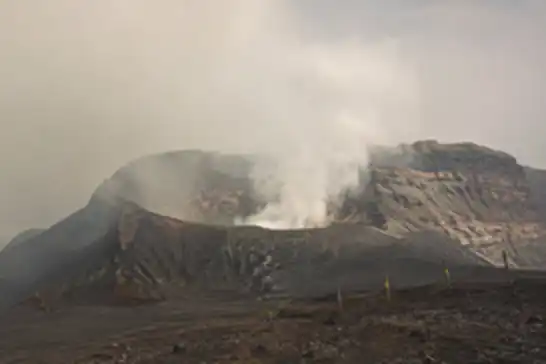
Japan has raised the volcanic alert level for Mount Aso in Kumamoto Prefecture from Level 2 to Level 3 following a sharp increase in volcanic tremors and gas emissions, prompting authorities to restrict access to the volcano.
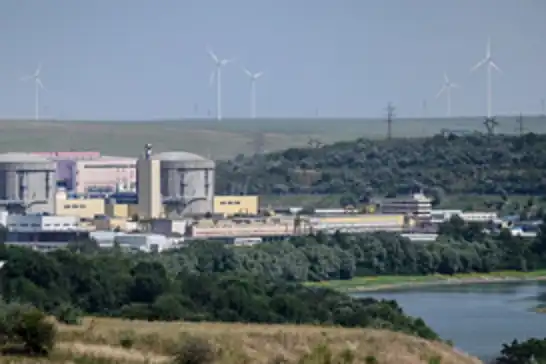
Romania has temporarily shut down the last operating reactor at the Cernavoda Nuclear Power Plant after record-low water levels in the Danube River reduced the cooling water available for the facility, leaving the country without nuclear-generated electricity for the first time in years.