Hezbollah’s drone tactics expose Israeli military weaknesses in southern Lebanon, report says
 13 oC
13 oC 
Güneşli

Hezbollah’s evolving drone capabilities are increasingly challenging Israel’s military operations in southern Lebanon, exposing weaknesses in the occupation forces’ strategy and raising questions about the viability of Israel’s long-term objectives, according to an analysis published by The New York Times.
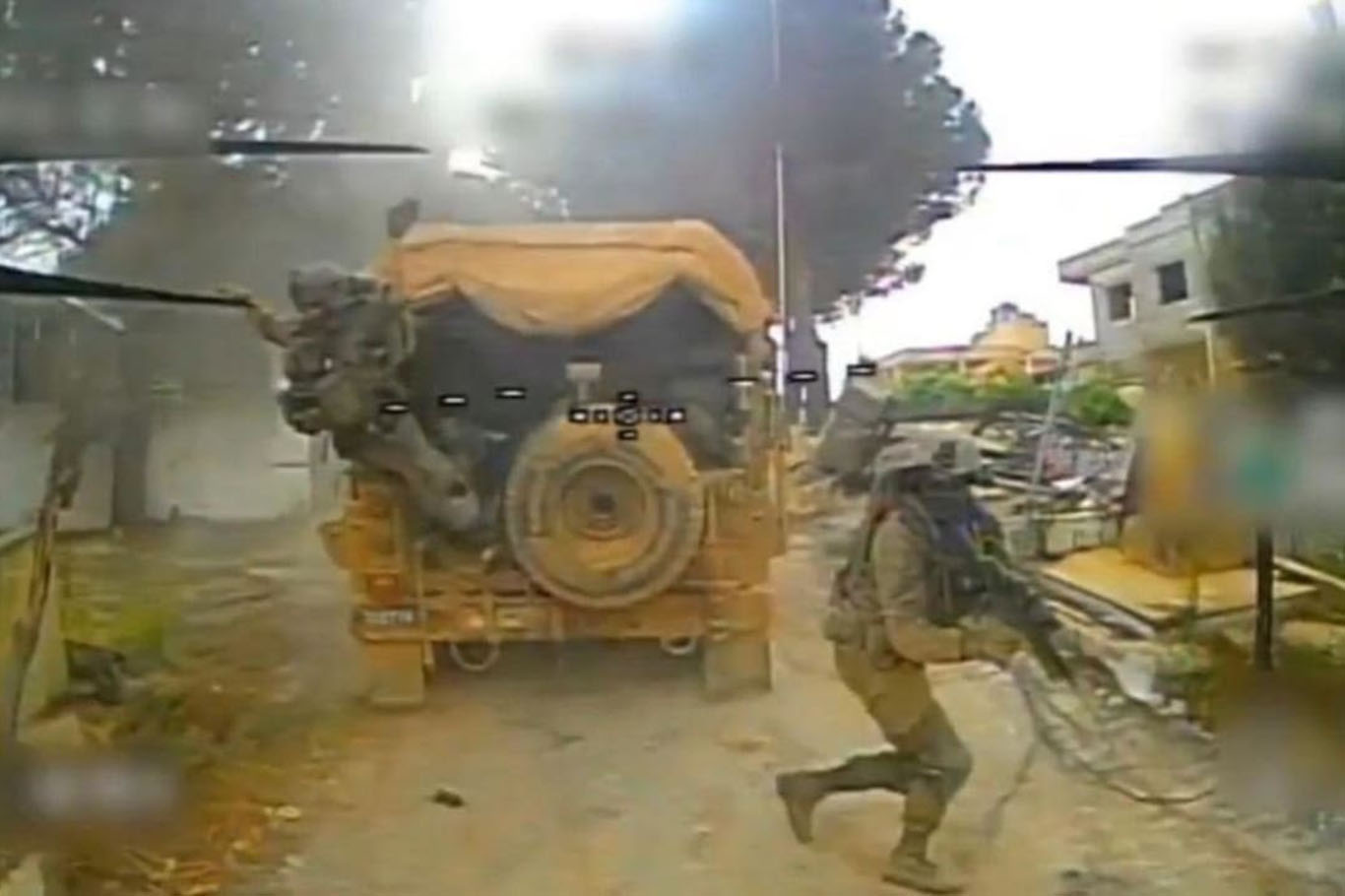
The report highlighted growing concerns within Israeli military and political circles as Hezbollah continues to employ advanced first-person-view (FPV) drones against Israeli positions, vehicles, and troop concentrations. The resistance movement’s use of fiber-optic-guided drones has emerged as a particularly significant development, allowing operators to evade many of the electronic warfare systems traditionally relied upon by the Israeli military.
Recent tensions underscored these challenges when Israeli Prime Minister Benjamin Netanyahu and Defense Minister Israel Katz threatened attacks on Beirut’s southern suburbs before ultimately retreating from the proposal. Observers cited by the newspaper suggested that the reversal reflected the mounting pressures facing Israeli decision-makers as they struggle to balance military ambitions, domestic political demands, and international pressure to avoid wider escalation.
According to the report, Israel initially sought to establish a security belt inside southern Lebanon and push Hezbollah forces beyond the range of anti-tank weapons that had long posed a threat to military sites and settlements in northern occupied Palestine. However, Hezbollah’s ability to adapt its tactics and deploy increasingly sophisticated drone systems has complicated those objectives.
The newspaper noted that Hezbollah has released footage documenting successful drone strikes against Israeli military vehicles, fortified positions, and gatherings of occupation soldiers. Such operations have demonstrated the movement’s ability to maintain battlefield pressure despite months of Israeli military action.
Former Israeli national security official Orna Mizrahi acknowledged that Israeli planners had underestimated the effectiveness of Hezbollah’s drone arsenal.
“There was a strategy — was,” Mizrahi told the newspaper. “But the drones made for some confusion, because it was a surprise. The I.D.F. didn’t think that it would be such a dangerous weapon.”
Military analysts cited in the report argued that early Israeli expectations of decisively weakening Hezbollah have failed to materialize. Instead, the conflict has evolved into a prolonged confrontation in which the Lebanese resistance movement has continued to adapt and demonstrate operational resilience.
The report also drew comparisons with Israel’s previous occupation of southern Lebanon, which lasted from 1982 until 2000 and ultimately ended with the withdrawal of Israeli forces in the face of sustained resistance operations.
Retired Israeli Brigadier General Assaf Orion warned that maintaining fixed military positions inside southern Lebanon risks repeating the mistakes of that earlier occupation.
“Choosing to stay there in a stationary manner defies most of our lessons from ’82 to 2000,” Orion said.
Analysts noted that Hezbollah’s drone campaign has become a key factor in reshaping the battlefield, forcing Israeli commanders to confront new vulnerabilities and raising the cost of maintaining a prolonged military presence in Lebanese territory.
The New York Times concluded that Israeli leaders now face a difficult choice: continue a costly and increasingly vulnerable military deployment in southern Lebanon or seek a political arrangement that may fall short of the objectives announced at the outset of the campaign.
For Hezbollah and its supporters, the growing effectiveness of the movement’s drone operations is being viewed as further evidence of the resistance’s ability to adapt to changing battlefield conditions and challenge one of the region’s most technologically advanced militaries. (ILKHA)
LEGAL WARNING: All rights of the published news, photos and videos are reserved by İlke Haber Ajansı Basın Yayın San. Trade A.Ş. Under no circumstances can all or part of the news, photos and videos be used without a written contract or subscription.

Lebanon and Syria have taken new steps toward reconnecting the Port of Tripoli to Syria's railway network as part of a broader effort to strengthen regional trade and transport links across the eastern Mediterranean.
The United States is reportedly preparing a $2.8 billion arms package for the Israeli regime that includes thousands of heavy bombs used in its military operations in Gaza, according to US media reports.

Italy has extended temporary border checks on air and sea arrivals from Spain for another 15 days, citing persistent internal security concerns and the continuing risk of terrorist infiltration.
The Pentagon's Office of Inspector General has revealed that the United States spent an estimated $33.4 billion during the first four months of its military campaign against Iran, known as Operation Epic Fury, with munitions accounting for the largest share of the cost.