Iran responds to U.S. aggression with missile strikes on American bases in the Gulf
 13 oC
13 oC 
Güneşli

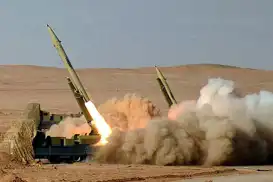
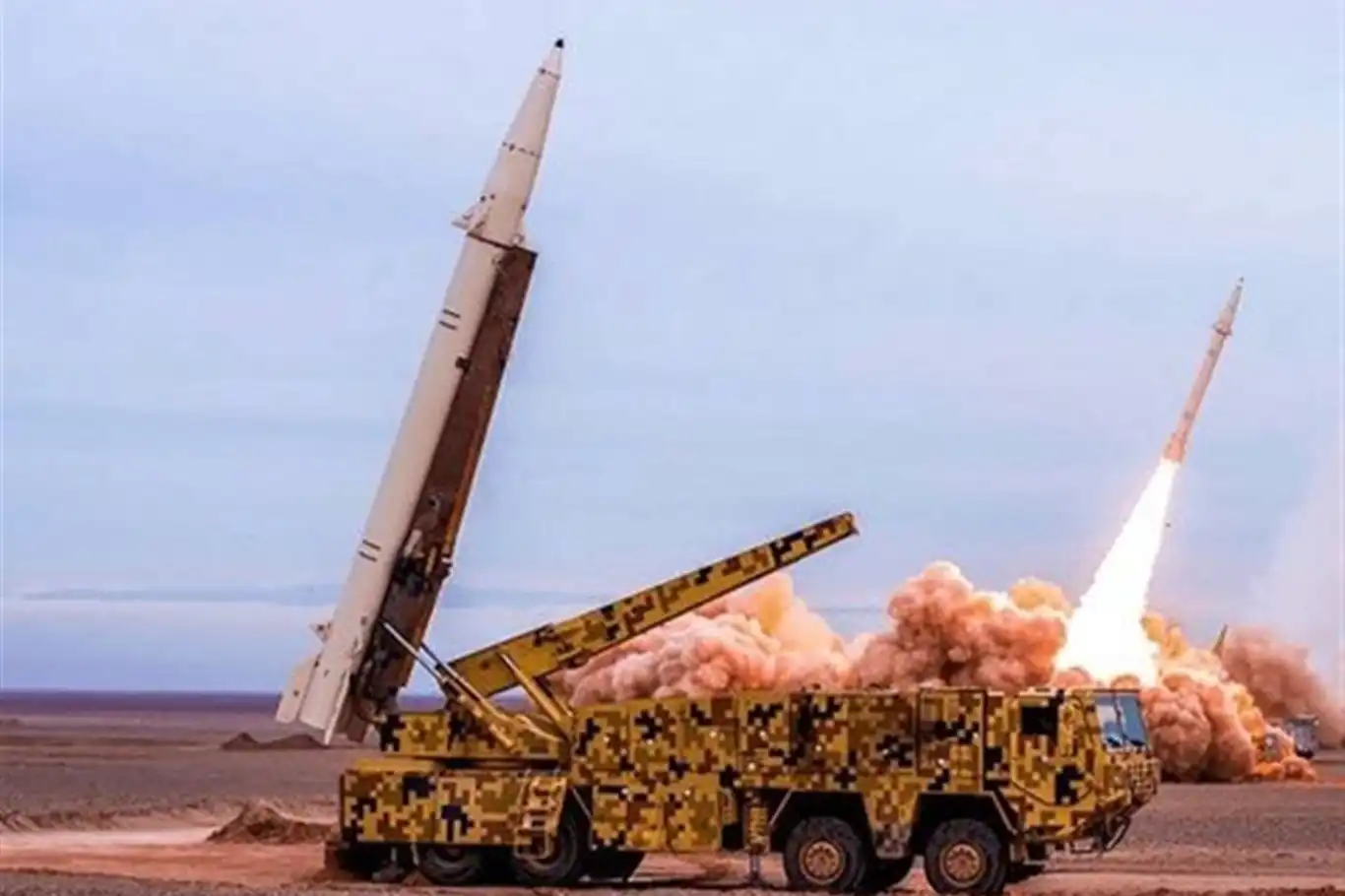
Iran's Islamic Revolutionary Guard Corps (IRGC) announced that its Aerospace Force launched retaliatory missile strikes against key American military installations in the Persian Gulf a series of aggressive U.S. actions targeting Iranian territory and infrastructure.
In a statement released by the IRGC Public Relations Office, the force confirmed that ballistic missiles were fired at the Ali al-Salem Air Base in Kuwait and the headquarters of the U.S. Fifth Fleet in Bahrain. The operation was described as a direct response to recent American attacks against Iranian targets.
According to the IRGC, tensions escalated in the early hours of the morning when four oil tankers attempted to leave the Strait of Hormuz without authorization and in disregard of warnings issued by Iranian naval forces. The statement alleged that the vessels had been "provoked and directed by the invading U.S. military" in an effort to challenge Iran's authority and security responsibilities in the strategic waterway.
Iranian naval units reportedly issued multiple warnings before taking action. One vessel was targeted after refusing to comply, while the remaining tankers reversed course and returned to the area.
The IRGC further stated that at approximately 2:00 a.m., American drones launched strikes against telecommunications towers in Qeshm and Sirik, targeting civilian infrastructure on Iranian soil. Tehran condemned the attacks as a blatant violation of Iran's sovereignty and another example of Washington's escalating military aggression in the region.
In response, the IRGC Aerospace Force launched what it described as a "measured but decisive" operation against American military assets stationed in Kuwait and Bahrain.
The IRGC warned that any continuation of U.S. military attacks would provoke a much broader response from Iran and could have far-reaching consequences for regional security and global energy markets.
"We warn the invading and child-killing enemy that if these hostile acts are repeated, the response will not be limited, and you will be responsible for the consequences of the complete closure of the Strait of Hormuz to oil and gas exports," the statement said.
Iranian officials have repeatedly stressed that the country will not tolerate violations of its territorial integrity and will respond forcefully to any aggression against its people, infrastructure, or national interests.
Following the Iranian missile operation, authorities in Kuwait and Bahrain activated air defense systems as missiles and drones approached strategic military sites hosting American forces.
Emergency sirens sounded across both countries, and regional aviation authorities diverted several incoming flights as precautionary measures were implemented. No immediate information regarding casualties or material damage was released.
The incidents have heightened concerns among regional governments as tensions between Washington and Tehran continue to intensify.
The latest confrontation came only hours after U.S. Central Command (CENTCOM) announced that American forces had intercepted several drones allegedly launched toward the Strait of Hormuz.
The United States also acknowledged conducting strikes against Iranian coastal radar installations in Goruk and on Qeshm Island, claiming the attacks were defensive measures.
Iran, however, views the strikes as unlawful acts of aggression designed to undermine its defensive capabilities and challenge its sovereign rights in the Persian Gulf.
The Strait of Hormuz remains one of the world's most important maritime routes, carrying a substantial share of global oil and natural gas exports. For decades, the waterway has been at the center of tensions between Iran and the United States.
The latest exchange underscores the growing risk of a wider regional confrontation as Washington continues to maintain a significant military presence across the Gulf. Bahrain hosts the headquarters of the U.S. Navy's Fifth Fleet, while Kuwait serves as a major logistical and operational hub for American military activities in the region, including Camp Arifjan and other strategic installations.
Iranian analysts argue that the retaliatory strikes demonstrate Tehran's readiness and capability to defend its sovereignty, deter foreign aggression, and impose costs on adversaries seeking to destabilize the region. (ILKHA)
LEGAL WARNING: All rights of the published news, photos and videos are reserved by İlke Haber Ajansı Basın Yayın San. Trade A.Ş. Under no circumstances can all or part of the news, photos and videos be used without a written contract or subscription.
Iran’s Islamic Revolutionary Guard Corps (IRGC) has appealed directly to the American public, calling on U.S. citizens to distance themselves from Israel and urging Washington to change its approach toward Iran and the wider Middle East.
The death toll from a fire at a fireworks factory in Russia's Yaroslavl region has risen to 14, while emergency crews continue recovery operations at the site, authorities said.
At least 23 people have died in flooding across Thailand since Sept. 16, including four in Bangkok, where torrential rain inundated parts of the capital and affected about 700,000 people, authorities said on Tuesday.
At least 44 people were killed after heavy fighting erupted between Ansarullah forces and Saudi-backed Yemeni forces near the strategic Bab al-Mandab Strait, according to military sources from both sides.