IRGC urges Americans to distance themselves from Israel in open letter
 13 oC
13 oC 
Güneşli

Iran’s Islamic Revolutionary Guard Corps (IRGC) has appealed directly to the American public, calling on U.S. citizens to distance themselves from Israel and urging Washington to change its approach toward Iran and the wider Middle East.
Speaking at a press briefing on Tuesday, IRGC spokesman Brig. Gen. Hossein Mohebbi said the 25-page open letter was addressed to the American people, particularly academics, university students, lecturers and media professionals. He said the Iranian people had no hostility toward ordinary Americans and that peaceful coexistence between Iran and the United States was possible if Americans separated themselves from Israel and opposed what Tehran describes as Washington’s aggressive foreign policy.
The letter presents Iran’s account of the ongoing conflict with the United States and Israel, arguing that Tehran has resisted military pressure despite the vastly greater military resources available to Washington and its allies.
The IRGC says the United States and Israel failed to achieve their principal objectives in the war, including weakening Iran’s political system and restricting its military capabilities. It also portrays Iran’s resistance as having strengthened national unity and increased Tehran’s strategic leverage in the region.
A central point of the letter is the strategic importance of the Strait of Hormuz. The IRGC argues that Washington has failed to restore unrestricted maritime traffic through the waterway despite deploying substantial military forces to the region. Mohebbi has repeatedly made similar claims in recent weeks, saying Iran has retained significant control over the strait.
The letter also argues that Iran has strengthened its missile, drone and air-defense capabilities during the conflict. The IRGC has separately claimed that its forces have developed new weapons and capabilities during the fighting, while warning that any renewed attack would result in an expanded battlefield and the use of new weapons.
Iran's message to the American public
The IRGC letter distinguishes between the U.S. government and the American people, arguing that the phrase “Death to America,” frequently heard at Iranian demonstrations, is directed at what it describes as the U.S. political establishment rather than ordinary Americans.
It accuses successive U.S. administrations of decades of interference in Iran, beginning with the 1953 CIA-backed coup that overthrew Prime Minister Mohammad Mosaddegh. The letter also cites Washington’s support for Iraq during the Iran-Iraq war, the 1988 downing of Iran Air Flight 655, economic sanctions and the 2020 killing of IRGC commander Gen. Qassem Soleimani as examples of what Tehran regards as a long history of U.S. hostility.
The letter argues that these experiences have shaped Iran’s determination to defend its sovereignty and resist foreign pressure.
It also rejects the U.S. designation of the IRGC as a terrorist organization, portraying the force instead as a national institution established to protect Iran and the Islamic Revolution. The United States, however, maintains its designation of the IRGC as a foreign terrorist organization.
Islamic identity and resistance
A major part of the letter is devoted to the religious and ideological foundations that the IRGC says underpin Iran’s resistance.
It presents the Quran, the teachings of Islam and the example of figures including Prophet Muhammad, Imam Ali, Imam Hussein and Lady Zaynab as central sources of Iran’s political and social identity.
The letter particularly invokes the tragedy of Karbala and Imam Hussein’s resistance as a model of standing against oppression and refusing to surrender principles under pressure. It argues that this religious heritage has contributed to Iran’s ability to withstand decades of sanctions, military threats and political pressure.
The IRGC also portrays Iran’s system of wilayat al-faqih as an alternative model of governance rooted in Islamic principles, justice and religious scholarship.
The letter praises Iran’s current leadership and presents the country’s political system as having survived the latest conflict despite the loss of senior figures and extensive military pressure.
Gaza and Israel
The IRGC also links the conflict with the wider situation in Palestine, arguing that U.S. support for Israel has contributed to the continuation of the Gaza war.
It says Washington’s backing of Israel has damaged the United States’ standing internationally and argues that the Palestinian issue remains central to public opinion across the Muslim world and beyond.
The letter calls on Americans to reconsider their government’s support for Israel and says that the continued occupation of Palestinian territories cannot provide a lasting basis for peace.
It further argues that Palestinians and other peoples in the region should be allowed to determine their own political future without external domination.
Call for a change in U.S. policy
The letter urges Americans to demand an end to what it describes as Washington’s “endless wars,” overseas military deployments and support for Israel.
It calls for the closure of U.S. military bases overseas, the redirection of military spending toward domestic economic and technological development, and an end to military interventions and what Tehran describes as foreign interference.
The IRGC also argues that Americans should hold their elected representatives accountable for U.S. foreign policy and use democratic institutions to demand a change in Washington’s approach.
The letter concludes with an appeal for peaceful coexistence between the Iranian and American peoples.
“We can live together in peaceful coexistence,” it says, while urging Americans to distance themselves from Israel and what Tehran describes as the policies of oppression and aggression pursued by Washington.
The IRGC has in recent days continued to combine military warnings with calls for a political resolution. Mohebbi said last week that Iran does not reject diplomacy but would seek to negotiate on its own terms.
The latest appeal comes as Tehran and Washington remain engaged through intermediaries over possible diplomatic arrangements, including the future of the Strait of Hormuz and the broader conflict. Iran has said it remains open to diplomacy while rejecting negotiations conducted under military or economic coercion. (ILKHA)
LEGAL WARNING: All rights of the published news, photos and videos are reserved by İlke Haber Ajansı Basın Yayın San. Trade A.Ş. Under no circumstances can all or part of the news, photos and videos be used without a written contract or subscription.
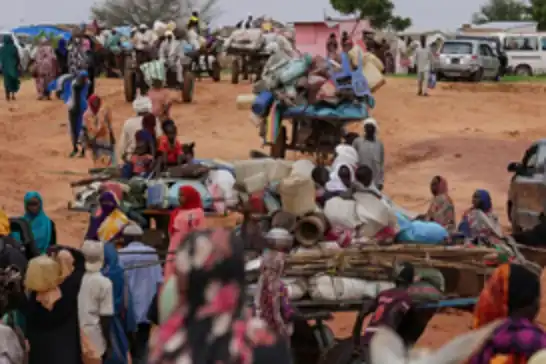
UN High Commissioner for Human Rights Volker Türk on Friday condemned a sharp escalation in drone attacks across Sudan, saying at least 306 people had been killed and hundreds more injured in the first three weeks of October.
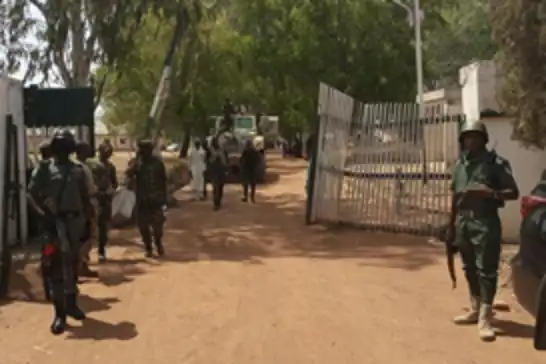
Residents of a village in Nigeria’s northwestern Zamfara state, backed by police, repelled a three-day attack by armed bandits, with about 30 gunmen reported killed, local media reported on Friday.
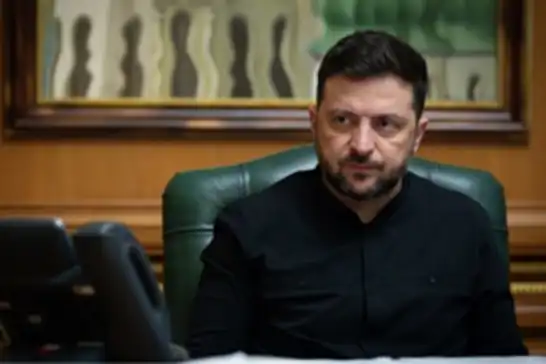
Ukrainian President Volodymyr Zelensky said Friday that negotiation teams from Ukraine, Russia and the United States are expected to meet in Abu Dhabi in the first half of November to launch a new round of peace talks aimed at ending the war.
Iranian President Masoud Pezeshkian and Russian President Vladimir Putin will meet in Moscow next week to discuss bilateral cooperation and regional and international developments, Iranian Foreign Minister Abbas Araghchi announced Friday.