Nationwide IT outage brings German rail network to a standstill
 13 oC
13 oC 
Güneşli

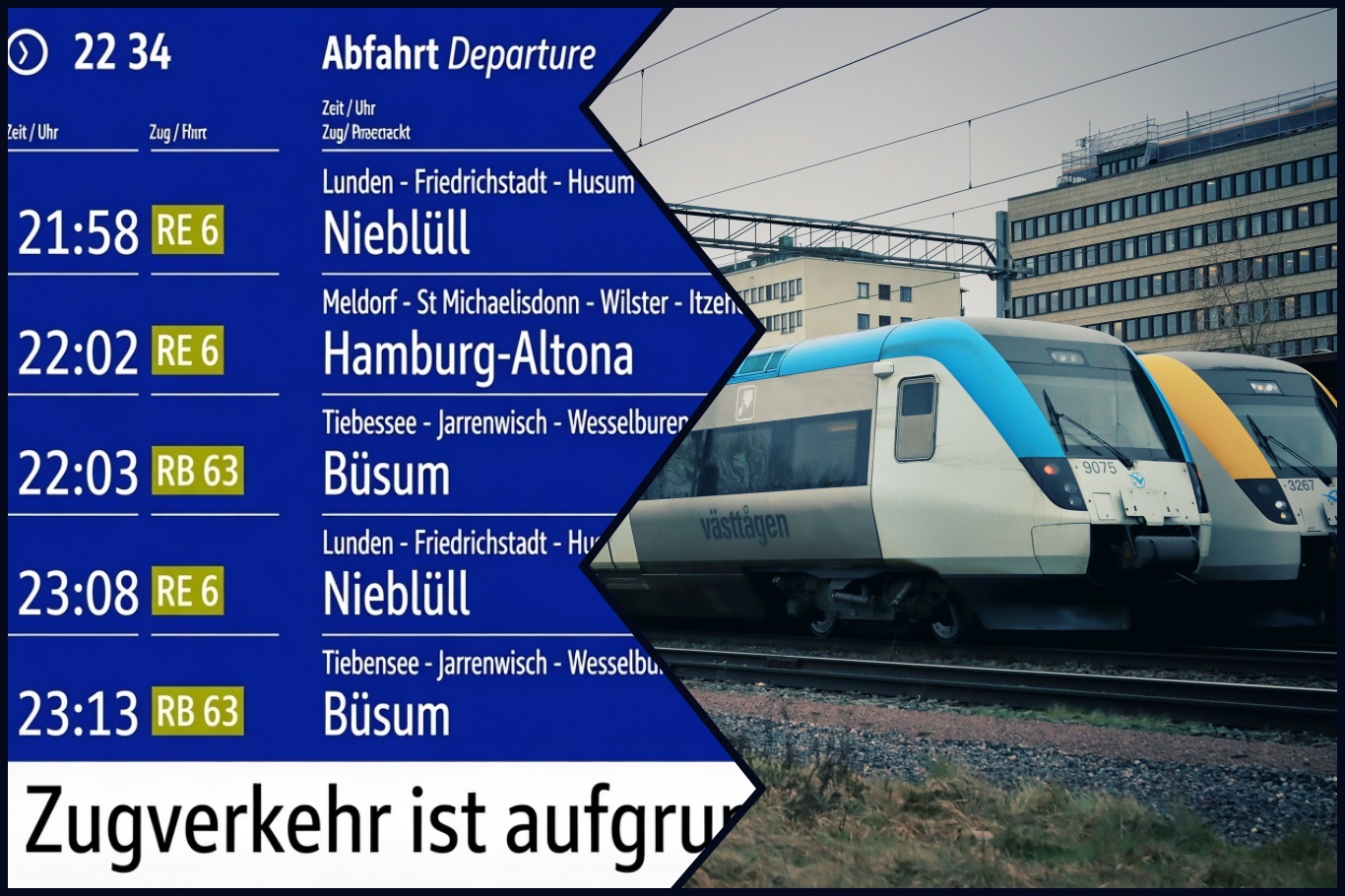
Rail services across Germany were severely disrupted on Tuesday evening after a nationwide IT outage forced train operator Deutsche Bahn to temporarily halt operations throughout the country.
The disruption, caused by a malfunction in Germany’s digital railway communication network, brought long-distance, regional, and suburban rail services to a standstill for more than two-and-a-half hours, affecting thousands of passengers and causing widespread delays and cancellations.
Deutsche Bahn announced at approximately 10:30 p.m. local time that all trains were being held at stations due to a nationwide failure of the Global System for Mobile Communications for Railways (GSM-R), a critical communication system used between train drivers and rail traffic control centers.
The company said the outage disrupted internal communication channels essential for the safe operation of trains, leaving railway authorities with no option but to suspend services until the issue could be resolved.
After more than two hours of disruption, Deutsche Bahn confirmed that its technical teams had successfully identified and fixed the problem.
“Our IT experts worked tirelessly to resolve the issue – successfully. The disruption was quickly fixed, and service is now gradually resuming,” the company said in a statement.
The operator thanked passengers for their patience and warned that delays and cancellations would continue as services returned to normal.
Earlier in the evening, Deutsche Bahn had urged travelers to seek alternative transportation where possible due to the uncertainty surrounding the duration of the outage.
Although the company did not immediately disclose how many trains or passengers were affected, major railway stations across Germany reported significant disruptions.
Images from several stations showed long queues forming at customer service centers as travelers sought information about cancellations, delays, and alternative travel arrangements.
Speaking to the German newspaper Bild during the outage, Deutsche Bahn executive Evelyn Palla said railway staff were focused on ensuring passengers could safely disembark.
“We are now trying to get the trains into stations so that travellers can disembark,” Palla said.
To assist affected customers, Deutsche Bahn announced that it would provide taxi and hotel vouchers where necessary and arrange replacement transportation whenever possible.
The outage centered on the GSM-R system, a specialized wireless communications network that serves as a backbone of railway operations throughout Germany.
The system enables continuous communication between train drivers, dispatchers, and traffic management centers, playing a crucial role in maintaining rail safety and coordinating train movements.
Rail experts note that disruptions to GSM-R can have far-reaching consequences because train operations rely heavily on uninterrupted communication between operational personnel.
The outage also affected urban commuter rail services, including the S-Bahn networks that connect major German cities with surrounding suburbs.
S-Bahn Berlin confirmed that its services were halted due to the communications failure but later announced that operations were gradually resuming following the restoration of the GSM-R network.
“The outage to the GSM-R system has been resolved,” S-Bahn Berlin said in a statement. “S-Bahn trains can run again.”
However, the operator warned passengers to continue expecting delays and occasional train cancellations as schedules return to normal.
While Deutsche Bahn confirmed that the technical problem had been resolved, the company has not yet provided detailed information regarding the root cause of the outage.
Technicians and railway specialists are expected to continue investigating the incident to determine what triggered the nationwide communications failure and whether additional safeguards are needed to prevent similar disruptions in the future.
The incident highlights the growing dependence of modern railway systems on digital infrastructure and communication technologies, where even a temporary technical failure can rapidly affect transportation networks on a national scale. (ILKHA)
LEGAL WARNING: All rights of the published news, photos and videos are reserved by İlke Haber Ajansı Basın Yayın San. Trade A.Ş. Under no circumstances can all or part of the news, photos and videos be used without a written contract or subscription.

The International Maritime Organization (IMO) has announced an evacuation plan for more than 11,000 seafarers still stranded in the Strait of Hormuz, following recent diplomatic and maritime security developments in the region.
Firefighters in Southern California continue to battle a massive blaze that erupted nearly a week ago at a commercial cold storage facility in Los Angeles, sending thick plumes of smoke across the region and triggering air quality alerts.

A fresh diplomatic dispute has emerged between Washington and Tehran following conflicting statements regarding the outcome of recent high-level talks in Switzerland, while the US Senate mounted a symbolic challenge to potential military actions in the region.