Pentagon urges defense firms to build weapons as Iran war depletes stocks
 13 oC
13 oC 
Güneşli

The United States has seen a significant depletion of its Terminal High Altitude Area Defense (THAAD) missile interceptor stockpile during the conflict, highlighting the growing pressure on Washington’s air-defense resources.
According to figures cited by the Center for Strategic and International Studies (CSIS), the number of THAAD interceptors in the U.S. inventory fell from 452 before the war to between 232 and 262 by the beginning of the April ceasefire.
The United States subsequently managed to replenish part of its depleted stockpile, bringing the number of available interceptors to between 234 and 278. Despite those efforts, however, the stockpile remains substantially below its pre-war level.
The current inventory is estimated to be at least 38% smaller than before the conflict, underscoring the scale of interceptor consumption and the challenges Washington faces in rapidly rebuilding its missile-defense capacity.
The depletion of THAAD interceptors provides an indication of the significant costs associated with sustaining intensive missile-defense operations.
THAAD is one of the United States’ most advanced systems for intercepting ballistic missiles at high altitudes. A substantial reduction in its interceptor inventory could therefore place additional pressure on Washington as it seeks to maintain sufficient reserves for potential future conflicts.
From an Iranian perspective, the figures also demonstrate that US military resources are not unlimited, despite Washington's technological and military advantages.
The sharp decline in the THAAD stockpile suggests that sustained missile exchanges can impose considerable costs on even the world's most heavily equipped military powers. The difficulty of rapidly replacing sophisticated interceptors further highlights the strategic importance of missile capabilities and the ability to maintain pressure on adversaries over an extended period.
The figures could also reinforce arguments in Iran that missile capabilities remain an important element of deterrence against the United States and its allies.
The fact that Washington was unable to restore its THAAD inventory to its pre-war level despite efforts to replenish supplies illustrates the challenges involved in maintaining advanced air-defense systems during prolonged periods of conflict.
While the United States continues to possess substantial military capabilities, the depletion of its interceptor stockpile demonstrates that sustained military confrontation can create significant logistical and strategic pressures even for Washington.
The CSIS figures therefore offer an important insight into the wider costs of missile-defense operations and the challenges facing the United States as it seeks to preserve its air-defense capacity for future contingencies. (ILKHA)
LEGAL WARNING: All rights of the published news, photos and videos are reserved by İlke Haber Ajansı Basın Yayın San. Trade A.Ş. Under no circumstances can all or part of the news, photos and videos be used without a written contract or subscription.

New Zealand has announced a new package of sanctions targeting individuals and entities accused of supporting Russia’s war against Ukraine, with a particular focus on malicious cyber activity and the alleged forced relocation and re-education of Ukrainian children.

British Columbia has declared a province-wide state of emergency after a fast-moving wildfire forced more than 20,000 people to evacuate overnight, with officials reporting that strong winds caused the flames to spread rapidly and significant challenges remaining in bringing the blaze under control.
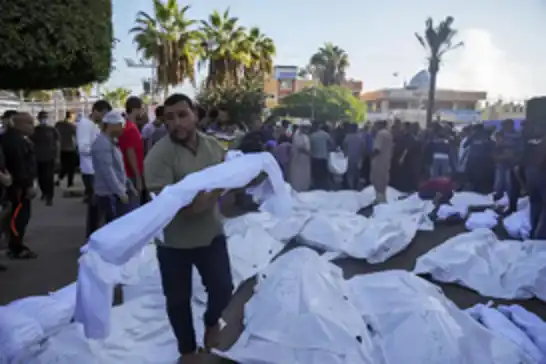
The death toll from Israel’s ongoing aggression against the Gaza Strip has risen to 73,386, while the number of injured has reached 174,250 since October 7, 2023, according to health authorities in the enclave.